Play ping pong
Play ping pong using paddles, a ball, and a table to practice hand eye coordination, serve techniques, scoring, and friendly sportsmanship with a partner.


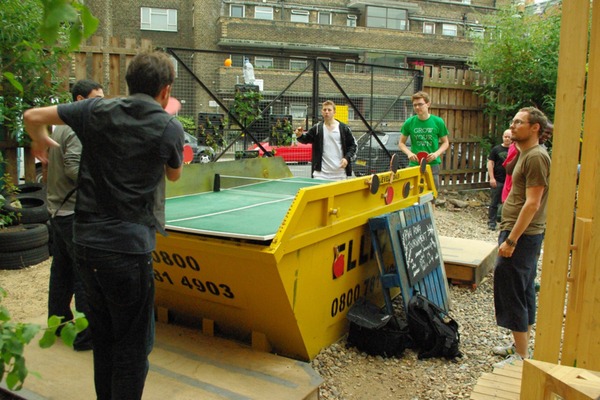

Step-by-step guide to play ping pong
How to Play Ping Pong (Table Tennis)
Step 1
Gather all materials and bring them to a clear play area.
Step 2
Place the table in a spot with room on both ends for players to move.
Step 3
Attach the net or string across the middle of the table so it is secure.
Step 4
Use tape to mark the end lines and sidelines on the table so the play area is clear.
Step 5
Decide who serves first by playing rock paper scissors.
Step 6
Warm up by each player bouncing the ball on their paddle ten times in a row.
Step 7
Practice serve technique by standing behind the end line and each player doing six serves aiming to land the ball on the opponent’s side.
Step 8
Practice returning by rallying cooperatively back and forth until you reach twenty successful hits without the ball touching the floor.
Step 9
Play a scored match to 11 points while keeping track of each player’s score.
Step 10
Switch servers every two points during the match to practice fair serving rotation.
Step 11
After the match, shake hands or high-five and say “good game” to show friendly sportsmanship.
Step 12
Share a photo or short description of your game and the final score on DIY.org.
Help!?
What can we use if we don't have a ping pong net, paddles, or a real table?
If you don't have a net, stretch and tape string across the middle as the instructions say to 'Attach the net or string across the middle of the table,' use spatulas or paper plates taped to sticks for paddles, and play on a sturdy dining table or large piece of flat cardboard for the 'Place the table' step.
What should we do if the ball keeps falling off the paddle or rallies don't reach twenty hits?
If rallies aren't reaching the 'twenty successful hits' or the ball slips from paddles, slow the game down with underhand returns, move players slightly closer than the taped end lines during practice, switch to larger paddles or a foam/balloon ball, and re-secure the net by retying or taping it as instructed to 'so it is secure.'
How can we adapt this game for younger or older children?
For younger kids shorten the warm-up to five bounces and three serves from a closer position than the taped end line, while older children can increase difficulty by extending the 'scored match' to 21 points and enforcing the two-point server rotation.
How can we make the activity more fun or personalized after the match?
Decorate or label paddles, use tape to add target zones on the opponent's side during practice to practice aiming, keep a written scorecard during the 'Play a scored match to 11 points,' and share a photo and final score on DIY.org as the instructions suggest.
Watch videos on how to play ping pong
How to teach young kids to play table tennis
4 Videos
How to teach young kids to play table tennis
How to LEARN & PLAY the FOREHAND FLICK | Table Tennis / Ping Pong| Beginner - Advance level Tutorial
How to play Ping Pong or Table Tennis
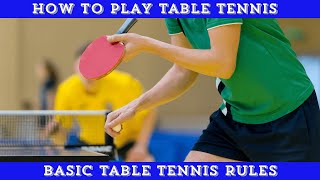
How to Play Table Tennis (Ping Pong) | Basic Table Tennis Rules for Beginners
Facts about table tennis for kids
🏓 Table tennis began as a Victorian parlor game often played with books for a net and champagne corks as balls.
🔁 Topspin is a powerful trick — it makes the ball dip and skid forward, confusing opponents' timing.
⚡ Pro players react in tiny fractions of a second, making rallies extremely fast and exciting to watch.
🥇 Table tennis became an Olympic sport in 1988, and countries like China have dominated the gold medals.
🤝 Sportsmanship matters: players call lets, keep score honestly, and often shake hands before and after matches.
How do I teach my child to play ping pong to practice hand-eye coordination and serving?
What materials do I need to play ping pong with my child?
What ages is ping pong suitable for and how can I adapt it for younger kids?
What are the benefits of playing ping pong with a partner for my child's development?
