Let's Practice Some One Line Patterns
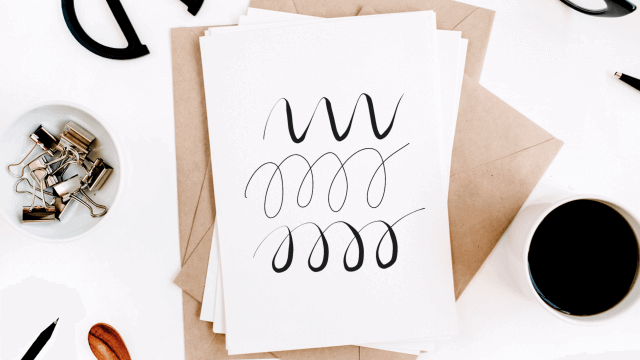
Draw and practice repeating one-line patterns on paper using pencils and pens, improving hand control, rhythm, and design by creating several continuous-line sequences.
About this activity
Draw and practice repeating one-line patterns on paper using pencils and pens, improving hand control, rhythm, and design by creating several continuous-line sequences.
What you need
Step by step
- 1
Step 1
Put one sheet of paper and your pencil pen eraser and coloring materials on a flat table.
- 2
Step 2
Make a small dot on the left edge of the paper to mark your starting point.
- 3
Step 3
From the dot draw a single continuous wavy line all the way to the right without lifting your pencil.
- 4
Step 4
Draw the same continuous wavy line pattern five times in a row below your first line.
- 5
Step 5
From the left draw a single row of connected loops across the page without lifting your pencil.
- 6
Step 6
Repeat the connected loops three more times in rows below your first loop row.
- 7
Step 7
Draw one row of zigzag one-line patterns across the page without lifting your pencil.
- 8
Step 8
Pick up your pen.
- 9
Step 9
Carefully trace over one entire row of patterns with the pen.
- 10
Step 10
Use your coloring materials to color or lightly shade the spaces created by one row.
- 11
Step 11
Draw the same pattern in a small size on a new row to practice quick rhythm.
- 12
Step 12
Draw the same pattern in a large size on another new row to practice slow rhythm.
- 13
Step 13
Share your finished creation on DIY.org.
Fun facts
How do I teach my child to draw and practice one-line patterns?
Start by showing a few simple continuous lines—loops, waves, and zigzags—on a model sheet. Have the child trace printed examples, then copy freehand across a page, repeating each pattern in rows. Encourage steady, slow motion and deep breathing; move the whole arm for smoother lines. Increase complexity gradually, keep sessions short (five minutes), and celebrate attempts to build confidence and rhythm.
What materials do I need for one-line pattern practice?
You’ll need plain paper or a sketchbook, HB pencils for light practice, a fine pen or marker for final lines, and an eraser. Optional extras: colored pencils or markers, printable pattern sheets or stencils, a clipboard to keep paper steady, a ruler for straight-line practice, and a small timer. A folder or tray helps store finished strips for review and display.
What ages is this one-line pattern activity suitable for?
This activity suits children from preschool to early teens when adjusted. Preschoolers (ages three to five) enjoy tracing simple waves and loops with hand-over-hand support; children six to nine can copy and repeat patterns independently to build fine motor control; ages ten and up can practice more complex rhythmic sequences and design variations. Always supervise very young kids and tailor challenges to ability and attention span.
What are the benefits of practicing one-line patterns?
One-line pattern practice builds fine motor control, hand–eye coordination, and a sense of rhythm. Repeating patterns improves pencil grip, line confidence, and sustained attention. It also encourages creativity and early design thinking as children vary spacing, size, and motifs. Short daily sessions boost progress; adding music or beats can make rhythm practice more engaging and fun.
Watch & Learn
Need help?
What can we use if we don't have the pencil, pen, eraser, or coloring materials from step 1?
Substitute a fine‑tip marker or ballpoint for the pen when you 'Carefully trace over one entire row of patterns with the pen', use a kneaded or vinyl eraser (or fold a clean scrap of paper) instead of the listed eraser, and swap crayons, colored pencils, or washable markers for the coloring materials.
My pencil keeps lifting or my wavy line becomes uneven—how can I fix that during the continuous-line steps?
To keep the instruction 'draw a single continuous wavy line... without lifting your pencil,' rest your wrist on the flat table, use light even pressure, practice the pattern in a smaller size first, and rotate the paper so your hand moves comfortably across the page.
How can I change the activity for different ages?
For toddlers simplify to one short continuous line or one row of connected loops, for preschoolers do fewer repeats and use chunky crayons for the 'Use your coloring materials' step, and for older kids add timed quick- and slow-rhythm challenges when you 'draw the same pattern in a small size' and 'large size' to practice control.
What are some ways to extend or personalize the finished patterns?
After you 'Carefully trace over one entire row of patterns with the pen' and 'Use your coloring materials to color or lightly shade the spaces,' personalize by adding color gradients, turning rows into decorative borders for a drawing, labeling rhythm speeds, or scanning the page to create a repeating digital pattern to share on DIY.org.