Paint Your Favorite Song!
Listen to your favorite song and create a painting inspired by its mood, rhythm, tempo, and lyrics, exploring color, texture, and personal expression.
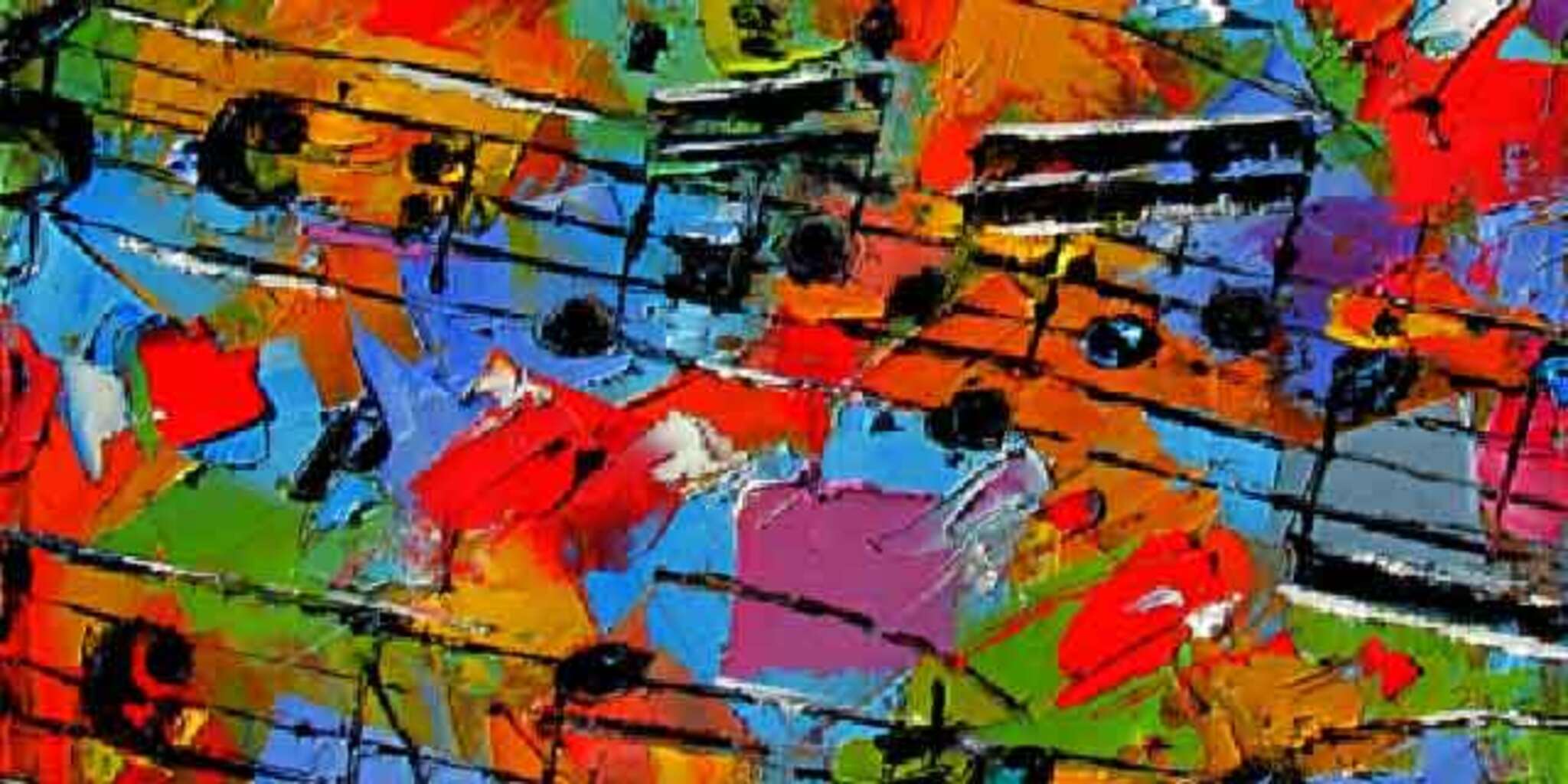
About this activity
Listen to your favorite song and create a painting inspired by its mood, rhythm, tempo, and lyrics, exploring color, texture, and personal expression.
What you need
Step by step
- 1
Step 1
Spread a towel or newspapers on your table to protect it.
- 2
Step 2
Put your paper or canvas and paints on the protected surface.
- 3
Step 3
Choose your favorite song.
- 4
Step 4
Press play on the song.
- 5
Step 5
Listen to the song all the way through and notice its overall mood.
- 6
Step 6
Close your eyes.
- 7
Step 7
Imagine the colors and shapes the song makes you feel.
- 8
Step 8
Lightly sketch big shapes or lines on your paper with a pencil.
- 9
Step 9
Pick two or three main paint colors that match the imagined mood.
- 10
Step 10
Mix those colors on your palette to make lighter or darker tones.
- 11
Step 11
Paint your background with broad strokes and add repeating marks or shapes to show the song’s rhythm and tempo.
- 12
Step 12
Share your finished painting on DIY.org
Fun facts
How do I do the "Paint Your Favorite Song" activity with my child?
Choose a favorite song, set up paints and paper, and listen together once to notice mood, tempo, and lyrics. Pick colors and brush types that match the song’s feelings. Play the song again and paint to the rhythm—use sweeping strokes for long notes and quick dabs for beats. Add texture with sponges or palette knives, pause to reflect, then sign and let the work dry before talking about the choices.
What materials do I need for "Paint Your Favorite Song"?
You’ll need paper or canvas, washable paints (acrylic, tempera, or watercolors), assorted brushes, a palette or plate, water cup, and paper towels. Add smocks and a table cover for easy cleanup. Optional extras: headphones, sponges, palette knives, salt for texture, crayons for resist effects, and non-toxic glitter. Choose child-safe, non-toxic supplies and a well-ventilated space for acrylics.
What ages is the "Paint Your Favorite Song" activity suitable for?
This activity works for many ages: toddlers (3–4) enjoy color and movement with close adult help; preschoolers (4–6) can match colors to moods with guidance; elementary kids (7–11) develop storytelling through paint; teens can explore advanced techniques and symbolism. Adapt tools, song length, and supervision to the child’s motor skills and attention span for a safe, fun experience.
What are the benefits of painting to music with kids?
Painting to music encourages emotional expression, listening skills, and creativity. It links auditory and visual senses, builds focus and fine motor control, and boosts confidence when children make personal choices. The activity is low-pressure and supports language development when kids describe colors and feelings. It also provides a calming, mindful break and can strengthen parent-child bonding through shared interpretation and conversation.
Watch & Learn
Need help?
What can we use instead of canvas or a palette if we don't have them?
If you don't have canvas, use thick cardboard or printer paper on the protected surface, and use a clean paper plate, yogurt lid, or baking tray as a palette to mix colors.
My colors look muddy or the paint is too thick — what should I do during the mixing and painting steps?
If colors get muddy while you mix those colors on your palette, wipe your brush between mixes, add a little water or white to thin and lighten tones, and test on scrap paper before painting broad background strokes.
How can I adapt the activity for younger children or make it more challenging for older kids?
For younger kids pick a short song, use bigger brushes, fewer paint colors, and help with the light pencil sketch, while older kids can choose longer songs, experiment with mixing tones on the palette, layer glazes, and add intricate repeating marks to show complex rhythms.
What are some ways to extend or personalize the painting after finishing it?
After painting the background and rhythm marks, personalize the piece by adding collage bits or written lyrics, varnishing or framing it, creating a series for different songs, and then sharing the finished painting on DIY.org.