#Make realistic eyes with @JDogg13
Make realistic model eyes using air-dry clay, paint, and brushes while learning proportions, color mixing, and shading techniques guided by @JDogg13.


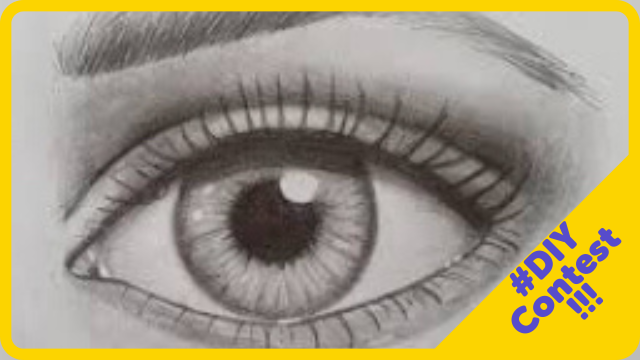

Step-by-step guide to make realistic eyes with @JDogg13
Step 1
Clear a flat workspace and lay down paper towel to keep things tidy.
Step 2
Take a small piece of air-dry clay and knead it until it is soft and smooth.
Step 3
Roll the clay into a smooth sphere about the size of a marble using your palms.
Step 4
Press a shallow dent on one side of the sphere with your fingertip to mark the front of the eye.
Step 5
Use the end of a paintbrush to press a circle in the dent about half the width of the sphere to mark the iris boundary.
Step 6
Use a toothpick or small tool to make a tiny central indentation for the pupil.
Step 7
Smooth any seams or fingerprints with a damp fingertip so the eye surface is even.
Step 8
Let the clay eye dry completely until it is hard to the touch.
Step 9
Lightly sand the dry eye with fine sandpaper to make the surface smooth.
Step 10
Paint the sclera (the white part) with white acrylic paint and let it dry.
Step 11
Mix your chosen iris color on a palette by blending paints until you like the shade.
Step 12
Paint the iris with short strokes radiating from the pupil to the edge and add a slightly darker ring at the outer edge for depth.
Step 13
Paint the pupil black in the small central indentation and let it dry.
Step 14
Add a tiny white highlight dot on the pupil with a fine brush to make the eye look shiny.
Step 15
Take a photo of your realistic model eye and share your finished creation on DIY.org
Help!?
What can I use if I can't find air-dry clay or acrylic paints?
If air-dry clay isn't available, substitute oven-bake polymer clay and bake it per package instructions instead of step 7 air-drying, and if you lack acrylics use gouache or tempera for steps 9–12 but allow extra drying time before step 13 photo-taking.
My clay eye keeps showing fingerprints and uneven spots—how do I fix it?
If seams or fingerprints remain after rolling and pressing (steps 2–6), gently smooth them with a damp fingertip as in step 6, let the eye harden fully in step 7, then lightly sand in step 8 before painting to get an even surface.
How can I adapt this activity for different ages and skill levels?
For younger kids, make a larger sphere and skip sanding and detailed iris strokes (steps 3, 8, 11) using chunky brushes for step 9, while older kids can follow all steps and add finer radial strokes and a darker outer ring in step 11 for realism.
What are some ways to improve or personalize the finished eye after painting?
To enhance the finished eye after step 12, add a tiny glossy varnish or epoxy layer for shine, glue it into a clay eyelid or small bead mount, and experiment with layered translucent paint for depth in the iris.
Watch videos on how to make realistic eyes with @JDogg13
How To Calculate Probability Of Lottery Numbers? - The Friendly Statistician
4 Videos

How To Calculate Probability Of Lottery Numbers? - The Friendly Statistician

How to Play Powerball and Powerball Double Play

How Do Lottery Ticket Machines Work? - CountyOffice.org

How to Play the Lotto for Absolute Beginners (A 2025 Guide)
Facts about clay sculpting and painting for kids
🧬 No two irises are alike — iris patterns are as unique as fingerprints.
👁️ The human eye can distinguish about 10 million different colors.
📏 In classical portrait proportions, the distance between the eyes equals the width of one eye.
⏳ Air-dry or modelling clays typically harden in 24–72 hours, but thick pieces take longer to fully dry.
🎨 Mixing complementary colors (like blue and orange) tends to neutralize them into grays or browns — handy for realistic shadows.
How do I make realistic model eyes with air-dry clay like @JDogg13 teaches?
What materials do I need to make realistic eye models with air-dry clay?
What ages is this realistic eye-making activity suitable for?
What are the benefits of making realistic model eyes with air-dry clay?
