Make the puppet shadow theater box
Build a cardboard shadow puppet theater box using a shoebox, paper screen, puppet sticks, and a flashlight to explore storytelling and light.




Step-by-step guide to make a puppet shadow theater box
Step 1
Gather all your materials and put them on a table where you can work.
Step 2
Place the shoebox on the table with one long side facing up.
Step 3
Use a pencil to draw a large rectangle on that long side leaving a 1-inch border all around.
Step 4
Carefully cut out the rectangle with scissors to make the stage opening.
Step 5
Tape the white tissue paper over the hole on the inside so the paper is smooth and tight.
Step 6
Tape black construction paper around the outside of the hole to make a dark frame.
Step 7
Decorate the outside of the shoebox with colouring materials to make your theater look fun.
Step 8
Draw simple puppet characters on the cardstock or thick paper.
Step 9
Cut out each puppet character with scissors.
Step 10
Attach each paper puppet to a craft stick or skewer using tape or glue at the back bottom of the puppet.
Step 11
Put the shoebox on a table with the tissue paper screen facing your audience.
Step 12
Place the flashlight at the back inside the box and point it toward the tissue screen.
Step 13
Hold a puppet stick between the flashlight and the screen so the puppet casts a clear shadow on the screen.
Step 14
Practice a short story while moving your puppets smoothly to match the words.
Step 15
Share your finished puppet theater and story on DIY.org
Help!?
What can we use if we don't have white tissue paper, cardstock, or a flashlight?
Use a thin white plastic shopping bag or tracing paper taped smoothly over the cut-out rectangle as the screen, make puppets from cereal-box cardboard instead of cardstock and tape them to wooden craft sticks or skewers, and use a desk lamp or your phone flashlight positioned at the back of the shoebox as the light source.
The shadow is blurry or too faint—what should we check and change?
Check that the white tissue paper is taped smooth and tight inside the box, block stray light with the black construction paper frame, and move or angle the flashlight/lamp and the puppet stick between the light and screen (closer to the light for bigger softer shadows, closer to the screen for sharper ones).
How can I adapt this puppet theater for a 3-year-old versus a 10-year-old?
For a 3-year-old have an adult cut the rectangle and pre-cut simple puppet shapes for coloring and let the child tape the tissue, hold puppets, and practice a short story, while a 10-year-old can cut the box and puppets themselves, add jointed puppet parts with extra skewers, and write a longer practiced script with smoother movements.
How can we make the theater more exciting or personal after finishing the basic steps?
Decorate the outside of the shoebox with a hand-drawn marquee and scenery, add colored cellophane over the flashlight for colored shadows, create layered paper backgrounds inside the box for depth, and record your practiced story to share on DIY.org.
Watch videos on how to make a puppet shadow theater box
For Kids! Make your own Mini Shadow Puppet Show!
4 Videos
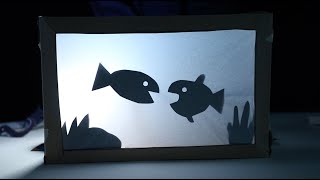
For Kids! Make your own Mini Shadow Puppet Show!
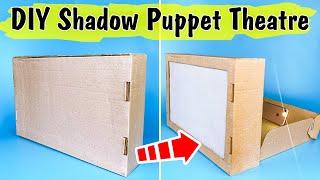
DIY Shadow Puppet Theatre out of a cardboard box in 5 minutes at home for a Halloween spooky story
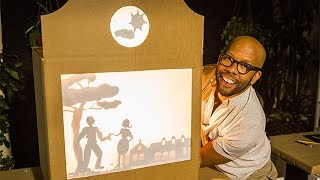
How To - Kenneth Wingard's DIY Shadow Puppet Theater - Home & Family
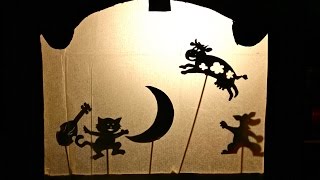
How to make your own shadow puppet theatre
Facts about shadow puppetry for kids
🐉 Shadow play is over 2,000 years old — ancient forms of shadow storytelling grew in China, Indonesia (Wayang), and other parts of Asia.
🎭 Puppetry appears in nearly every culture: rod, string, glove and shadow puppets all bring stories to life in different ways.
🔦 Move the flashlight closer to a puppet and the shadow becomes bigger and sharper; move it back and the shadow shrinks and softens.
📦 A shoebox-sized theater can easily hold 2–4 stick puppets and is a perfect portable mini-stage for kids’ performances.
✂️ Cutting puppets from stiff cardboard or paper makes crisp silhouettes, while thinner or translucent materials create ghostly, fuzzy shadows.
How do you make a puppet shadow theater box?
What materials do I need to build a shadow puppet theater box?
What ages is the puppet shadow theater box suitable for?
What are the benefits and fun variations of making a shadow puppet theater?
