Build something with LEGO® that is colorful
Build a colorful LEGO mosaic or simple model using bricks to explore patterns, symmetry, and color mixing while practicing planning, sorting, and fine motor skills.
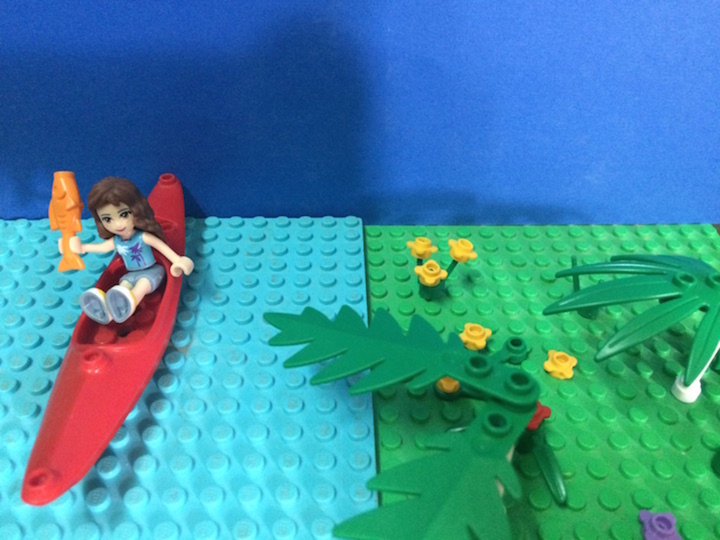
About this activity
Build a colorful LEGO mosaic or simple model using bricks to explore patterns, symmetry, and color mixing while practicing planning, sorting, and fine motor skills.
What you need
Step by step
- 1
Step 1
Gather all your LEGO bricks the baseplate the bowls the paper and pencil and bring them to a clear workspace.
- 2
Step 2
Choose whether you will make a colorful flat mosaic or a simple 3D model.
- 3
Step 3
Pick 3 to 6 main colors you want to use for your project.
- 4
Step 4
Place the baseplate or flat board on the table where you will build.
- 5
Step 5
Sort your bricks by color into the bowls or tray so each color is easy to reach.
- 6
Step 6
Draw a very simple plan on paper showing the pattern or shapes you want to make.
- 7
Step 7
Start building by placing bricks on the baseplate following your plan from one corner or the base.
- 8
Step 8
Build row by row or layer by layer to keep your pattern even and tidy.
- 9
Step 9
Try moving a few bricks to make a gradient or blend two colors to see color mixing.
- 10
Step 10
Add small details or 3D features like eyes doors or a roof to make your creation pop.
- 11
Step 11
Step back and check for symmetry or balance and change one area if it needs fixing.
- 12
Step 12
Share a photo or description of your finished colorful LEGO creation on DIY.org
Fun facts
How do I build a colorful LEGO mosaic or simple model?
Start by choosing a simple design or pattern and pick a baseplate for a mosaic or a small model to build. Sort bricks by color and size, sketch a grid on graph paper if making a mosaic, then work from the center or outline inwards. Use repeating patterns and mirror symmetry to explore color mixing and balance. Take breaks to compare progress, adjust colors as needed, and encourage planning and counting of pieces before gluing or finalizing.
What materials and tools do I need to build a colorful LEGO mosaic?
You'll need a variety of LEGO bricks and tiles in many colors, a mosaic baseplate or flat base for models, and smaller plates or 1x1 tiles for detailed pixel art. Include sorting trays or muffin tins, graph paper and pencils for planning, and good lighting. Optional helpful tools: brick separators, tweezers for tiny pieces, and small labeled containers for color groups. Keep a flat work surface and a box for finished pieces.
What ages is a colorful LEGO mosaic activity suitable for?
This activity suits many ages: toddlers (2–4) can play with larger DUPLO bricks with supervision; children aged 4–7 enjoy simple mosaics and need help sorting and following patterns; ages 7–12 can handle detailed pixel art, symmetry exercises, and independent planning. Adjust complexity, piece size, and time to match attention span. Be mindful of choking hazards and supervise younger kids; adapt tasks like color sorting for beginners.
What are the benefits and safety tips for kids building colorful LEGO mosaics?
Building colorful LEGO mosaics boosts planning, pattern recognition, color mixing, symmetry understanding, and fine motor skills while encouraging patience and creativity. It also supports early math skills like counting and sorting. For safety, keep small bricks away from children under three, use labeled containers, and supervise young builders. Variations include mirrored designs, gradient fades, three-dimensional models, collaborative murals, timed challenges, or mixing DUPLO and standard br
Watch & Learn
Need help?
What can I use if I don't have a LEGO baseplate or bowls to sort colors?
Use a piece of sturdy cardboard or a plastic cutting board as a flat baseplate substitute, and replace bowls with muffin tin cups, ice cube trays, or small jars to sort bricks by color.
My mosaic looks uneven when I build row by row—how can I fix this?
Make sure the baseplate or flat board is on a level surface, follow your simple plan on paper to count studs for each row, and move or rebuild any misplaced bricks row by row to restore symmetry.
How can I adapt the activity for different ages?
For younger children use larger Duplo-style bricks, only 2–3 main colors and a very simple drawn plan, while older kids can work with small bricks, 3–6 colors, gradients, and add 3D features like eyes, doors, or a roof.
How can I enhance or personalize my LEGO project before sharing it on DIY.org?
Add small details like hinged doors or a roof, experiment with gradients by moving a few bricks to blend two colors, consider transparent plates or tiny LED lights for extra pop, and photograph your creation from multiple angles to show balance and color choices.