Show us your acting slate
Make a simple cardboard clapperboard and practice saying your name, role, and scene to learn stage timing, clear speaking, and performance confidence.




Step-by-step guide to make a cardboard clapperboard and practice your acting slate
Step 1
Gather all the materials and put them on a clean workspace.
Step 2
Use the ruler and pencil to draw a rectangle about 20 cm by 15 cm on the cardboard.
Step 3
Cut out the rectangle with scissors.
Step 4
Use the ruler and pencil to draw a long strip about 20 cm by 3 cm on the cardboard for the clapper.
Step 5
Cut out the long strip with scissors.
Step 6
Color the front of the large rectangle black with the black marker or black paint.
Step 7
Let the paint dry completely before you touch it.
Step 8
Draw two or three white diagonal stripes on the top strip using the white paint or white marker.
Step 9
Cut a small rectangle from the white paper to make a label.
Step 10
Write your name role and scene clearly on the white paper label with a dark marker.
Step 11
Glue the white paper label onto the front of the black board and press to stick.
Step 12
Attach the top strip to the top edge of the board on the back with strong tape so it can hinge and clap.
Step 13
Practice saying your name role and scene clearly three times.
Step 14
Clap the top strip on the word "Action" three times to practice stage timing.
Step 15
Share a photo or video of your finished acting slate and your slate performance on DIY.org.
Help!?
What can we use instead of cardboard, black marker/paint, or strong tape if they're not available?
Use a flattened cereal box or poster board for the 20 cm × 15 cm rectangle and 20 cm × 3 cm clapper, glue or tape black construction paper to the front instead of black marker/paint, and substitute a brass paper fastener or a folded strip of tape as the hinge if you don't have strong tape.
My clapper won't hinge or clap properly—what might be wrong and how can we fix it?
If the top strip is taped down too firmly or the tape covers the whole edge, remove and reattach it with tape only along the back edge so it can pivot, or poke a small hole and join both pieces with a brass fastener as explained in the 'Attach the top strip' step.
How can we adapt this activity for younger or older children?
For younger kids have an adult pre-measure and cut the 20 cm by 15 cm board and 20 cm by 3 cm strip and let them color, glue the label, and clap, while older kids can measure and cut themselves, paint detailed white diagonal stripes, and rehearse their name, role, and scene three times for a polished slate.
How can we personalize or enhance the finished slate to make it more creative or durable?
Decorate the back with paint or stickers, laminate or cover the white paper label for durability, reinforce the hinge with extra tape or a small fabric strip, or add a small handle so your finished slate stands out in the photo or video you share on DIY.org.
Watch videos on how to make a cardboard clapperboard and practice your acting slate
Anyone Can Act | Acting Lessons For Kids | Acting Tips For Beginners | How To Act
3 Videos

Anyone Can Act | Acting Lessons For Kids | Acting Tips For Beginners | How To Act
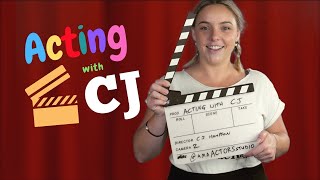
Acting Classes for KIDS! Episode 1 - Acting with CJ

Acting Tips for Kids
Facts about acting and theater skills for kids
🎬 The clapperboard (also called a slate) was invented to help sync audio and picture when sound films arrived in the 1920s.
👩🎤 Saying your name and role on a slate doubles as a quick vocal and focus warm-up many actors use before a take.
📢 Clear slating (name/role/scene) helps editors and sound mixers find the right take faster — which can save hours in post-production.
📦 In low-budget and early productions, crews often used simple materials like cardboard and chalk before painted wooden slates were common.
⏱️ Modern digital slates can display precise timecode, but the traditional loud clap is still one of the most reliable sync signals.
How do you do the 'Show us your acting slate' activity?
What materials do I need for the 'Show us your acting slate' activity?
What ages is the 'Show us your acting slate' activity suitable for?
What are the benefits of doing the 'Show us your acting slate' activity?
