Write A Letter To A Tree Near You!
Write a thoughtful letter to a tree near your home or school, describe observations and feelings, tuck it safely at the trunk and return later.


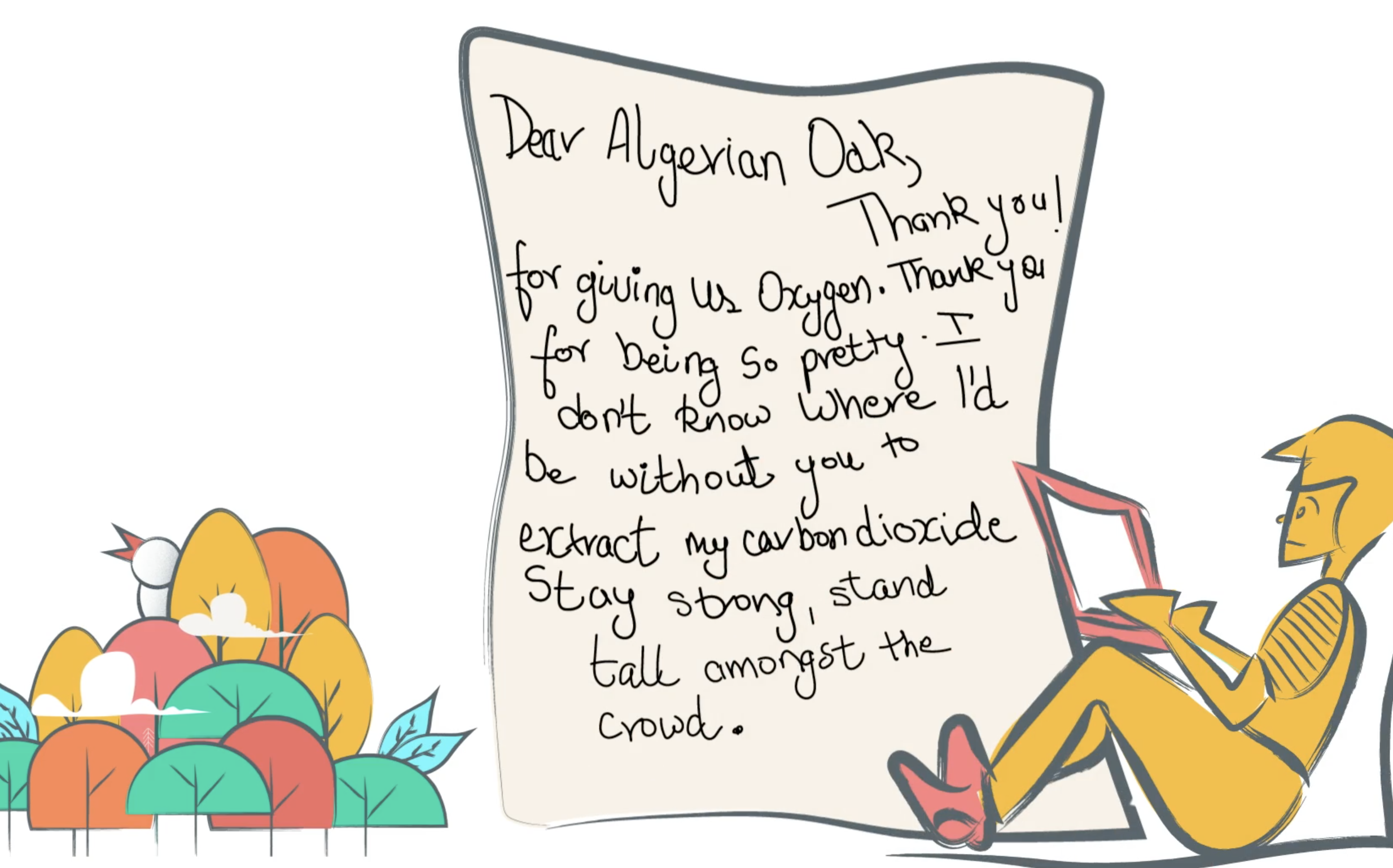

Step-by-step guide to write a letter to a tree near you
Step 1
Ask an adult for permission to visit a nearby tree and to go with you.
Step 2
Walk to the tree with your adult.
Step 3
Stand quietly by the tree for one minute and look closely at it.
Step 4
Notice and write three things you see about the tree on your paper.
Step 5
Write one or two sentences about how the tree makes you feel and why.
Step 6
Write your letter starting with Dear Tree and include your observations and feelings.
Step 7
Decorate your letter with a drawing or stickers using your colouring materials.
Step 8
Fold your paper and place it inside an envelope or fold it into a pocket.
Step 9
Put the envelope into the small plastic bag to protect it from weather.
Step 10
Seal the bag closed with tape.
Step 11
Walk back to the tree with your adult carrying your protected letter.
Step 12
Choose a safe spot at the base of the trunk where the letter will not harm the tree.
Step 13
Gently tuck the protected letter into that spot so it will stay safe and not blow away.
Step 14
Write down where you left the letter and the date so you can remember when to return.
Step 15
Share your finished creation on DIY.org.
Help!?
What can we use if we don't have an envelope, small plastic bag, or tape?
If you don't have an envelope or small plastic bag, put the folded paper into a resealable sandwich or zip-top bag and use clear packing tape or wide adhesive tape to seal it for the 'Put the envelope into the small plastic bag' and 'Seal the bag closed with tape' steps.
My letter keeps blowing away or getting wet when I try to tuck it at the tree—what should I do?
Completely seal the protective bag with tape and tuck the protected letter into a sheltered spot at the base of the trunk—for example between roots or under the root flare—so it won't blow away or sit in puddles while following the 'Choose a safe spot at the base of the trunk' and 'Gently tuck the protected letter' instructions.
How can I adapt this activity for younger or older kids?
For younger children, shorten 'Stand quietly by the tree for one minute' to 15–30 seconds and let them draw their observations instead of writing during the 'Notice and write three things' and 'Decorate your letter' steps, while older kids can add species notes, sensory details, and longer sentences before sharing on DIY.org.
What are some ways to personalize or extend the project after we leave the letter?
Photograph the tree, write down the location and date as instructed in 'Write down where you left the letter and the date,' set a reminder to revisit, and consider adding a small sealed seed packet or a laminated journal page inside the protected letter so you can compare changes and share updates on DIY.org.
Watch videos on how to write a letter to a tree near you
Request Letter to Neighbor for tree trimming - Letter Asking Neighbor to Trim Tree
3 Videos
Request Letter to Neighbor for tree trimming - Letter Asking Neighbor to Trim Tree
Letter to your friend, telling him about tree plantation. Let's Learn English and Paragraphs.
How to Write a Letter to a Friend in 10 Steps (With Examples) 🤗
Facts about nature journaling for kids
🌳 Trees can "talk" underground — roots and fungi trade nutrients and signals in a network scientists call the "wood wide web".
🕰️ The oldest known non-clonal tree is a bristlecone pine that's over 4,800 years old — older than many civilizations!
🌬️ Through photosynthesis, trees make oxygen and pull carbon dioxide out of the air, helping cool our planet.
🏙️ Trees in cities can lower local temperatures by several degrees and help reduce energy use by shading buildings.
✉️ People have long written messages for trees; leaving a gentle letter tucked at the trunk is a kinder way to say hello than carving.
How do I do the 'Write a Letter to a Tree Near You' activity with my child?
What materials do I need to write a letter to a tree?
What ages is the 'Write a Letter to a Tree Near You' activity suitable for?
What are the benefits of writing a letter to a tree?
