Share the first draft of your pencilled comic book
Create a penciled comic book first draft by sketching characters, panels, and speech bubbles, then share pages with friends or family for feedback.


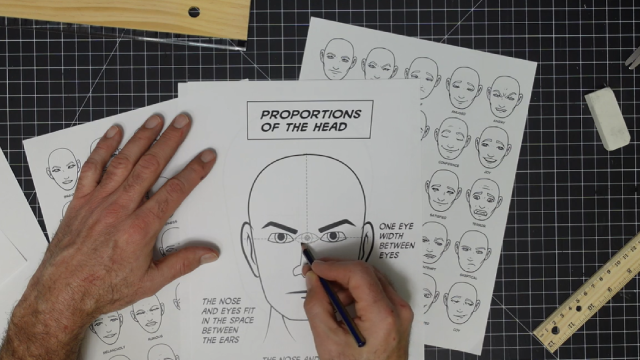

Step-by-step guide to share the first draft of your pencilled comic book
Step 1
Find a clean flat workspace and lay out your materials.
Step 2
Choose a short story idea for your comic.
Step 3
Pick one main character for your story.
Step 4
Write a one-sentence summary of the story at the top of a sheet of paper.
Step 5
Use a ruler to draw panels on the first page to plan the scene layout.
Step 6
Lightly sketch your main character inside the first panel.
Step 7
Sketch what happens next in the following panels on the same page.
Step 8
Draw speech and thought bubbles where characters will talk or think.
Step 9
Write short penciled dialogue or captions inside each bubble.
Step 10
Repeat drawing panels sketching characters and adding bubbles on each extra page until your draft is complete.
Step 11
Darken the lines you want to keep so your drawings look clear.
Step 12
Show your penciled pages to a friend or family member.
Step 13
Ask them for feedback about the story and the drawings.
Step 14
Make quick edits to your penciled pages based on the feedback.
Step 15
Share your finished penciled comic book first draft on DIY.org.
Help!?
What can I use if I don't have a ruler, pencils, or printer paper for this penciled comic draft?
Use a straightedge like the edge of a hardcover book or cereal box to draw panels, and substitute pencils with a pen, crayon, or colored pencil on any clean sheet of paper while following the sketch, panel, and darken-the-lines steps.
My panels look crooked and my sketches keep smudging—what should I try?
Hold a straightedge firmly when using the ruler step to draw panels, sketch very lightly in the 'lightly sketch your main character' step, and place a scrap paper under your drawing hand to prevent smudging before you darken the lines you want to keep.
How can I adapt this comic-drafting activity for younger or older kids?
For younger kids simplify by drawing fewer, larger panels and allowing tracing or stickers during the 'sketch characters' steps, and for older kids encourage multiple pages, detailed backgrounds, stronger penciled dialogue, and revising after the feedback step before sharing on DIY.org.
What are some ways to extend or personalize the penciled comic draft after finishing the suggested steps?
After you darken lines and make quick edits from feedback, personalize the draft by adding color with markers or colored pencils, creating a cover, stapling or binding the pages, and scanning the finished penciled comic to share on DIY.org.
Watch videos on how to share the first draft of your pencilled comic book
How to Make Your Own Comic | Toontorial | @cartoonnetworkuk
4 Videos
How to Make Your Own Comic | Toontorial | @cartoonnetworkuk
How To Make A Comic Book At Home (St Teresa's RC Primary School) | Mr Mckenzie
Learn and make your own comic book | Very easy! | Just like any other comic | Craft Mob
How I Make Mini Comics? (step by step) PART I
Facts about comic book creation
✏️ Many comic artists start with tiny thumbnail sketches, then create a penciled first draft before inking and coloring.
🗨️ Speech balloons (or speech bubbles) became common in cartoons and comic strips in the late 1800s and are now a staple for showing dialogue.
📐 The idea of "closure"—readers mentally filling in action between panels—was popularized by Scott McCloud in Understanding Comics.
👥 Sharing penciled pages with friends, collaborators, or editors for feedback is a standard step in professional comic-making.
📚 Traditional American comic book issues usually contain about 20–24 pages of story, so penciled drafts often plan pacing around that length.
How do I create and share a penciled comic book first draft?
What materials do I need to make and share a penciled comic book first draft?
What ages is this penciled comic book activity suitable for?
What are the benefits of sharing a penciled comic book first draft and how can I get useful feedback?
