Create a Rhyme using the AA Rhyme Scheme
Write a two line poem using the AA rhyme scheme, choose a topic, match end sounds, and practice rhythm, vocabulary, and creative expression.




Step-by-step guide to create a rhyme using the AA rhyme scheme
Step 1
Pick a topic you love such as a pet a place or a feeling.
Step 2
Say out loud four words that rhyme with a sound you like for the line endings.
Step 3
Choose one rhyming word from your list to use at the end of both lines.
Step 4
Think of one simple idea or image about your topic for the first line.
Step 5
Write the first line and finish it with the rhyming word you chose.
Step 6
Think of a second short idea that connects to the first line.
Step 7
Write the second line and finish it with the same rhyming word so the poem follows the AA rhyme scheme.
Step 8
Read both lines out loud slowly to hear how the words and rhythm feel.
Step 9
Change one word if a line sounds clumsy to make the rhythm smoother.
Step 10
Edit your poem for punctuation and capitalization so it looks tidy.
Step 11
Decorate or draw a picture on your paper that matches your rhyme.
Step 12
Share your finished creation on DIY.org.
Help!?
What can we use if we don't have paper, pencils, or crayons for this rhyme activity?
If you don't have paper, pencils, or crayons, write your two lines in a notes app or on a whiteboard, draw your matching picture digitally or on cardboard, and take a photo to complete the 'decorate or draw' step and upload to DIY.org.
My rhyme sounds clumsy—what should I try to fix the rhythm?
If the lines sound clumsy when you 'read both lines out loud slowly' (step 8), swap in a different word from your four-word rhyme list or 'change one word' (step 9) to smooth the rhythm.
How can I adapt this activity for younger or older kids?
For younger kids, have an adult scribe the two simple lines while they pick a topic and rhyming words and decorate with stickers (steps 1, 4, 11), and for older kids encourage richer imagery, varied meter, or adding extra rhymed couplets before sharing on DIY.org (steps 6–12).
How can we extend or personalize the finished rhyme beyond the two lines?
To enhance the project, turn your two-line AA rhyme and drawing (steps 6–7 and 11) into a short video performance with props, sound effects, or background music and upload it to DIY.org to personalize your presentation.
Watch videos on how to create a rhyme using the AA rhyme scheme
Rhyme Scheme Explained: Easy Guide with Examples! #englishlanguage #shakespeare
4 Videos
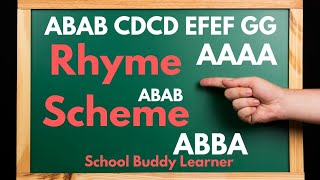
Rhyme Scheme Explained: Easy Guide with Examples! #englishlanguage #shakespeare
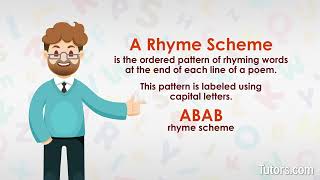
What Is Rhyme Scheme | Definition, Types & Examples
What Is a Rhyme Scheme? | Easy Explanation with Examples for Class 7 | English Poem Guide
Stanzas, Lines, and Rhyme Schemes
Facts about poetry and rhyming for kids
🎶 Rhymes make lines easier to remember — that's why nursery rhymes stick in your head!
✍️ 'AA' rhyme scheme means both lines end with the same sound (like cat/hat) — super simple and satisfying.
📚 Dr. Seuss used rhyme and rhythm to help kids learn new words — his playful rhymes are famous worldwide.
🕒 Two-line poems are perfect for practicing rhythm and vocabulary — you can write one in just a few minutes!
🌍 Many languages use rhyme, but how poets rhyme can vary a lot from place to place — rhyme is creative everywhere.
How do I help my child write a two-line AA rhyme poem?
What materials do I need to create a two-line AA rhyme with my child?
What ages are suitable for making a two-line AA rhyme poem?
What are the benefits and fun variations of two-line AA rhyme poems?
