Teach DIYers How To Play Dungeons & Dragons!
Learn how to play Dungeons & Dragons by creating a character, building a simple dungeon map, making a foam die, and practicing roleplaying.


Step-by-step guide to teach DIYers to play Dungeons & Dragons
How to play Dungeons & Dragons
Step 1
Gather all Materials Needed and put them on a clear workspace.
Step 2
On a sheet of paper write your character's name and draw a small portrait.
Step 3
Choose and write your character's race and class under the name.
Step 4
Pick three ability scores for Strength Dexterity and Intelligence each from 1 to 10 and write them down.
Step 5
Choose two skills or special abilities your character is good at and write them down.
Step 6
Write one or two sentences of backstory explaining where your character came from.
Step 7
Draw a simple dungeon map on the cardboard or paper showing a clear start three rooms a monster spot and a treasure spot.
Step 8
Place small toys or coins as tokens for your character the monster and the treasure on the map.
Step 9
Use the ruler and marker to draw six equal squares on the craft foam sheet and cut them out with scissors.
Step 10
Tape the six foam squares together into a cube so they form a die.
Step 11
Use the marker to add numbers or dots to each face of your foam die.
Step 12
Adopt your character's voice and say one sentence as your character.
Step 13
Roll your foam die to try an action and move your token forward one space if you roll 4 or higher.
Step 14
If your token reaches the treasure describe in one sentence how your character celebrates or uses the prize.
Step 15
Share your finished creation on DIY.org.
Help!?
What can I use if I don't have the craft foam sheet or small toys the instructions call for?
If you don't have a craft foam sheet, cut six equal squares from stiff cardboard or folded paper to make the die and use coins, buttons, or paper tokens instead of small toys to mark your character, the monster, and the treasure on the map.
My foam die falls apart or the squares aren't the same size—how do I fix that?
Measure each square with the ruler before cutting, score fold lines for clean edges, and reinforce taped seams with extra tape or a dab of glue so the cube holds together when you roll it.
How can I adapt the activity for younger children or make it more challenging for older kids?
For younger kids, simplify by pre-cutting the foam squares, using a regular die, and drawing only two or three rooms, while older kids can pick full ability arrays for Strength/Dexterity/Intelligence, add more rooms and monsters to the cardboard dungeon, and write a longer backstory.
What are simple ways to extend or personalize the game after completing the steps?
Decorate the character portrait and foam die with markers or stickers, add extra rooms or another monster spot on the dungeon map, create special-skill rules tied to specific die rolls, and then share your finished creation on DIY.org.
Watch videos on how to teach DIYers to play Dungeons & Dragons
Learn to Play Dungeons & Dragons in 10 MINUTES with the D&D Starter Set
4 Videos
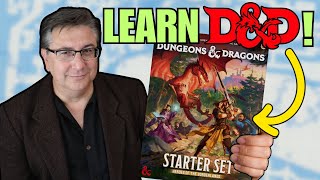
Learn to Play Dungeons & Dragons in 10 MINUTES with the D&D Starter Set

How to play D&D — Absolute beginner's guide
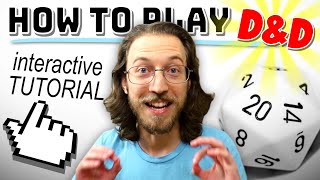
Let's Play Your First D&D Adventure! | 10-Minute Interactive D&D Beginner Guide
How to Play Dungeons & Dragons - A Step by Step Walkthrough!
Facts about tabletop role-playing games for kids
🐉 Dungeons & Dragons was first published in 1974 by Gary Gygax and Dave Arneson.
🎲 The d20 (20-sided die) is the most famous die in D&D and many actions are decided by rolling it.
🎭 Roleplaying lets players act as characters—creating voices, backstories, and choices that shape the story.
🗺️ Dungeon maps often use a square grid where 1 inch = 5 feet in-game, making movement and combat easier to track.
✂️ A full polyhedral dice set usually has seven dice (d4, d6, d8, d10, d%, d12, d20), and foam dice are a safe DIY alternative for kids.
How do I teach my child to play Dungeons & Dragons step by step?
What materials do I need to teach a child to play Dungeons & Dragons?
What ages is Dungeons & Dragons suitable for children?
What are the benefits of teaching kids to play Dungeons & Dragons?
