Practice Uppercase Alphabets: A-G
Practice writing uppercase letters A through G by tracing, copying, and creating letter art with markers, stencils, and simple puzzles to reinforce strokes.


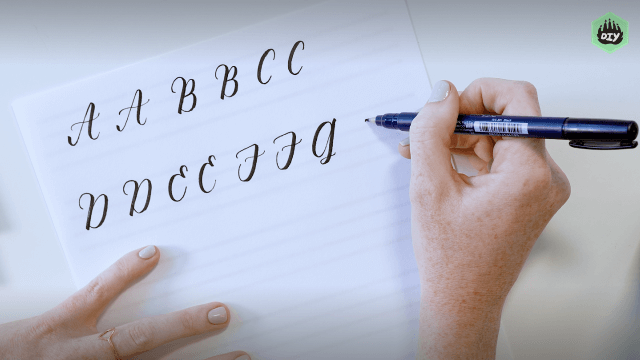

Step-by-step guide to practice uppercase letters A-G
Step 1
Gather all your materials and sit at a clean flat table so you are ready to practice.
Step 2
Place one sheet of paper on the table in front of you.
Step 3
Put the stencil for the letter A on top of the paper and hold it steady with one hand.
Step 4
Trace the uppercase letter A with a pencil following the stencil lines carefully.
Step 5
Repeat the tracing action for letters B C D E F and G using the stencil.
Step 6
On a new line for each letter, copy each traced letter freehand three times using your pencil.
Step 7
Go over each pencil letter with a marker to make bold uppercase letters.
Step 8
Decorate each letter with colours patterns or little drawings using your colouring materials.
Step 9
Draw a large uppercase letter you like on an index card to make a puzzle piece.
Step 10
With adult supervision cut the large letter on the index card into two or three puzzle pieces.
Step 11
Mix the puzzle pieces and then reassemble them to practice recognizing the letter shape.
Step 12
Glue one of your decorated letters onto a clean sheet to make a small poster and add stickers or embellishments.
Step 13
Share your finished creation on DIY.org
Help!?
What can we use if we don't have the letter stencil?
If you don't have the stencil, print large uppercase letters from a computer or cut letter outlines from cardboard to use as a template and then trace them as in step 3.
My stencil keeps shifting and my traced A-G letters look wobbly — how can I fix that?
Tape the stencil to the paper with small pieces of masking tape and press down with one hand while tracing with a sharp pencil, then erase stray marks before going over letters with marker as in step 7.
How can I adapt this activity for different ages (toddlers vs older kids)?
For toddlers, use larger letter stencils, thick washable markers, and skip the freehand copies and cutting steps, while older kids can copy each traced letter more times, add detailed decorations, and make multi-piece index-card puzzles per steps 8–10.
How can we make the finished poster or puzzles more creative or reusable?
After gluing a decorated letter to make the poster, laminate it or add textured materials like yarn or glitter glue, and create extra index-card letters to mix into a matching puzzle set to share on DIY.org.
Watch videos on how to practice uppercase letters A-G
Learn to Trace Letter G (Capital & Small) + Guess the G Words! | Fun Alphabet Game for Kids
4 Videos
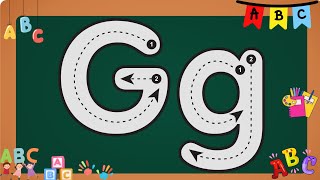
Learn to Trace Letter G (Capital & Small) + Guess the G Words! | Fun Alphabet Game for Kids

The G Song (Uppercase) | Super Simple ABCs

Letter G Song - THE KIBOOMERS Preschool Phonics Sounds - Uppercase & Lowercase Letters
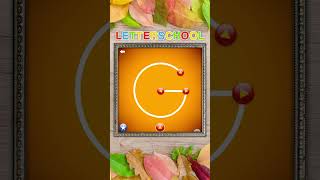
Learn to write Uppercase Letter G of the English Alphabet | Letter School ABC Games
Facts about handwriting and early literacy for kids
🅰️ The word "alphabet" comes from the first two Greek letters: alpha and beta.
✍️ Tracing letters helps tiny hands build fine motor control — a key step toward fluent writing.
🧠 Many preschools introduce uppercase letters first because their straight lines and simple shapes are easier for young children to recognize and form.
🎨 Bright markers, stencils, and letter art turn practice into play and help kids remember letter shapes better.
🔁 Repeating tracing, copying, and creating letter art builds muscle memory so strokes become smoother and faster.
How do I practice uppercase letters A through G with my child?
What materials do I need for practicing uppercase A-G?
What ages is this activity suitable for?
What are the benefits of practicing uppercase A-G?
