Practice letters with Upstroke/Downstroke Shape - i, j, p, t
Practice lowercase letters i, j, p, and t using upstroke and downstroke shapes with tracing, guided practice, and playful repetition to improve handwriting.


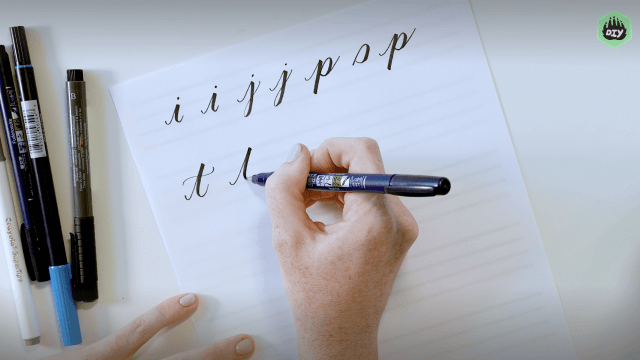

Step-by-step guide to practice letters with upstroke/downstroke shape - i, j, p, t
Step 1
Sit at a table with your paper and pencil ready and feet flat on the floor.
Step 2
Make a small gentle upward line from the baseline to the top line to practice an upstroke.
Step 3
Make a straight firm line from the top line down to the baseline to practice a downstroke.
Step 4
Lightly make three dotted guide shapes for each letter i j p t across your paper.
Step 5
Trace three dotted lowercase i letters focusing on making the short body with a downstroke and adding a small dot above.
Step 6
Trace three dotted lowercase j letters focusing on the downstroke that goes below the baseline and the small dot above.
Step 7
Trace three dotted lowercase p letters focusing on a long downstroke that goes below the baseline and a rounded belly on the left.
Step 8
Trace three dotted lowercase t letters focusing on a tall downstroke and then adding a short horizontal crossbar near the top.
Step 9
Write each letter i j p t five times on your own without tracing to practice steady upstrokes and downstrokes.
Step 10
Pick your favorite letter and decorate it with your colouring materials.
Step 11
Share your finished practice page on DIY.org.
Help!?
What can I use if I don't have lined paper or a pencil?
Use plain paper and draw the baseline and top line with a ruler and a light marker, and substitute a crayon, felt-tip pen, or chunky pencil so your child can still practice the upstroke and downstroke shapes.
My child's downstrokes wobble; how can I help them steady their lines?
Make sure they sit with feet flat on the floor, hold the pencil lightly near the tip, and practice slow, firm 'straight lines from the top line down to the baseline' before tracing the dotted letters.
How can I adapt this activity for younger or older children?
For younger kids, draw larger dotted guide shapes and use chunky colouring materials to trace only i and t, while older children can complete more independent rows of i, j, p, t and decorate a favorite letter with detailed colouring materials.
How can we extend or personalize the practice beyond tracing and decorating?
Ask the child to write short words using i, j, p, t with different coloured pencils to highlight upstrokes and downstrokes, assemble the pages into a mini book on extra paper, and then share their favourite decorated page on DIY.org.
Watch videos on how to practice letters with upstroke/downstroke shape - i, j, p, t
How to Write Letters for Children - Teaching Writing ABC for Preschool - Alphabet for Kids
4 Videos
How to Write Letters for Children - Teaching Writing ABC for Preschool - Alphabet for Kids
Learn to Write the ABCs | How to Write Letters | Handwriting Practice for Kids
Cursive writing for beginners Lesson 1 | Basic Strokes and Shapes | Cursive handwriting practice
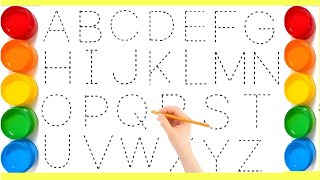
Learn ABCD Capital Letters Writing | Alphabet Tracing for Kids | A - Z Writing Practice for Toddlers
Facts about handwriting and letter formation for kids
✍️ Research shows handwriting practice helps children recognize and remember letters better than typing alone.
🖋️ Upstrokes (light upward strokes) and downstrokes (firmer downward strokes) are foundational techniques used in calligraphy and neat cursive.
🧠 Fine motor skills for precise letter formation begin developing in preschool and continue improving through early elementary years.
⏱️ Short daily practice sessions (about 5–10 minutes) often boost handwriting legibility faster than rare, longer drills.
🎯 Grouping letters with similar stroke patterns—like i, j, p, and t—helps kids transfer control and consistency across shapes.
How do I teach my child to practice lowercase letters i, j, p, and t using upstroke and downstroke shapes?
What materials do I need to practice upstroke/downstroke letters i, j, p, and t at home?
What ages or skill levels are suitable for practicing upstroke and downstroke letters i, j, p, and t?
What are the benefits, safety tips, and fun variations for practicing upstroke/downstroke letters i, j, p, and t?
