Show us an overlapping action
Create a flipbook illustrating overlapping action by drawing layered movements like hair and sleeves lagging behind a jumping character to study motion.


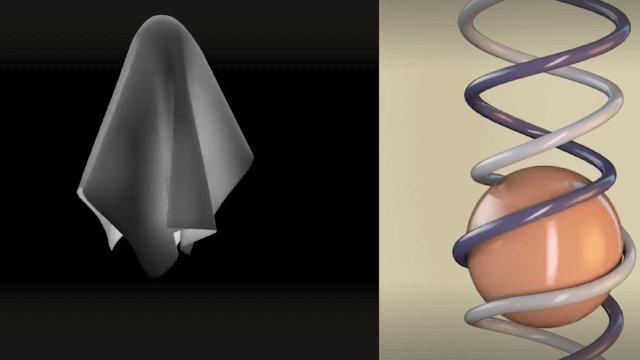

Step-by-step guide to create a flipbook illustrating overlapping action
Step 1
Stack about 30 small sheets or index cards and align them neatly on one edge.
Step 2
Clamp the aligned edge with a binder clip so the pages stay together while you draw.
Step 3
On the top page draw a simple character in the starting crouch or ready-to-jump pose using light pencil lines.
Step 4
Flip to the next page and draw the character slightly higher in the jump so the body moves a little upward.
Step 5
On the next pages repeat flipping and drawing each frame to move the body higher across 8 to 10 pages while keeping the hair and sleeves a bit behind the body.
Step 6
Draw one frame where the character is at the highest point of the jump and the hair and sleeves are furthest behind.
Step 7
Continue drawing frames for the character descending back down so the hair and sleeves gradually catch up to the body.
Step 8
Trace the pencil outlines on every page with a fine-tip marker to make the drawings clear and bold.
Step 9
Gently erase leftover pencil marks from each page after the ink has dried.
Step 10
Colour the hair and sleeves to show motion by making the trailing parts lighter or adding short motion lines then flip your flipbook to watch the overlapping action and share your finished creation on DIY.org
Help!?
What can I use if I don't have small sheets/index cards or a binder clip?
If you don't have small sheets or index cards, cut printer paper into card-sized sheets and instead of a binder clip clamp the aligned edge with a stapler, a bulldog/clothespin, or a tight rubber band to keep the pages together while you draw.
My drawings smudge or the flipbook sticks when I flip it—what step could I be doing wrong and how do I fix it?
If drawings smear after you trace with a fine-tip marker, make sure each page is completely dry before stacking (or use fast-drying ink), place scrap paper between wet pages while drying, and keep the binder clip tight so pages don't shift during erasing and flipping.
How can I change the activity for younger or older kids?
For younger children use fewer pages (4–6), bigger simple shapes, and help with clamping and tracing, while older kids can use more frames (15–30), smaller increments across each page for smoother motion, and add detailed inking and shading to the hair and sleeves to emphasize overlapping action.
How can we enhance or personalize the flipbook after finishing the basic jump sequence?
After colouring the hair and sleeves and adding motion lines, personalize the flipbook by drawing a repeating background across pages, adding a second interacting character, scanning frames to make a GIF to share on DIY.org, or varnishing a card stock cover for durability.
Watch videos on how to create a flipbook illustrating overlapping action
Lesson 09📗- FOLLOW THROUGH & OVERLAPPING (Animation Principles)
4 Videos
Lesson 09📗- FOLLOW THROUGH & OVERLAPPING (Animation Principles)
Animation Lesson - Overlapping Action and Drag
Animation Fundamentals - Overlapping Action
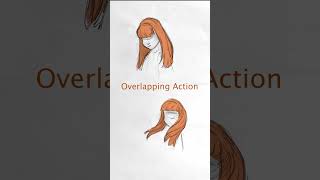
Animation - Overlapping Action
Facts about animation principles for kids
🌀 Flipbooks were patented as the "kineograph" in 1868 by John Barnes Linnett — an early way to make moving pictures on paper!
🎬 Overlapping action is one of the 12 basic principles of animation popularized by Disney animators Frank Thomas and Ollie Johnston.
⏱️ Traditional film runs at 24 frames per second, but simple flipbooks often use 12 (or fewer) frames per second to show motion clearly.
✏️ Onion-skinning is a drawing technique (now a common digital feature) that lets you see nearby frames to make smooth layered movement.
💡 Letting hair or sleeves lag by just a few frames makes a jump feel lively and believable — that tiny delay is overlapping action in action!
How do you create an overlapping-action flipbook to study motion?
What materials do I need for an overlapping-action flipbook?
What ages is this overlapping-action flipbook activity suitable for?
What are the benefits of making an overlapping-action flipbook?
