Fake an Injury With School Supplies With Uniii
Make a realistic looking fake injury using bandages, washable makeup and school supplies for supervised first aid role play to learn wound care and empathy.


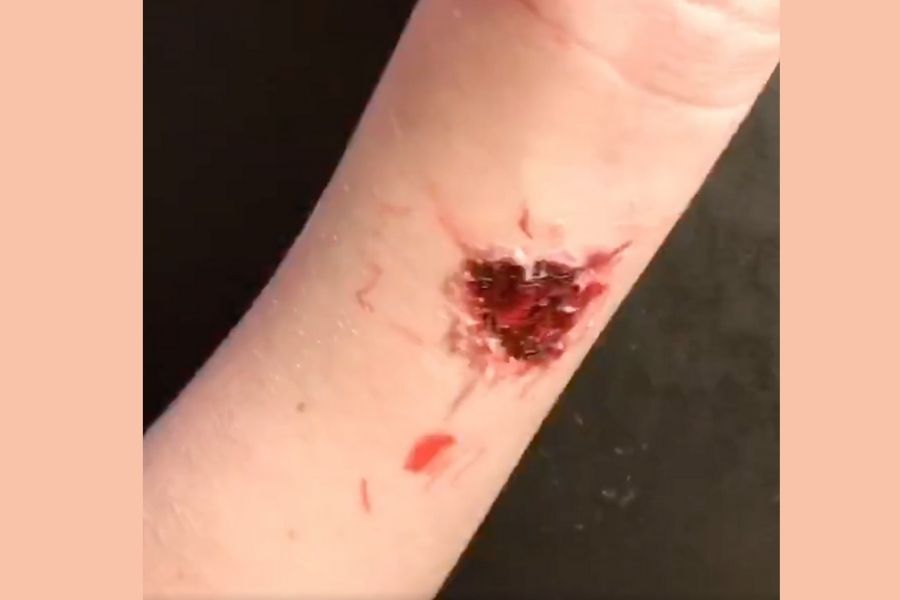

Step-by-step guide to Fake an Injury With School Supplies With Uniii
Step 1
Wash your hands with soap and water so everything stays clean.
Step 2
Lay a towel on a table or your lap to keep the area tidy.
Step 3
Do a patch test of the washable makeup on the inside of your wrist to check for any irritation.
Step 4
Pick a spot on an arm or leg where you want the fake injury to be.
Step 5
Decide if the injury will look like a cut scrape or a bruise.
Step 6
Cut or tear a small piece of tissue into the shape of the wound using the scissors with an adult's help.
Step 7
Place the tissue piece gently on the chosen spot.
Step 8
Secure the tissue edges with small strips of adhesive tape so it stays in place.
Step 9
Use brown or purple washable makeup to lightly shade around the tissue to create a bruised look.
Step 10
Dab red washable makeup into the center of the tissue with a cotton ball to make the cut or fresh blood.
Step 11
Blend the red outward lightly with a sponge or brush to make the wound look realistic.
Step 12
Put a small gauze pad over part of the wound and cover it with a bandage to show how it can be dressed.
Step 13
Say kind words to the pretend injured person to practice empathy and comfort.
Step 14
Ask an adult to check your fake injury and help you remove the makeup safely when you're done.
Step 15
Share your finished creation on DIY.org
Help!?
What can I use if I don't have washable makeup or tissue?
If you can't find washable makeup or tissue, use water-based face paint for bruises and a small folded square of toilet paper or paper towel secured with medical or fabric tape, and still do the patch test on your wrist and ask an adult to help with the scissors.
What should I do if the tissue won't stay in place or the makeup smudges?
If the tissue keeps lifting or the red makeup smudges, press the tissue edges firmly with extra adhesive tape, dab excess red with a clean cotton ball, and blend bruises lightly with a damp sponge or brush so the wound holds and looks realistic.
How can I change the activity for younger or older kids?
For younger kids have an adult cut the tissue and help with the scissors while they stick tape and dab simple makeup, and for older kids let them shape the wound, use multiple tissue layers and a sponge or brush for detailed bruising and blending before sharing on DIY.org.
How can we make the fake injury look more realistic or unique?
To personalize the project, add small drawn 'stitches' with a washable eyeliner along the tissue edge, layer brown and purple makeup for depth, tuck a gauze pad partially under the tissue before covering with a bandage, and photograph the result to share on DIY.org.
Watch videos on how to Fake an Injury With School Supplies With Uniii
Safe and Unsafe Situations | Safety Tips for Kids!
4 Videos
Safe and Unsafe Situations | Safety Tips for Kids!
Keeping Safe | Safety at Home | Safety at School | Safety at Playground | Safety Rules For Kids
Fun Manual Handling Safety Training Video! - Child's Play - Safetycare OHS DVD

Play Safely - A lesson on safety while playing for kids
Facts about first aid and wound care for kids
🩺 Practicing first aid role-play helps kids feel more confident and prepared to help in real emergencies.
🩹 The adhesive bandage (like a Band-Aid) was invented in 1920 to keep small cuts clean and protected.
🎭 Theatrical makeup artists use simple products like cream colors and liquid latex to create realistic cuts and bruises.
🧻 Common school supplies—cotton balls, tissue, and paper—can mimic swelling and padding under bandages for realistic props.
💖 Playing 'caregiver' in supervised role-play helps kids practice empathy, communication, and calmness under pressure.
How do I make a realistic fake injury with school supplies for supervised first aid role play?
What materials do I need to fake an injury using bandages, washable makeup, and school supplies?
What ages is this activity suitable for and how much supervision is required?
What are the benefits and safety tips for faking injuries in first aid role play, and are there easy variations?
