Share a cool way to shake hands
Design and practice a cool way to shake hands with a friend using claps, snaps, and a final pose; rehearse timing and smooth moves.
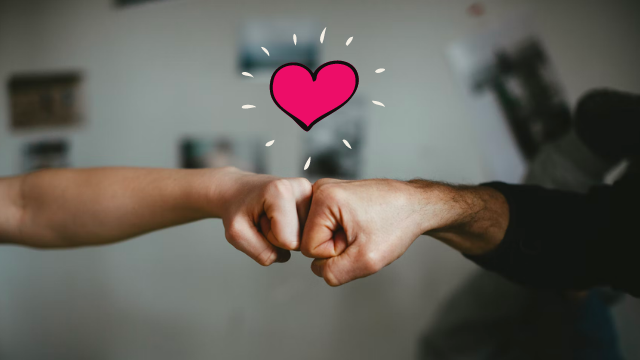
About this activity
Design and practice a cool way to shake hands with a friend using claps, snaps, and a final pose; rehearse timing and smooth moves.
What you need
Step by step
- 1
Step 1
Find a friend to practice with and stand facing each other in the open space.
- 2
Step 2
Decide together how many beats your handshake will have like three or four beats.
- 3
Step 3
Pick two hand sounds you want to use such as a clap and a finger snap.
- 4
Step 4
Choose a final pose you will both strike at the end like a thumbs-up or superhero pose.
- 5
Step 5
Assign which beat will be the clap which beat will be the snap and which beat is the pose.
- 6
Step 6
Practice the sequence slowly while counting the beats out loud by yourselves.
- 7
Step 7
Try the sequence together at a slow steady speed matching each other’s beats.
- 8
Step 8
Speed up a little and keep your moves smooth by staying in time with your partner.
- 9
Step 9
Polish the transitions by repeating only the tricky change between moves until it is smooth.
- 10
Step 10
Add a fun facial expression or small body motion to make your handshake look cool.
- 11
Step 11
Perform your full handshake ten times in a row with smooth timing and confident moves.
- 12
Step 12
Share your finished cool handshake on DIY.org
Fun facts
How do I design and practice a cool handshake with claps, snaps, and a final pose?
To design and practice a cool handshake, start by brainstorming three or four simple moves—claps, finger snaps, fist bumps—then pick a final pose. Break the sequence into counts (1-2-3-4) and rehearse slowly, focusing on timing and smooth transitions. Practice facing a partner, using a metronome or music to keep rhythm. Gradually increase speed, repeat until natural, and finish with a clear pose. Encourage feedback and keep it gentle.
What materials do I need to practice a handshake routine with claps and snaps?
You don’t need special materials—just a partner and open space. Optional helpful items: a timer or metronome app to set rhythm, a small Bluetooth speaker for music, a mirror or phone to record practice, comfortable shoes, and water. For group practice, use floor markers to keep spacing. These extras make learning easier but aren’t required; safety and clear consent are most important.
What ages is this handshake activity suitable for?
This handshake design activity works well for ages 4–12 with simple adaptations. Ages 4–6 should focus on easy claps and a posed finish, with adult supervision. Ages 7–9 can learn snaps and short sequences, practicing timing and coordination. Ages 10–12 can create longer, music-driven routines and lead rehearsals. Always check each child’s motor skills and comfort with contact, and require consent before starting any handshake.
What safety and etiquette tips should we follow when creating a handshake routine?
Keep safety and etiquette in mind: always ask permission before initiating a handshake routine, avoid heavy or forceful contact, and keep moves at shoulder height or lower. Stop if a child is uncomfortable or tired. Sanitize hands before and after if needed. For variations, offer non-contact versions—air claps, foot taps, or mirrored poses—or use music, costumes, or team formations to scale difficulty while keeping everyone included and comfortable.
Watch & Learn
Need help?
What can we use if we don't want to clap or can't snap?
If you can't or don't want to use a clap or finger snap from 'Pick two hand sounds,' substitute a thigh pat, soft foot stomp, or a whisper-pop as your second sound and still assign it to a beat.
We keep getting out of sync when speeding up—how do we fix it?
If you get out of sync when accelerating, go back to 'Practice the sequence slowly while counting the beats out loud,' slow the tempo, and follow 'Polish the transitions' by repeating only the tricky change until both partners match each beat.
How can we adapt this handshake for different ages?
For younger children, choose just two beats in 'Decide together how many beats,' use big gestures and a simple thumbs-up from 'Choose a final pose' while practicing slowly and counting aloud, and for older kids add extra beats, quicker timing from 'Speed up a little,' and sharper sounds like clap plus snap.
How can we make our handshake more special or share it?
To personalize it, create a signature facial expression and small body motion from 'Add a fun facial expression or small body motion,' polish the routine by 'Perform your full handshake ten times in a row,' and record the finished handshake to share on DIY.org.