Shade a Sphere With LongleggedLucy
Draw and shade a sphere with LongleggedLucy using pencil, eraser, and blending to explore how light, shadow, core shadow, and highlights create form.


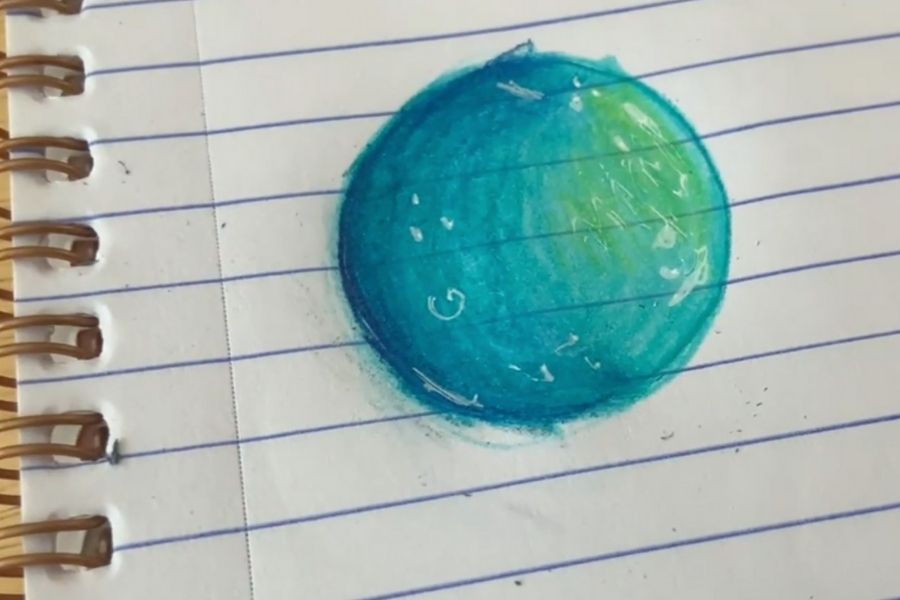
Drawing Apps
Step-by-step guide to Shade a Sphere With LongleggedLucy
Step 1
Draw a neat circle in the middle of your paper to be the sphere.
Step 2
Draw a small sun or an arrow outside the circle to show where the light is coming from.
Step 3
Lightly draw a faint line from the light source through the center of the circle to mark where the highlight will sit.
Step 4
Lightly shade the side of the sphere that faces away from the light using short curved pencil strokes that follow the round shape.
Step 5
Darken a narrow band on the side farthest from the light to create the core shadow on the sphere.
Step 6
Draw an oval-shaped cast shadow on the paper opposite the light source so it touches the base of the sphere.
Step 7
Darken the cast shadow nearest the sphere so it is darkest where the sphere meets the paper.
Step 8
Smooth the pencil shading on the sphere with your blending tool or tissue using curved strokes that follow the sphere’s shape.
Step 9
Use the eraser to lift a small bright spot on the side nearest the light to make the highlight.
Step 10
Add tiny darker marks or extra blending where needed to strengthen the contrast and make the sphere look round.
Step 11
Share your finished shaded sphere with LongleggedLucy on DIY.org.
Help!?
What can we use instead of a blending tool or kneaded eraser if we don't have them?
Use a clean tissue, cotton swab, or fingertip to smooth the curved pencil shading in the smoothing step, and use the corner of a regular eraser or a white colored pencil to lift the highlight in the eraser step.
My sphere still looks flat—what step did I probably miss and how do I fix it?
Darken the narrow core shadow on the side farthest from the light, make the cast shadow darkest where the sphere meets the paper, and re-blend the curved pencil strokes while preserving the erased highlight to add roundness.
How can I change the activity for younger children or older kids/teens?
For young children, draw a larger circle (step 1) and have them use broader short curved strokes (step 4) and a tissue for blending, while older kids can use harder and softer pencil grades, refine the core shadow and reflected light (steps 5 and 10), and add subtle blending and extra contrast (steps 9 and 11).
How can we make the shaded sphere more creative or advanced once it's finished?
Make it more creative by adding a texture or pattern on the sphere before shading, introducing a second light source and corresponding cast shadow, or using colored pencils to tint the highlights and shadows, then finish with extra dark marks for contrast and share with LongleggedLucy on DIY.org.
Watch videos on how to Shade a Sphere With LongleggedLucy
How To Shade A Cube (for kids)
4 Videos
How To Shade A Cube (for kids)
How To Shade A Sphere With Charcoal
How to Shade A Landscape Drawing | Step By Step
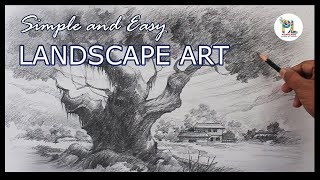
How to draw and shade a easy and simple Landscape for learners with pencil | Step by step
Facts about shading and light in drawing
🎨 "Chiaroscuro" is an Italian word that means "light-dark" and artists like Caravaggio used it to make figures look 3D.
✏️ Pencil grades range from hard (H) to soft (B) — artists often mix HB, 2B and 4B to get smooth shading.
🔆 On a shiny sphere the brightest highlight, the core shadow, and the cast shadow all move when the light source moves.
🪄 Blending with a stump or tissue makes smooth transitions, but gentle lifting with a kneaded eraser creates natural highlights.
🌕 Spheres are the simplest way to practice shading because every part of the form curves steadily from light to dark.
How do you draw and shade a sphere with LongleggedLucy?
What materials do I need to draw and shade a sphere with LongleggedLucy?
What ages is this sphere shading activity suitable for?
What are the benefits of drawing and shading a sphere with LongleggedLucy?
