Plan on a Big Purchase!
Create a savings plan for a big purchase: research prices, set a budget, track progress, and make a visual savings chart.


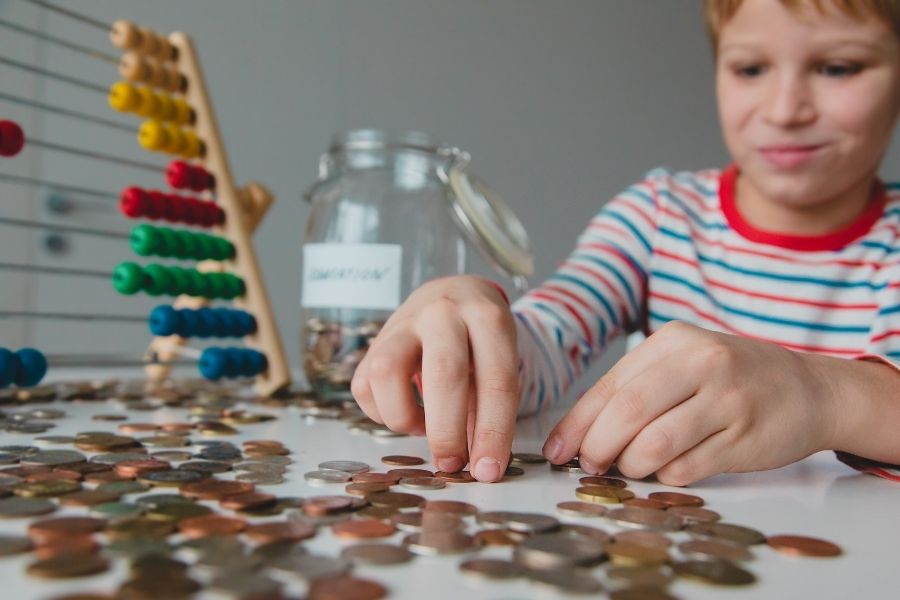

Step-by-step guide to planning a big purchase
Step 1
Choose the big thing you want to buy and write its name at the top of a clean sheet of paper.
Step 2
Ask an adult to help you look up the usual price of that item online or in a store.
Step 3
Write the price you found under the item name on your paper.
Step 4
Pick a date when you want to buy the item and write that target date below the price.
Step 5
Count how many weeks or months there are until your target date and write that number on the paper.
Step 6
Divide the total price by the number of weeks or months and write how much you need to save each week or month.
Step 7
Draw a visual savings chart with one box for each week or month and label each box with the amount to save.
Step 8
Use your coloring materials to decorate and clearly label your chart so it is easy to read.
Step 9
Put your first saved coins or bills into your jar or envelope.
Step 10
Record that deposit on your chart and color in the matching box to show progress.
Step 11
Choose one day each week to add money to your savings and write that day on your chart.
Step 12
At the end of each month count how much you have saved and write the new total on your paper.
Step 13
When you reach your goal write the date you reached it and draw a star or add a sticker to celebrate.
Step 14
Ask an adult to help you share your finished savings plan and chart on DIY.org.
Help!?
What can we use instead of a jar or envelope if we don't have one?
Use a clean food container, empty shoe box, or recycled tin labeled with the item name and treat it the same way the instructions say to 'Put your first saved coins or bills into your jar or envelope' and record deposits.
What should we do if dividing the price by weeks or months gives a hard-to-save number?
Round up the weekly or monthly amount from the 'Divide the total price by the number of weeks or months' step so you always save at least the target and mark any smaller final adjustments on your visual savings chart.
How can I adapt this activity for younger or older kids?
For younger kids, use months instead of weeks, bigger savings amounts, and sticker-filled boxes for the 'Record that deposit' step, while older kids can add chore earnings, calculate exact percentages, and set intermediate milestones when they 'Count how many weeks or months.'
How can we make the savings plan more fun or personalized?
Decorate the chart with theme drawings, colorful labels and stickers, add small milestone rewards as you color each box, and ask an adult to help you photograph and share the finished plan on DIY.org as the instructions suggest.
Watch videos on how to create a savings plan for a big purchase
What is a BUDGET? 🤔 Learn How to Manage Your Money 💰 Finance for All
4 Videos

What is a BUDGET? 🤔 Learn How to Manage Your Money 💰 Finance for All

Financial Literacy for Kids | Learn the basics of finance and budgeting

How To Invest for Children's Future | Best and Efficient Financial Plan for Child's Future | ETMONEY

Financial Literacy—Calculating Sales Tax | Learn how to figure out sales tax on purchases
Facts about saving and budgeting for kids
🐷 Even tiny regular deposits add up — saving a little each week can grow into a big sum over months.
📈 A visual savings chart lets you watch progress and makes hitting goals more exciting and real.
🔍 Comparing prices before you buy can save you a lot — the same item often has very different prices in different places.
⏳ Compound interest helps your money grow faster over time — the longer you save, the more it can increase.
🎯 Setting a clear target (amount + date) makes it easier to make a plan, track progress, and celebrate success.
How do you plan a big purchase with your child?
What materials are needed to create a savings plan and chart?
What ages is this savings activity suitable for?
What are the benefits of planning a big purchase with children?
