Market Economy Examples
Set up a mini market to role-play buyers and sellers, price products, trade goods, and observe how choices shape supply and demand.


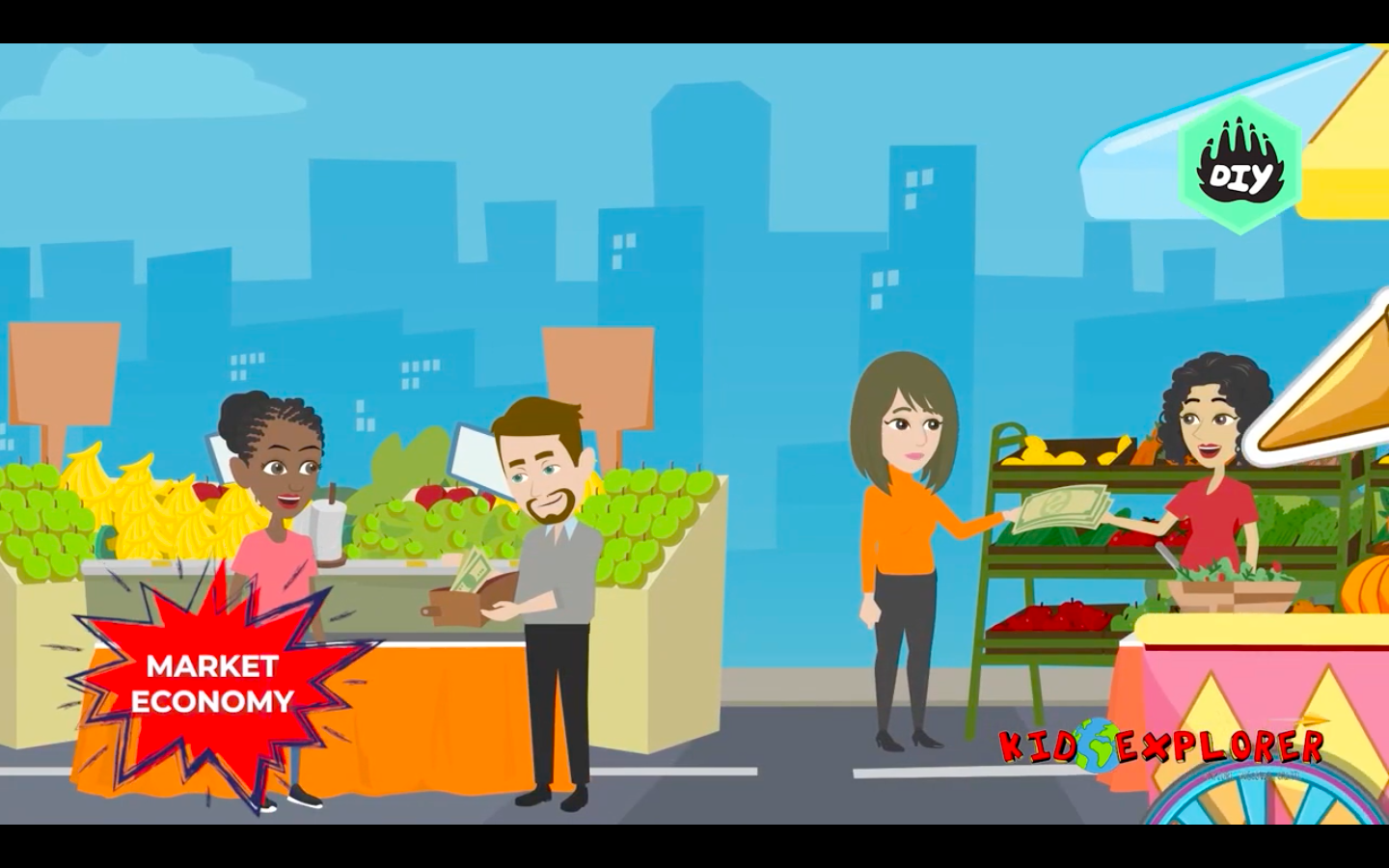

Step-by-step guide to set up a mini market
Step 1
Gather all the Materials Needed and bring them to your play area.
Step 2
Decide who will be sellers and who will be buyers by assigning roles to each player.
Step 3
Choose stall spots and set up a box or basket for each seller on the table or floor.
Step 4
Make a name sign for each stall and attach it so everyone can see which seller it is.
Step 5
Sellers pick a few items to sell and place them neatly inside their stall.
Step 6
Write a price on a sticky note or index card for each item using your markers.
Step 7
Attach the price tags to the matching items in the stall.
Step 8
Make play money by folding paper bills and drawing numbers or gather your play money set.
Step 9
Give each buyer a set budget of play money to use while shopping.
Step 10
Sellers write the starting inventory numbers for each item in the notebook.
Step 11
Let buyers use their play money to buy items from the stalls.
Step 12
Sellers record each sale and update the remaining inventory in the notebook after every purchase.
Step 13
Sellers change at least one price based on what sold quickly or slowly.
Step 14
Write down which items were most popular and which items were not wanted in the notebook.
Step 15
Share your mini market and what you learned about supply and demand on DIY.org.
Help!?
What can we use instead of sticky notes, index cards, boxes, or play money if we don't have them?
If you don't have sticky notes or index cards, cut price tags from scrap paper and tape them to items, use shoeboxes or cereal-box pieces instead of baskets for stalls, and make play money by folding plain paper bills and drawing numbers as described in the 'Make play money' step.
What should we do if sellers forget to update inventory or get confused during busy sales?
If sellers forget to update the notebook after each sale, have buyers hand a sale token or a used play bill to the seller at checkout so sellers can quickly count tokens and then update the remaining inventory in the notebook after every purchase.
How can we adapt the market game for much younger or older children?
For younger kids (ages 3–5) limit each seller to three large items with pre-written prices on sticky notes and small budgets to practice counting, while for older kids (8–12+) require sellers to write starting inventory numbers, change at least one price during the game, and calculate simple profits in the notebook to deepen the supply-and-demand lesson.
How can we extend or personalize the activity to make it more fun or educational?
To extend the activity, let sellers design colorful name signs for their stalls, introduce coupons or bundle deals that force sellers to change prices mid-game, photograph or video your stalls and then share your mini market and what you learned about supply and demand on DIY.org while noting which items were most popular in the notebook.
Watch videos on how to set up a mini market
Economics for Kids: Producers and Consumers
3 Videos
Economics for Kids: Producers and Consumers

Markets and Allocation of Resources for Kids - GCSE Economics Topic 1.2.1

The 4 Types of Economies | Economics Concepts Explained | Think Econ
Facts about economics for kids
💰 A market (economics) can be a busy bazaar or an online app — it's any place where buyers and sellers meet.
📈 When supply drops but demand stays the same, prices usually go up — that’s why rare toys can become pricey.
🔁 Before money, people bartered goods directly — ancient traders swapped grain, tools, or livestock for other needs.
💸 Many stores use psychological pricing (like $0.99) because shoppers often perceive it as much cheaper than the next dollar.
🧑🤝🧑 Running a mini market helps kids learn real skills: negotiation, counting change, teamwork, and decision-making.
How do you set up a mini market for kids to role-play buyers and sellers?
What materials do I need to create a kid-friendly market economy activity?
What ages is a mini market economy role-play suitable for?
What are the benefits of having children role-play a market economy, and are there safe variations?
