Create Your Quilling Masterpiece
Make a colorful quilled paper masterpiece—roll and shape strips to form flowers, animals, or patterns, then glue them onto a cardstock base.
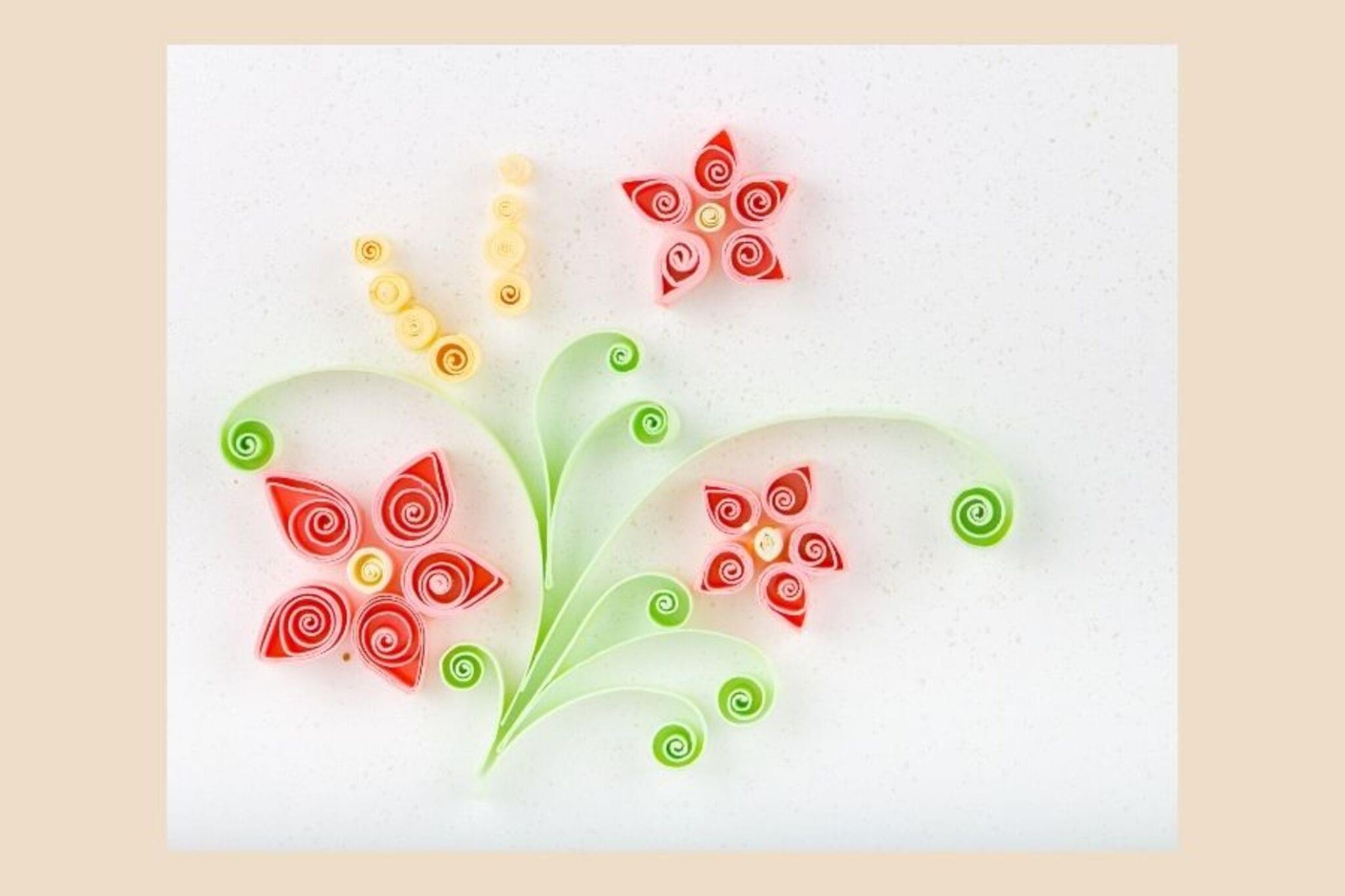
About this activity
Make a colorful quilled paper masterpiece—roll and shape strips to form flowers, animals, or patterns, then glue them onto a cardstock base.
What you need
Step by step
- 1
Step 1
Pick a subject for your masterpiece and lightly draw a simple outline on the cardstock with your pencil.
- 2
Step 2
Cut the colored paper into strips about 1 cm wide and 20 cm long using the scissors.
- 3
Step 3
Insert the end of one paper strip into the quilling tool or wrap the end around a toothpick and roll tightly to make a tight coil.
- 4
Step 4
Slide the tight coil off the tool and let it loosen a little so it becomes a loose coil.
- 5
Step 5
Put a tiny dab of glue on the loose coil’s end and press it down to secure the coil.
- 6
Step 6
Pinch the secured coil at one point to make a teardrop shape or pinch two opposite points to make a leaf shape.
- 7
Step 7
Repeat the rolling gluing and shaping steps to make many coils and shapes in different colors for your design.
- 8
Step 8
Arrange all your quilled shapes on the drawn outline without gluing to check the placement.
- 9
Step 9
Put a small dot of glue on the back of one quilled shape at a time.
- 10
Step 10
Press each glued quilled shape onto the cardstock in its planned spot and hold briefly to set.
- 11
Step 11
Let the glue dry completely so all pieces are secure.
- 12
Step 12
Share your finished quilling masterpiece on DIY.org
Fun facts
How do you make a quilled paper masterpiece step by step?
Start by sketching a simple design (flower, animal, pattern) on cardstock. Roll paper strips around a slotted quilling tool or toothpick to make tight and loose coils. Glue the end of each strip and let coils loosen if needed. Shape coils into teardrops, marquises, and scrolls by pinching or stretching. Arrange pieces on the sketch, attaching each with a tiny dot of white glue. Build layers for depth, allow to dry flat, then trim edges and display.
What materials do I need to make quilling with kids?
Gather quilling paper strips (1/8"–1/4"), a slotted quilling tool or toothpicks, white craft glue, and a sturdy cardstock base. Add tweezers for placing pieces, child-safe scissors, a ruler or template board, and a pencil for sketching. Optional extras: a quilling board, glue applicator (toothpick or fine-tip bottle), a non-stick mat, and small containers to sort strips by color. Choose non-toxic supplies for kids.
What ages is quilling suitable for children?
Quilling is ideal for children aged about 6 and up who have basic fine motor control. Younger kids (4–5) can join using pre-rolled coils or wider strips with adult help. Teens and older kids can handle detailed designs. Always adjust complexity: use larger shapes and fewer pieces for beginners, and introduce slotted tools, tweezers, and more intricate patterns as skills improve.
Is quilling safe for kids and what precautions should I take?
Quilling is low-risk but requires supervision: small coils can be a choking hazard for toddlers, so keep materials away from under-3s. Use non-toxic glue, child-safe scissors, and blunt-ended tools when possible. Work on a clean, well-lit surface and store strips in closed containers. Teach children not to put strips or tools in their mouths, and supervise glue use to avoid inhaling fumes or getting adhesive in eyes.
Watch & Learn
Need help?
What can we use instead of a quilling tool or cardstock if we can't find them?
If you don't have a quilling tool you can wrap the paper around a toothpick as described in step 3, and if you lack cardstock use heavy construction paper or glued-together printer paper for the base while saving true cardstock for the most stable result.
My coils keep unrolling or fall apart when I try to glue them — what should I do?
If coils keep unrolling after step 4, roll tighter in step 3, put a slightly larger dab of glue on the loose coil's end in step 5, and press and hold each glued shape longer when attaching in step 10 so the glue sets fully.
How can this activity be changed for younger kids or for older kids who want more challenge?
For younger children have an adult pre-cut the 1 cm strips in step 2 and let them make simple loose coils and place them in step 8, while older kids can cut thinner strips, create more pinch shapes in step 6, and draw a detailed subject outline in step 1.
What are some creative ways to extend or personalize our quilling masterpiece when it's finished?
To enhance the design add layered coils for depth, glue on tiny beads or sequins to specific quilled shapes during steps 9–10, experiment with different strip widths from step 2 for texture, and frame the finished cardstock before sharing on DIY.org in step 11.