Make an Origami Squirrel!
Fold paper to create an origami squirrel, practicing precise folds, shaping a bushy tail and ears, then decorate it with markers or stickers.


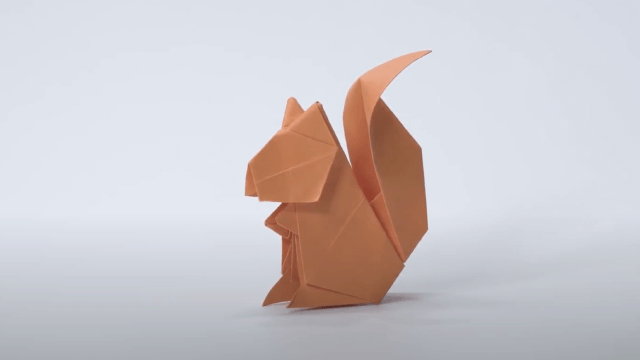

Step-by-step guide to make an origami squirrel
Step 1
Place the square paper color side down on a flat table so the plain side faces up.
Step 2
Fold the paper diagonally from one corner to the opposite corner to make a large triangle and crease the fold firmly.
Step 3
Fold that triangle in half by bringing the two side points together to make a smaller triangle and crease it well.
Step 4
Put the long edge of the small triangle closest to you with the point facing away and keep the top layer only for the next fold.
Step 5
Fold the right corner of the top layer up and to the left about one-third of the way to form a small head flap and crease it.
Step 6
Fold the tip of that head flap down a little to make one ear and crease the fold.
Step 7
On the left long side make three or four small accordion pleats along the edge to build a bushy tail and press each crease tight.
Step 8
Fan out the pleats so the tail spreads and looks fluffy.
Step 9
Fold the bottom point up slightly to create a little base so the squirrel can stand.
Step 10
Tuck the tail tip gently behind the body into the space made by the bottom fold to secure it.
Step 11
Decorate your squirrel with colouring materials and stickers to add eyes a nose and fur patterns.
Step 12
Share a photo of your finished origami squirrel on DIY.org
Help!?
What can I use if I don't have square origami paper?
If you don't have square origami paper, trim a regular sheet of printer or construction paper into a square and place it color side down as the instructions require.
My accordion pleats for the tail keep unfolding or won't tuck—how can I fix that?
If the accordion pleats on the left side won't hold or won't tuck behind the body, press each pleat firmly with a fingernail or the edge of a ruler, make three slightly wider pleats instead of four if needed, and then tuck the tail tip into the space made by the bottom fold.
How should I change the steps for younger or older kids?
For toddlers (3–5), simplify by doing only the diagonal and head folds and making one or two large tail folds before letting them decorate, while older kids (8+) can add more small pleats, sharper creases, and detailed coloring to create realistic fur patterns.
How can we personalize or extend the origami squirrel activity?
To personalize the squirrel, add button eyes or a small pom-pom nose after the decorate step, draw fur patterns with markers, or make a family of squirrels from different-sized squares and mount them on a cardstock tree display.
Watch videos on how to make an origami squirrel
How to make origami squirrel, step by step tutorial
4 Videos
How to make origami squirrel, step by step tutorial
Easy Origami Squirrel Tutorial 🐿️ Step-by-Step Instructions
Origami Squirrel Tutorial for Kids & Beginners | Fun Paper Animal Craft | Autumn Thanksgiving craft
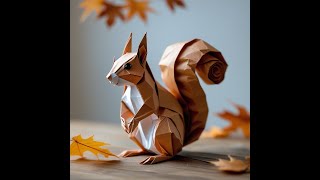
How to Make an Origami Squirrel - Easy Paper Folding Tutorial
Facts about origami and paper folding
🐿️ Squirrels use their bushy tails to balance, steer in midair, and keep warm — great inspiration for shaping an origami tail!
🧻 Washi is traditional Japanese paper made with long fibers, making it extra strong and lovely for detailed folds.
✨ Akira Yoshizawa is often called the father of modern origami — he invented popular diagramming methods and helped turn origami into an art form.
🕊️ In Japan, folding 1,000 origami cranes (senbazuru) is a well-known tradition believed to grant a wish or bring healing.
🎨 Origami paper (kami) is usually square and often colored on one side to help plan folds and make designs pop.
How do you fold an origami squirrel step by step?
What materials do I need to make an origami squirrel?
What ages is an origami squirrel craft suitable for?
What are the benefits, safety tips, or fun variations for making origami squirrels?
