Recreate Flower Flag on Paper
Make a colorful paper flag decorated with drawn and glued paper flowers, practicing cutting, arranging symmetry, and using safe glue and coloring tools.
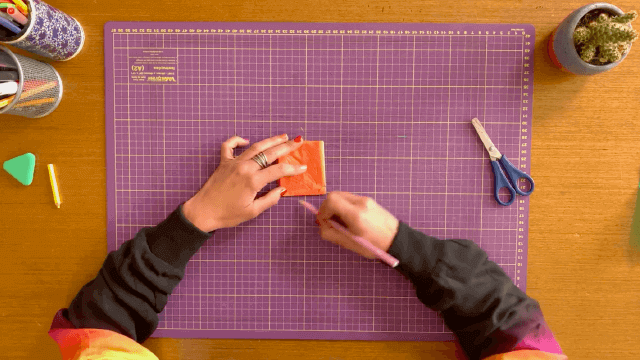
About this activity
Make a colorful paper flag decorated with drawn and glued paper flowers, practicing cutting, arranging symmetry, and using safe glue and coloring tools.
What you need
Step by step
- 1
Step 1
Choose a piece of construction paper and place it flat on the table as your flag base.
- 2
Step 2
Use your pencil and ruler to lightly draw a rectangle the size you want your flag to be.
- 3
Step 3
Cut out the rectangle carefully with scissors to make the flag shape.
- 4
Step 4
Lightly draw a straight vertical center line down the middle of the flag to guide symmetry.
- 5
Step 5
Pick three to five colored papers for your flowers and set them nearby.
- 6
Step 6
Draw simple flower shapes on the colored paper using your pencil.
- 7
Step 7
Cut out each flower shape carefully with scissors.
- 8
Step 8
Arrange the paper flowers on the flag symmetrically using the center line as your guide without gluing yet.
- 9
Step 9
Glue the flowers to the flag one at a time starting from the center and moving outward.
- 10
Step 10
Use coloring materials to add stems leaves and fun patterns around and between the flowers.
- 11
Step 11
Share your finished flower flag on DIY.org
Fun facts
How do you make a flower flag on paper?
Start with a rectangular sheet or cardstock as your flag base. Lightly draw a center line to plan symmetry, then choose flower shapes and colors. Trace and cut paper flowers (folding paper and cutting half-flowers helps keep petals symmetrical). Arrange flowers on the flag before gluing to balance the design. Use a child-safe glue stick for small pieces, press gently, then add drawn details with markers or crayons. Allow to dry fully and attach a craft stick if you want a handheld flag.
What materials do I need to recreate a flower paper flag?
You’ll need a rectangular paper or lightweight cardstock for the flag base, colored paper for flowers, a pencil and ruler for layout, safety scissors or blunt-tip scissors, and a child-safe glue stick or washable white glue. Add crayons, markers, or colored pencils for details, and optional extras like stickers, sequins, or a craft stick. Lay down a washable work surface and paper towels for easy cleanup.
What ages is the flower flag paper craft suitable for?
This craft suits a wide range: 3–5-year-olds can tear or stick pre-cut flowers and color the flag with adult help. Ages 5–8 can cut simple flower shapes, practice arranging symmetry, and glue pieces independently with supervision. Older children (9+) can design complex patterns, fold for precise symmetry, and add detailed drawing. Always supervise cutting and small pieces with younger kids and provide age-appropriate tools.
What are the benefits and safety tips for making a flower flag craft?
Making a flower flag builds fine motor skills, pattern recognition, symmetry awareness, color mixing, and creative planning. It encourages patience and following multi-step projects. For safety, use non-toxic, washable glue and blunt-tip scissors, supervise cutting and small parts for children under five, and work on a protected surface. Remind kids not to put materials in their mouths and store tiny decorations out of reach when not in use.
Watch & Learn
Need help?
What can I use instead of construction paper or colored paper if I don't have them?
Use lightweight cardstock, pages from an old greeting card, or cut colored sections from magazines for the flag base and flower shapes so you can still follow the 'Choose a piece of construction paper' and 'Pick three to five colored papers' steps.
Why do my flowers shift or not stick when I glue them onto the flag?
Use a glue stick or a thin layer of white school glue, press each flower down and let it dry flat after 'Glue the flowers to the flag one at a time starting from the center and moving outward,' or use small pieces of double-sided tape for faster adhesion.
How can I adapt this activity for different ages?
For younger children skip the 'pencil and ruler' rectangle step and pre-cut simple flower shapes for them to arrange and glue, while older kids can precisely draw the rectangle, use the center line for exact symmetry, add detailed petal patterns, or layer petals for complexity.
How can we extend or personalize the finished flower flag?
After you 'glue the flowers' and 'use coloring materials to add stems leaves and fun patterns,' personalize it by adding button or pom-pom centers, layering tissue paper for 3D petals, attaching the flag to a craft stick for display, and then share the result on DIY.org.