Memorise chord dictionary
Memorise common guitar chord shapes by making flashcards, drawing chord diagrams, practicing each chord on an instrument, and quizzing yourself regularly.


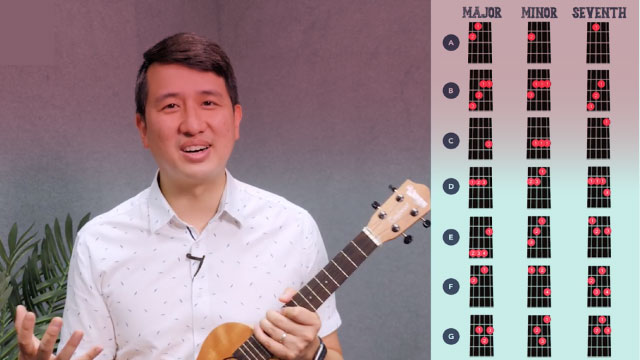

Step-by-step guide to Memorise chord dictionary
Step 1
Gather your materials and lay them out on a clear table or the floor so everything is easy to reach.
Step 2
Choose these 8 common open chords to learn: G C D Em Am E A Dm.
Step 3
Cut the paper into index-card sized flashcards using scissors and a ruler if you like straight edges.
Step 4
On every card draw six vertical strings and one top nut line so each card looks like a small guitar fretboard.
Step 5
Write the chord name clearly at the top of each card in big letters.
Step 6
Mark the finger dots for each chord on its card so the dots show which string and fret to press.
Step 7
Color-code the finger numbers on each card using a different color for each finger to make them easy to remember.
Step 8
Make two piles on your table labeled "learn" and "learned" so you can sort cards as you practice.
Step 9
Shuffle the flashcards and place them face down in the "learn" pile.
Step 10
Turn over the top card from the "learn" pile and look at the chord diagram.
Step 11
Put your fingers on the guitar to make the chord shape shown on the card.
Step 12
Strum the chord slowly once and listen to how the notes ring.
Step 13
If the chord rings cleanly move the card to the "learned" pile otherwise return it to the bottom of the "learn" pile.
Step 14
Pick two cards from the "learned" pile and practice switching between those two chords ten times in a row to build smooth changes.
Step 15
Share your flashcards and tell how many chords you learned on DIY.org.
Help!?
What can we use instead of colored pens, special paper, or a guitar if those items are hard to find?
If you don't have colored pens for the 'Color-code the finger numbers' step, use small colored stickers or write finger numbers with a pencil and a color key, cut cards from plain cardboard instead of paper for step 'Cut the paper into index-card sized flashcards', and if you don't have a guitar practice the finger shapes on a cardboard fretboard you draw following the 'draw six vertical strings and one top nut line' instruction.
My chords don't ring cleanly when I 'Strum the chord slowly once'—what should I check or fix?
If the chord doesn't ring cleanly on the 'Strum the chord slowly once' step, check that your fingers are placed exactly where the finger dots are drawn on the card, press closer to the fret with a more arched finger to avoid muting adjacent strings, and move the card back to the bottom of the 'learn' pile until it rings clearly.
How can I adapt this activity for younger children or older beginners?
For younger kids, make larger flashcards during the 'Cut the paper into index-card sized flashcards' step with big finger-dot stickers and practice switching between only two chords from the 'learned' pile, while older beginners can work through all eight chords and increase the 'practice switching between those two chords ten times' repetitions or add tempo goals.
What are simple ways to extend or personalize the chord flashcard activity once we've learned some chords?
To extend the activity, laminate the cards from step 3 for durability, add a stopwatch to time how fast you can move cards from the 'learn' pile to the 'learned' pile, create your own songs by sequencing cards, and share recordings or progress on DIY.org as suggested in the final step.
Watch videos on how to Memorise chord dictionary
How to interpret and understand chord symbols with lyrics on the Piano
4 Videos
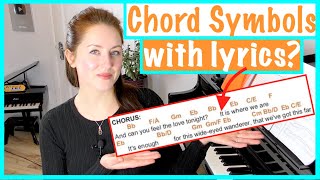
How to interpret and understand chord symbols with lyrics on the Piano

How to memorize every major and minor chord (FOREVER)

Learn EVERY Chord and Chord Symbol - The 7 Systems
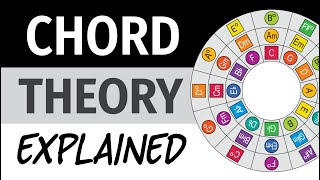
How Chords Work in Music
Facts about learning guitar chords
🎸 Many pop songs use the C–G–Am–F progression — the famous four-chord sequence you’ll see again and again.
🎶 There are 12 pitch classes in Western music, so chord names repeat every 12 semitones across the fretboard.
🧠 Short daily practice sessions build muscle memory faster than occasional long rehearsals — consistency wins!
🔁 Tons of classic hits are 'three-chord songs' (I–IV–V), which makes them perfect for beginner chord practice.
📇 Flashcards + spaced repetition dramatically improve recall — quizzing yourself beats passive review.
How do I memorise a chord dictionary using flashcards and practice?
What materials do I need to make chord flashcards and practise chords?
What ages is memorising chord shapes suitable for?
What are the benefits of memorising common guitar chord shapes?
