Play minor chords!
Learn to play three basic minor chords on a keyboard or ukulele, practice finger shapes and strumming, and hear how minor chords sound.




Step-by-step guide to play minor chords
Step 1
Sit down with your instrument in a comfy playing position so your hands can move easily.
Step 2
If you have a keyboard press a nearby white key to hear a note and find a group of three black keys so you can spot the A note by looking for the white key between the second and third black key; if you have a ukulele hold it upright and let the strings hang from your shoulder so you can reach the frets.
Step 3
Learn the A minor sound: if you have a keyboard press the three keys A C and E at the same time; if you have a ukulele press the 2nd fret on the top G string with one finger and leave the other strings open then strum all four strings once.
Step 4
Play the A minor chord slowly four times in a row at a steady beat so you can hear how it sounds.
Step 5
Learn the E minor sound: if you have a keyboard press the three keys E G and B at the same time; if you have a ukulele place fingers on frets 0 4 3 2 from the top G string to the A string (G open C fret 4 E fret 3 A fret 2) and strum all four strings once.
Step 6
Play the E minor chord slowly four times in a row at a steady beat to listen to the difference from A minor.
Step 7
Learn the D minor sound: if you have a keyboard press the three keys D F and A at the same time; if you have a ukulele press frets 2 2 1 0 from the top G string to the A string (G fret 2 C fret 2 E fret 1 A open) and strum all four strings once.
Step 8
Play the D minor chord slowly four times in a row so you can hear how it feels different from the other two minor chords.
Step 9
Practice switching between two chords slowly (for example A minor then E minor) and change every four beats so your fingers learn the shapes.
Step 10
Practice a simple down-strum on the ukulele or steady single-press on the keyboard on each beat while you switch chords for one minute to get a smooth sound.
Step 11
Try a short three-chord song by playing A minor for four beats then E minor for four beats then D minor for four beats and repeat this pattern twice.
Step 12
Share a short video or photo of you playing your three minor chords and tell what they sound like on DIY.org.
Help!?
What can we use if we don’t have a keyboard or a ukulele?
Use a free piano app or online keyboard to press the A, C and E keys (or E, G, B and D, F, A for the other chords) or use a guitar to finger the same notes on equivalent frets so you can follow the keyboard and ukulele steps.
My ukulele chords buzz or my fingers keep missing frets—how do I fix that?
Make sure your fingers press just behind the specified frets (for example frets 2 2 1 0 for D minor), curl your fingertips to avoid touching other strings, and practice the slow four-beat changes from the instructions until the notes ring clear.
How can I adapt this activity for younger or older kids?
For younger children, mark the keyboard key between the second and third black keys and have them strum A minor once slowly, while older kids can speed up the one-minute steady down-strum practice and add the full A–E–D three-chord song pattern.
How can we make the three-chord song more interesting or personal?
Try changing the strumming pattern (add an up-strum or fingerpicking), play the A minor → E minor → D minor sequence with louder and softer dynamics, or record and share a short video on DIY.org describing how each chord sounds to personalize the activity.
Watch videos on how to play minor chords
A minor Guitar Chord || How To Play A minor Chord On Guitar #shorts #guitartutorial #music
4 Videos

A minor Guitar Chord || How To Play A minor Chord On Guitar #shorts #guitartutorial #music

How to Play Basic Minor Chords on a Guitar For Dummies
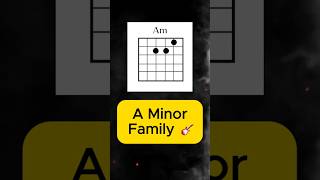
A Minor Chord Family Explained | Easy Guitar Lesson
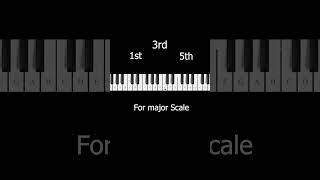
Discover The SECRET to Building Major & Minor Chords Easily
Facts about chords and basic music theory
🎹 Minor chords are built from three notes — root, minor third, and perfect fifth — and that lowered middle note gives them a 'sad' or moody sound.
🪕 The ukulele usually has four strings, so beginner-friendly minor chords like Am, Em, and Dm use simple finger shapes.
🎼 On a keyboard a minor triad is root + 3 semitones + 7 semitones, so the same pattern repeats across every octave.
🎧 Composers and songwriters often use minor keys to create feelings of mystery, sadness, or introspection in music.
🤏 With just three minor chords you can accompany many songs — great practice for finger switching, strumming, and hearing chord color.
How do I teach my child to play three basic minor chords on keyboard or ukulele?
What materials do I need to play minor chords on a keyboard or ukulele?
What ages is learning basic minor chords suitable for?
What are the benefits, safety tips, and variations for playing minor chords with kids?
