Name the parts of a ukulele!
Identify and label the main parts of a ukulele using a diagram or small model. Learn string names, frets, bridge, neck, and tuning pegs.


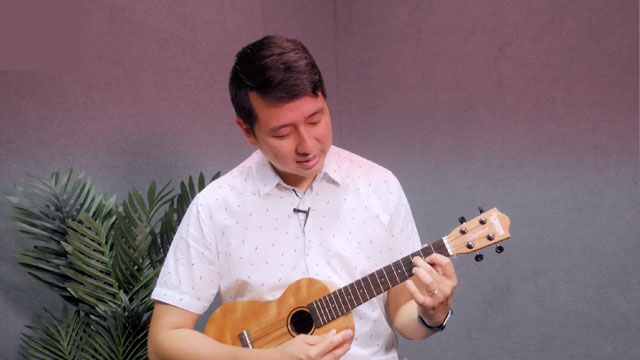

Step-by-step guide to name the parts of a ukulele
Step 1
Gather your Materials Needed and sit at a clean flat table.
Step 2
Put your ukulele or your printed ukulele diagram flat on the table in front of you.
Step 3
Find the large hollow part of the instrument and identify it as the body.
Step 4
Put a label or write the word "Body" on your diagram or on a sticky note and attach it to the body.
Step 5
Find the long thin part that sticks out from the body and identify it as the neck.
Step 6
Put a label or write the word "Neck" on your diagram or on a sticky note and attach it to the neck.
Step 7
Find the metal or marked lines across the neck called frets and label them with numbers starting at the headstock for fret 1.
Step 8
Hold the ukulele in playing position with the body against your chest and the neck pointing to your left.
Step 9
Look at the strings from top to bottom and say their names out loud: G C E A.
Step 10
Write the letters G C E A next to each string on your diagram or put sticky notes with those letters on the strings.
Step 11
Find the small piece on the body where the strings are attached and identify it as the bridge.
Step 12
Put a label or write the word "Bridge" on your diagram or on a sticky note and attach it to the bridge.
Step 13
Find the pegs at the top of the neck that you turn to tune the strings and identify them as the tuning pegs.
Step 14
Put a label or write the words "Tuning Pegs" on your diagram or on a sticky note and attach it to the headstock.
Step 15
Share your finished labeled ukulele diagram or photo of your small model on DIY.org.
Help!?
What can we use if we don't have a real ukulele or sticky notes?
If you don't have a ukulele, print a ukulele diagram or draw one on paper and use paper labels, tape, or colored markers instead of sticky notes to complete the labeling steps.
I'm confused about labeling frets starting at the headstock — how do I avoid mistakes?
Mark the headstock with a small star or sticker, then count the metal or marked fret lines away from that headstock and place numbered stickers starting with 1 on the first fret as the instructions direct.
How can I change this activity for younger or older kids?
For younger children label only the Body, Neck, and Strings with big colorful sticky notes and say 'G C E A' together, while older kids can precisely number more frets, measure fret spacing, and describe how the tuning pegs work.
How can we extend or personalize the finished labeled ukulele project?
Personalize the body with drawings or stickers, color-code the strings to match the letters G C E A, and then photograph and share your finished labeled ukulele diagram or small model on DIY.org as the final step.
Watch videos on how to name the parts of a ukulele
Parts of the Ukulele (Taught by a Music Teacher!)
4 Videos

Parts of the Ukulele (Taught by a Music Teacher!)

Ukulele Lesson For Children - Part 1 - Absolute Beginner Series
How to Play: Ukulele - Lesson 1 | The Strings Club

Ukulele Anatomy Lesson & Quiz | Ukulele Classroom
Facts about string instruments for kids
🎵 Most ukuleles have four strings tuned G–C–E–A (high G for reentrant tuning or low G for linear tuning).
🪄 Soprano ukuleles often have about 12–15 frets; concert and tenor sizes give you more frets to play higher notes.
🔩 Tuning pegs (or tuning machines) tighten or loosen strings so each one vibrates at the right pitch.
🌉 The bridge anchors the strings to the body and passes their vibrations into the soundboard to make the ukulele sing.
🏝️ The ukulele was adapted in Hawaii in the late 19th century from small Portuguese instruments like the machete.
How do I teach my child to identify and label the parts of a ukulele?
What materials do I need to help a child label a ukulele diagram or model?
What ages is the 'name the parts of a ukulele' activity suitable for?
What are the benefits and safety tips of teaching kids ukulele parts?
