Tell us an instrument origin story!
Make a simple homemade instrument from household materials, then write and perform its imaginative origin story for family or classmates.


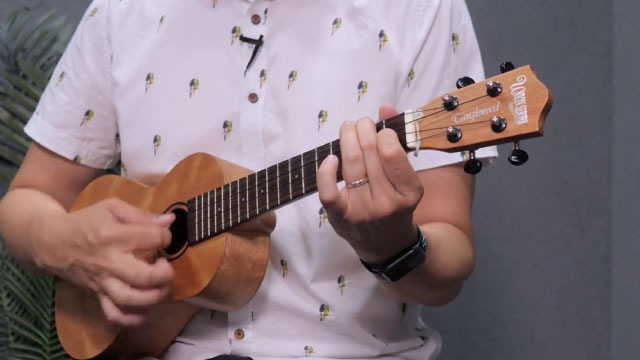

Step-by-step guide to make a simple homemade instrument and write its origin story
Step 1
Gather all the materials from the list and put them on a clear workspace.
Step 2
Choose whether you will use a cardboard box or a cardboard tube as the body of your instrument.
Step 3
With an adult's help cut a sound hole in the top of the box or leave the tube open at one end.
Step 4
Stretch rubber bands around the box so they run over the sound hole to make strings.
Step 5
Adjust and add more rubber bands until you have different tightness and sounds.
Step 6
Use colouring materials to decorate your instrument so it looks magical or ancient.
Step 7
Pluck each rubber band to test the sounds and tighten or move bands to change the notes.
Step 8
Think of a fun origin idea for your instrument like who made it where it was born and what special power it has.
Step 9
Write a short origin story on paper with a clear beginning a middle and an ending.
Step 10
Practice playing your instrument while telling your origin story out loud so you can perform it smoothly.
Step 11
Perform your instrument and tell your origin story for your family or classmates.
Step 12
Take a photo or ask someone to help you and share your finished creation and story on DIY.org
Help!?
What can we use instead of a cardboard box or rubber bands if those are hard to find?
If you don't have a cardboard box or rubber bands, use a sturdy paper towel tube or shoebox and stretch hair ties, elastic bands, or strips of fabric over the sound hole following the "Choose whether" and "Stretch rubber bands" steps.
My rubber bands keep slipping or the instrument sounds dull—how can I fix that?
To stop slipping and improve tone, fasten rubber bands with small pieces of tape or add a folded cardboard bridge under the bands over the sound hole and retighten bands as described in "Stretch rubber bands" and "Adjust and add more rubber bands".
How can I adapt this activity for a 3-year-old or a 10-year-old?
For a 3-year-old, have an adult pre-cut the sound hole and let them decorate and pluck a few wide bands, and for a 10-year-old, encourage precise tuning by changing band tightness, adding a movable bridge, and writing a longer origin story in the "Write a short origin story" step.
How can we make the instrument and story more impressive for a performance or sharing on DIY.org?
Enhance your instrument and story by adding beads or bells glued to the box for extra sound, painting mystical symbols during "Use colouring materials to decorate," refining your practiced narration in "Practice playing," and taking a clear photo to upload to DIY.org.
Watch videos on how to make a simple homemade instrument and tell its origin story
What Is The History Of The Violin? - The Collectibles Guide
3 Videos

What Is The History Of The Violin? - The Collectibles Guide

The Fascinating History of the Violin 🎻 | From 16th Century to Today
Exploring the Rich History of the Violin | From Origins to Modern Mastery 🎻
Facts about musical instrument making for kids
🪈 The oldest known musical instruments are flutes carved from bird bone and mammoth ivory over 40,000 years ago.
🥁 People have long used pots, pans, spoons and jugs as percussion — jug bands made music from household items in early American folk scenes.
🎸 You can build a simple string instrument from a box and rubber bands; the box acts as a soundboard to amplify vibrations.
🎵 Changing a string's length, thickness or tension alters its pitch — that's the same trick used to tune guitars and homemade instruments.
✨ Many cultures have imaginative origin stories about instruments, explaining how gods, animals, or magic gave people music.
How do we make a simple homemade instrument and tell its origin story?
What household materials do I need to make a simple instrument for this activity?
What ages is this instrument-making and storytelling activity suitable for?
What are the benefits and safety tips for making and performing an instrument origin story?
