Beatbox the Trap Beat
Learn simple beatboxing patterns to perform a trap beat using mouth sounds, practice rhythm, layering, and tempo control to create a full track.


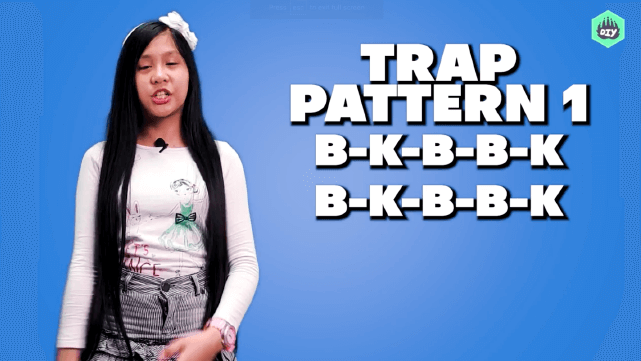

Step-by-step guide to Beatbox the Trap Beat
Step 1
Gather the materials listed and bring them to your practice spot.
Step 2
Go to a quiet space where you can hear yourself clearly.
Step 3
Stand in front of the small mirror so you can watch your mouth while you practice.
Step 4
Warm up your mouth by humming and doing lip trills for about 30 seconds.
Step 5
Make the kick sound by pushing air through closed lips to create a strong "b" pop.
Step 6
Make the snare sound by pressing your tongue to the back of your mouth and releasing a sharp "k" or by doing a quick "psh".
Step 7
Make the hi-hat sound by pressing your tongue to your teeth and saying a crisp "tss".
Step 8
Set a steady slow beat by using a metronome or by quietly counting "1-2-3-4" out loud.
Step 9
Practice the kick on every beat for one minute to lock in a steady pulse.
Step 10
Add the snare on beat 3 while keeping the kick steady for one minute.
Step 11
Add hi-hats between the beats to make eighth notes (the "and" counts) while keeping kick and snare.
Step 12
Practice a hi-hat roll by repeating short quick "t" sounds fast for one bar.
Step 13
Slowly increase the speed a little and practice keeping all your sounds even for three tries.
Step 14
Choose your favorite 4-beat pattern and repeat it four times to make a 16-beat loop.
Step 15
Share your finished creation on DIY.org.
Help!?
What can I use if I don't have a metronome or a small mirror?
Use a smartphone metronome app for tempo and the phone's front camera or reflective screen as a small mirror so you can watch your mouth during the warm-up and while practicing the kick/snare/hi-hat.
My kick sound isn't popping or my snare sounds weak — what should I try?
If your kick 'b' pop is weak or snare 'k' is muffled, practice the lip trill and closed-lip 'b' in front of the small mirror while slowly counting '1-2-3-4' and adjust tongue pressure for a sharper 'k' or 'psh' release.
How can I change this activity for different ages?
For ages 5–7, shorten steps to 30-second rounds focusing on the kick and hi-hat sounds, for 8–11 add snare on beat 3 and eighth-note hi-hats, and for 12+ work on hi-hat rolls, tempo increases, and creating the full 16-beat loop to share on DIY.org.
How can we extend or personalize our trap beat before uploading to DIY.org?
To enhance your loop, record it on a phone while repeating your chosen 4-beat pattern four times, layer multiple takes to add depth or harmonies, and edit the best version before uploading to DIY.org.
Watch videos on how to Beatbox the Trap Beat
How to Beatbox for Kids! 🎤 Fun & Easy Beatboxing with Aunt Jazz Using Letter Sounds!
4 Videos

How to Beatbox for Kids! 🎤 Fun & Easy Beatboxing with Aunt Jazz Using Letter Sounds!

How To Beatbox For Beginners: Learn The Basics (Part 1)

How To Beatbox The Basics (10 Beginner Sounds)

Learn How to Beatbox | Activities for Kids | GoNoodle
Facts about beatboxing and music production for kids
🧑🎤 Beatboxing rose to fame in 1980s hip hop — pioneers like Doug E. Fresh and Biz Markie helped popularize the art.
🎚️ Trap beats often sit in a slow pocket around 70 BPM or a double-time feel near 140 BPM — both are great for beatbox arrangements.
🥁 A classic trap track layers hi-hats, snappy snares, booming 808 bass, and rolls — you can mimic each layer with different mouth sounds.
🔊 Skilled beatboxers use techniques like throat bass and lip oscillation to produce deep, chest‑feeling low-end similar to an 808.
⏱️ Recording yourself and practicing with a metronome are powerful tricks for locking tempo and stacking clean layers into a full track.
How do you beatbox a trap beat with simple patterns?
What materials do I need to beatbox a trap beat?
What ages is beatboxing a trap beat suitable for?
What are the benefits and safety tips for kids learning trap beatbeatboxing?
