Make a Canard Wing Plane
Build a simple canard wing model airplane from foam or paper, test flight performance, and explore basic aerodynamics and stability through hands-on adjustments.




Step-by-step guide to make a canard wing plane
Step 1
Choose whether to use a foam sheet or cardstock paper and lay it flat on your table.
Step 2
Use the ruler and pencil to draw a fuselage 25 cm long and 3 cm wide on your material.
Step 3
Draw a main wing 18 cm wide and 5 cm deep and a canard wing 8 cm wide and 3 cm deep on the sheet.
Step 4
Cut out the fuselage and both wings carefully with scissors.
Step 5
Cut a 1 cm wide slot across the top of the fuselage at 12 cm from the nose for the main wing.
Step 6
Cut a second 1 cm wide slot across the top of the fuselage at 4 cm from the nose for the canard.
Step 7
Insert the main wing into the rear slot so it sits straight and centered.
Step 8
Insert the canard wing into the front slot so it sits straight and level.
Step 9
Tape or glue each wing where it meets the fuselage so they are firmly attached.
Step 10
Clip a single paper clip to the nose of the fuselage to add a little forward weight.
Step 11
Give your plane a gentle glide throw and watch whether it flies smoothly nose-first or behaves differently.
Step 12
If the plane dives steeply slide the paper clip back by about 1 cm toward the tail and test again.
Step 13
If the plane stalls or flips backward slide the paper clip forward by about 1 cm toward the nose and test again.
Step 14
Adjust the canard angle by slipping a tiny folded paper wedge under it to raise or lower its front edge and then test the flight.
Step 15
Share your finished canard wing plane and what you learned about its flight on DIY.org.
Help!?
I don't have a foam sheet or cardstock — what can I use instead?
Use cereal-box cardboard or two sheets of printer paper glued together as a thinner substitute for the foam sheet or cardstock, but if using cardboard widen the 1 cm slots slightly and reinforce the wing joints with extra tape or glue.
My plane dives or flips — which steps should I adjust?
If it dives slide the paper clip back about 1 cm toward the tail, if it stalls or flips backward slide the paper clip forward about 1 cm toward the nose, and also verify the main wing and canard are inserted straight and taped at their fuselage slots.
How can I adapt this for different ages?
For younger children have an adult draw and pre-cut the 25 cm fuselage, 18×5 cm main wing and 8×3 cm canard from a foam sheet and let them insert and tape the wings, while older kids can measure, cut cardstock themselves and experiment with moving the paper clip and folded paper wedge to tune flight.
Any ideas to extend or personalize the plane after it flies?
Decorate the fuselage and wings, try adding extra paper clips or a small lump of clay at the nose to see how added forward weight changes glide, test different canard wedge angles by slipping folded paper under the canard, or cut alternate wing sizes to compare flight behavior.
Watch videos on how to make a canard wing plane
Homebuilt RC Canard plane
4 Videos

Homebuilt RC Canard plane

Teach you to fold a super handsome canard wing simulation fighter

How to Make A Paper Airplane That FLIES FAR - Full Tutorial | WIRED
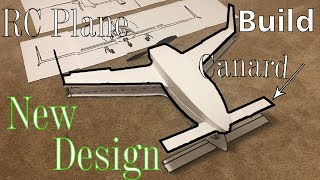
Diy Canard RC Plane Build
Facts about aerodynamics and model airplane building
🛩️ The Wright Flyer (1903) used a forward elevator — an early canard — to control pitch and help make powered flight possible.
🧪 Canard designs often make the small forward wing stall before the main wing, so the nose drops and the airplane naturally recovers from a stall.
⚖️ Shifting a model plane's center of gravity forward usually increases stability but makes it less responsive; moving it back does the opposite.
💨 Lift grows with the square of speed — double your launch speed and you get about four times the lift on the wings.
🧩 Foam board and balsa wood are favorites for model planes because they're very light, easy to cut, and simple to repair after crashes.
How do you make and test a canard wing plane?
What materials are needed to build a canard wing plane at home?
What ages is building a canard wing plane suitable for?
What safety tips and variations should we try with canard wing plane experiments?
