Perform the Floating Bill Trick
Learn to make a bill appear to float using clear thread, tape, and simple balance techniques while exploring static electricity and clever illusions.
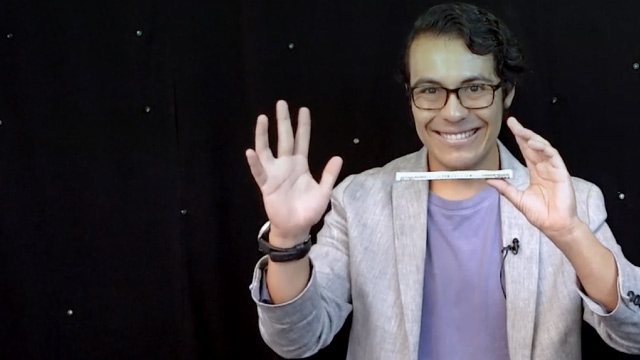
About this activity
Learn to make a bill appear to float using clear thread, tape, and simple balance techniques while exploring static electricity and clever illusions.
What you need
Step by step
- 1
Step 1
Clear a flat workspace and place all materials within reach.
- 2
Step 2
Cut a piece of clear thread about 15 centimeters long.
- 3
Step 3
Tie the two ends of the thread together with a small knot to make a loop.
- 4
Step 4
Lay the bill flat on the table and place the thread loop across the center of the bill lengthwise.
- 5
Step 5
Press a small piece of clear tape over the loop onto the center of the bill to secure the thread.
- 6
Step 6
Slide the loop so it rests on top of a straw or pencil held horizontally so the bill hangs down.
- 7
Step 7
Hold the straw at eye level and move it slowly to practice making the bill drift and sway like it is floating.
- 8
Step 8
Rub the balloon on your hair or a sweater for about 10 seconds to build up static electricity.
- 9
Step 9
Slowly bring the charged balloon near the hanging bill without touching to make the bill lift or flutter from static.
- 10
Step 10
Share a photo or video of your floating bill trick on DIY.org.
Fun facts
How do you perform the Floating Bill Trick?
Attach a short length of clear thread to the center of a bill or paper money with a tiny piece of clear tape. Anchor the thread to a light hook, straw, or your fingertip so the bill can hang freely. Keep the thread taut and use smooth hand movements to move the anchor, making the bill drift. For extra mystery, rub a balloon or comb against hair to create static, then bring it near the bill to nudge it into motion.
What materials do I need for the Floating Bill Trick?
You’ll need a bill or paper substitute, clear monofilament or thin fishing line, small pieces of clear tape, and scissors. Optional helpful items: a balloon or plastic comb (for static electricity), a small ceiling hook or clothespin to anchor the thread, and a straw or lightweight stick to hide the thread’s anchor. Use play money for practice if you prefer not to handle real currency.
What ages is this activity suitable for?
The Floating Bill Trick is great for children ages 6 and up with adult guidance. Younger kids (4–6) can watch and help hold props but need close supervision for scissors, tape, and small parts. Ages 8–12 can handle setup, practice hand control, and learn the static electricity concept. Teens can refine the illusion and explain the science. Always supervise to prevent choking hazards or misuse of materials.
What safety tips or variations should I consider?
Safety first: avoid loose thread near a child’s neck or face and keep scissors and small tape pieces away from toddlers. Use play money to prevent damaging real bills. Variations: try different thread lengths, hang the bill from a straw to hide the anchor, or use a charged balloon to add subtle movement. Encourage kids to explain the illusion afterward to reinforce learning about static and balance.
Watch & Learn
Need help?
Can I substitute the clear thread or tape if I don't have them?
If you don't have clear thread use thin fishing line or transparent nylon sewing thread cut to about 15 centimeters and if you lack clear tape use a small piece of regular tape pressed firmly over the loop at the bill's center as in step 4.
What should I do if the bill keeps slipping off the loop or won't stay level?
If the bill slips or won't hang level, press a slightly larger piece of clear tape firmly over the loop at the center of the bill (step 4) and tighten the knot so the loop sits snugly on the straw or pencil (step 5).
How can I adapt this activity for younger or older children?
For younger kids use a paper replica of a bill and have an adult pre-cut the 15 cm thread and apply the tape (steps 1–4), while older kids can try longer loops and different straw heights to create bigger drifting effects (steps 5–6).
How can we make the Floating Bill Trick more impressive or unique?
To enhance the trick, record a video to share on DIY.org (step 9) while experimenting with rubbing the balloon longer (step 8) or suspending multiple bills by adding extra thread loops to the straw for a coordinated floating display.