Summarize Your Learning about the Deaf Community
Create a short illustrated poster summarizing what you learned about the Deaf community, including basic signs, accessibility tips, and respectful communication.


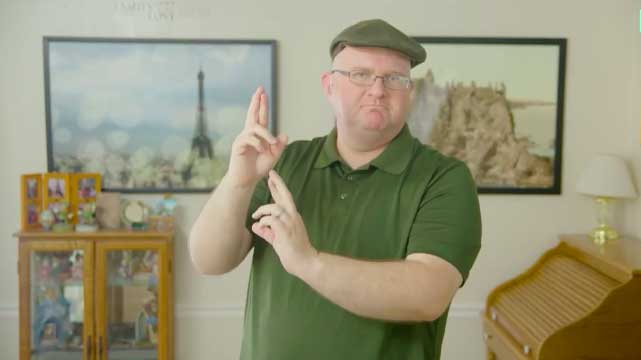

Step-by-step guide to Summarize Your Learning about the Deaf Community
Step 1
Gather all your materials and find a quiet table to work on.
Step 2
Read three short facts about the Deaf community from your reference images or book.
Step 3
Learn and practice at least five basic signs such as hello thank you please yes and no.
Step 4
Choose a clear title for your poster and write it at the top in big letters.
Step 5
Use your ruler to draw a box labeled "Basic Signs" on one side of the paper.
Step 6
Draw a simple person showing each of the five signs with the handshapes and arrows for movement.
Step 7
Write a one-sentence caption under each sign explaining when to use it.
Step 8
Draw a box labeled "Accessibility Tips" and list four short tips with a small icon next to each tip.
Step 9
Draw a box labeled "Respectful Communication" and write three short rules about how to be respectful when interacting with Deaf people.
Step 10
Outline your drawings and words with the black marker and then color the poster to make it bright and easy to read.
Step 11
Share your finished poster on DIY.org
Help!?
What can we use if we don't have a ruler, black marker, or reference book?
If you don't have a ruler, use the straight edge of a book or cereal box to draw the "Basic Signs" box, use a dark pen for outlining instead of a black marker, and view ASL photos or videos on a smartphone in place of the reference images or book.
My drawings of the five signs don't look right — how can we fix them?
Practice by photographing or tracing your own hands using the reference images, sketch the five sign drawings lightly in pencil first, and then add arrows for movement before outlining with the black marker as the instructions say.
How can this activity be changed for younger or older kids?
For younger children, simplify by learning three signs, using handprint tracings and stickers inside the "Basic Signs" box, while older kids can learn additional signs, add short research notes from the reference book under "Accessibility Tips", and record a practice video of the signs.
How can we extend or personalize the poster after finishing it?
Enhance your poster by laminating it, adding a QR code linking to short videos of each sign, listing local Deaf community resources in the "Accessibility Tips" box, and uploading a signing demo when you share your finished poster on DIY.org.
Watch videos on how to Summarize Your Learning about the Deaf Community
A Young Musician Explains Music to a Deaf Person | Kids Explain | HiHo Kids
4 Videos

A Young Musician Explains Music to a Deaf Person | Kids Explain | HiHo Kids

1,000 Deaf People Hear For The First Time
Sight and Hearing | Science for kids Year 1 | STEM Home Learning

The Five Senses for Kids - Preschool Education
Facts about Deaf culture and accessibility
🧏♂️ American Sign Language (ASL) is a full natural language used by hundreds of thousands in the U.S. and parts of Canada.
🌍 There are over 200 different sign languages around the world — sign languages develop naturally in Deaf communities.
👥 Using a capital 'D' in 'Deaf' often means someone identifies with Deaf culture and community, not just hearing loss.
✋ Getting someone's attention visually (a wave, gentle tap on the shoulder, or flicking lights) is a polite way to begin a conversation with a Deaf person.
🔤 Fingerspelling is used for names or words without a sign, and ASL has its own grammar that's different from spoken English.
How do I guide my child to create a short illustrated poster summarizing what they learned about the Deaf community?
What materials do I need to make an illustrated poster about the Deaf community?
What ages is this activity suitable for?
What are the benefits of making a poster about the Deaf community?
