Learn Bullet Journalling
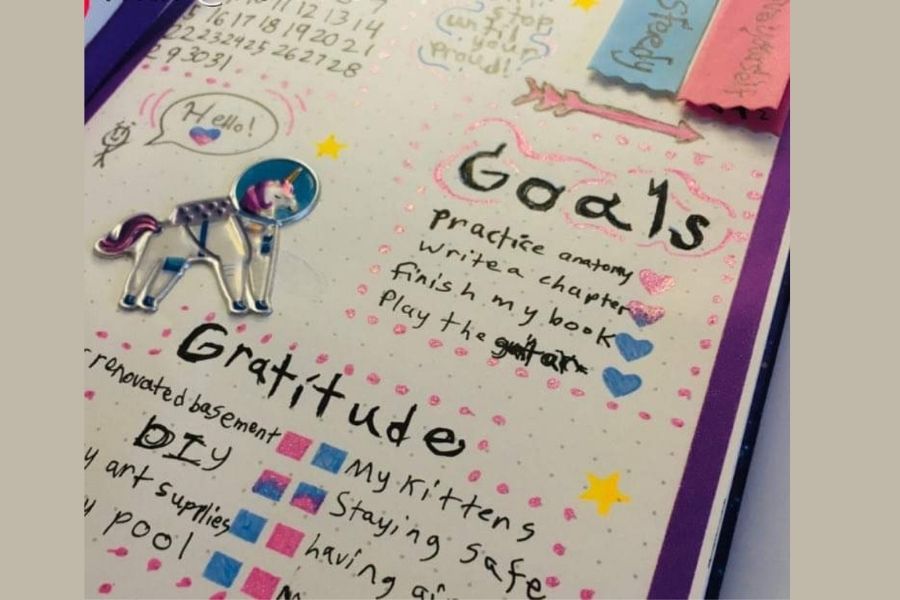
Make a simple bullet journal using a notebook, colored pens, and stickers. Learn to organize tasks, track habits, and plan weekly goals.
About this activity
Make a simple bullet journal using a notebook, colored pens, and stickers. Learn to organize tasks, track habits, and plan weekly goals.
What you need
Step by step
- 1
Step 1
Gather your notebook pens ruler pencil and stickers and place them on a clear table.
- 2
Step 2
Open your notebook to the first blank page.
- 3
Step 3
Write "Index" at the top of the first page.
- 4
Step 4
Turn to the next two-page spread in your notebook.
- 5
Step 5
On the left page write "Weekly Goals" at the top.
- 6
Step 6
Under "Weekly Goals" write three things you want to finish this week one per line.
- 7
Step 7
On the right page use your ruler to draw seven equal columns for the days of the week.
- 8
Step 8
Write the days of the week at the top of each column.
- 9
Step 9
Below the weekly columns draw a habit tracker grid with three rows and seven columns.
- 10
Step 10
Label each row of the habit tracker with a habit you want to track this week.
- 11
Step 11
Use colored pens to add task bullets and color-code important tasks in the weekly columns.
- 12
Step 12
Add stickers to decorate your pages and stick a sticker on tasks you finish.
- 13
Step 13
Share your finished bullet journal on DIY.org.
Fun facts
How do I teach my child to make a simple bullet journal?
Start with a plain notebook and explain a simple key (tasks, events, notes). Help your child create an index, a monthly page for goals, and a weekly spread for chores and school tasks. Add a small habit tracker and a short daily checklist. Use colored pens and stickers to make it fun. Spend 10–15 minutes each week reviewing and updating entries together so the habit becomes regular and rewarding.
What materials do I need to make a kids' bullet journal?
You need a notebook (dot-grid or plain), a set of colored pens or markers, a pencil and eraser, a ruler, and fun stickers. Optional items: washi tape, highlighters, sticky notes, simple stencils for boxes and stars, and a small set of labels. Choose inexpensive, non-toxic supplies and let kids pick some stickers or colors to boost motivation and ownership.
What ages is bullet journaling suitable for children?
Bullet journaling suits kids around 6–12 who can write simple words and follow basic routines; younger children (4–6) can join with stickers and drawings while parents write. Teens benefit from more detailed layouts for homework and goals. Adapt complexity: use pictorial trackers and reminders for early readers, and encourage independence as handwriting and planning skills improve.
What are the benefits of kids bullet journaling?
Bullet journalling helps children learn planning, time management, and goal-setting in a hands-on way. Tracking chores, homework, and habits builds responsibility and executive function, while decorating spreads encourages creativity and fine motor skills. Regular reflection boosts confidence and reduces stress by making tasks visible. It's also a great way for parents and kids to communicate about goals and progress together.
Watch & Learn
Need help?
I don't have a ruler or stickers—what can I use instead?
Use the straight edge of a hardcover book or the long side of a cereal box to draw your seven equal columns and cut sticky colored paper or use washi tape as substitutes for stickers to decorate and stick a sticker on tasks you finish.
My seven columns look uneven—how can I fix them without starting over?
Lightly measure the page width with your pencil from the left margin to the right, divide into seven equal marks, erase any extra lines, then retrace with your ruler to create neat columns for the days of the week and redraw the habit tracker grid below.
How can I change this activity for younger or older kids?
For younger kids, simplify by writing one weekly goal and making a habit tracker with three days using stickers; for older kids, keep three weekly goals, add time slots in each of the seven columns, and use colored pens to create more detailed task bullets and color-code important tasks.
What are some creative ways to extend or personalize the bullet journal after finishing the pages?
Add related Index entries on the first page for future spreads, create extra habit tracker rows for monthly habits, personalize with color-coded task bullets and stickers, and then photograph the finished bullet journal to share on DIY.org.