Make an Octopus!
Make a colorful octopus craft using paper plates, paint, scissors, and pipe cleaners, learning about eight arms, symmetry, and creative decorating skills.
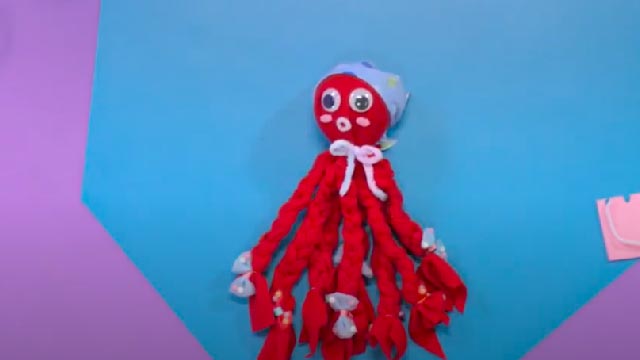
About this activity
Make a colorful octopus craft using paper plates, paint, scissors, and pipe cleaners, learning about eight arms, symmetry, and creative decorating skills.
What you need
Step by step
- 1
Step 1
Gather all the materials and find a clean workspace you can make a little mess on.
- 2
Step 2
Paint the front of the paper plate with your favorite color or patterns using the paint and brush.
- 3
Step 3
Let the paint dry completely before you move on so your colors do not smear.
- 4
Step 4
Bend and curl eight pipe cleaners into wavy arms so each one looks like a tasty octopus tentacle.
- 5
Step 5
Use a marker to make eight evenly spaced dots along the bottom edge of the paper plate to plan where the arms will go.
- 6
Step 6
Carefully make a small hole at each dot using the tip of the scissors while an adult watches and helps.
- 7
Step 7
Thread each shaped pipe cleaner through a hole from the front to the back and twist the end under the plate to hold each arm in place.
- 8
Step 8
Glue on big googly eyes or draw eyes with your marker to give your octopus a friendly face.
- 9
Step 9
Decorate the octopus body with stickers or coloring materials, making the left and right sides look similar to practice symmetry.
- 10
Step 10
Count all eight arms out loud and point to matching decorations on both sides to see the symmetry.
- 11
Step 11
Take a picture of your finished octopus and share your creation on DIY.org
Fun facts
How do you make a colorful octopus craft using paper plates, paint, scissors, and pipe cleaners?
Start by painting a paper plate the child’s chosen color and let it dry. Draw and cut a round head shape if desired, then cut eight even slits or curved tentacle shapes from the rim. Poke small holes at the base and thread pipe cleaners through for bendable arms, or glue pipe cleaners underneath. Add googly eyes, markers, and stickers to decorate. Supervise scissors and any gluing.
What materials do I need to make a paper plate octopus?
You’ll need paper plates, washable paint, paintbrushes, child-safe scissors, and pipe cleaners for tentacles. Also have glue or a glue stick, markers, and googly eyes or stickers for decoration. Optional supplies include glitter, pom-poms, construction paper for extra features, newspaper to protect surfaces, and smocks or old shirts to keep clothes clean.
What ages is the paper plate octopus craft suitable for?
This craft suits ages about 3–9. Preschoolers (3–5) enjoy painting and decorating with close adult help for cutting and threading. Children 6–9 can cut shapes, count and attach eight arms, and add more detailed designs independently. Adapt complexity: younger kids use pre-cut tentacles; older kids add symmetry challenges, patterns, or story prompts about octopus habitats.
What are the benefits of making a paper plate octopus?
Making an octopus craft teaches counting (eight arms), basic symmetry, and color recognition while strengthening fine motor skills through cutting, threading, and painting. It encourages creativity, following sequential steps, and language development when describing the animal. The activity also builds patience and focus and can spark interest in marine life and simple science conversation about octopus behaviors and habitats.
Watch & Learn
Need help?
What can I use if I can't find pipe cleaners or googly eyes?
If you don't have pipe cleaners, thread yarn, ribbon, or strips of cardstock through the holes and knot or tape them under the plate, and if you can't find googly eyes, cut eye shapes from paper or use stickers and glue them on when you 'Glue on big googly eyes or draw eyes with your marker.'
My holes tore or the arms keep slipping out—what should I do?
If holes tear or arms slip, reinforce each marked hole with a small piece of tape or a glued paper circle on the back before threading and twisting the pipe cleaner end under the plate, and be sure the paint is completely dry as the instructions say so decorations don't smear.
How can I change the activity for different ages?
For younger children, have an adult pre-poke the eight holes, pre-bend the pipe cleaners into wavy arms, and use stickers for eyes, while older kids can paint more detailed patterns, practice the symmetry step by matching decorations on both sides, and curl tentacles into more intricate shapes.
How can we make the octopus more special or more challenging?
To personalize or extend the project, add sequins or glitter glue when you 'Decorate the octopus body with stickers or coloring materials,' write a short story on the back, attach a string to hang it as a mobile, or take the 'Take a picture of your finished octopus' step to share on DIY.org with a custom name and background scene.