Let's Build a City
Design and build a model city using cardboard, recycled materials, and craft supplies; plan roads, buildings, parks, and basic infrastructure while learning teamwork and problem-solving.


Step-by-step guide to Let's Build a City
Step 1
Gather your teammates and give each person one job like planner builder decorator or tester
Step 2
Collect all the materials from the list and bring them to your work table
Step 3
Choose a large flat piece of cardboard to be the base of your city and place it on the table
Step 4
Draw a simple map on the base showing where roads buildings parks and other infrastructure will go
Step 5
Measure and draw building shapes on scrap cardboard using the ruler and pencil
Step 6
Cut out the cardboard building shapes with scissors while an adult helps
Step 7
Fold and assemble the building pieces and secure them with tape or glue to make buildings
Step 8
Position the buildings on the map and glue or tape each building firmly to the base
Step 9
Make roads by laying strips of cardboard or masking tape along the drawn road lines
Step 10
Create parks trees and decorations using recycled containers paper and craft items and attach them in park areas
Step 11
Test your city by rolling toy cars along the roads and fix any parts that wobble or come loose
Step 12
Share your finished city on DIY.org
Help!?
What can we use instead of a large flat cardboard base or masking tape if we don't have them?
Use a poster board or several cereal-box panels taped together as the base and substitute painter's tape, washi tape, or thin strips of construction paper for masking tape to make roads.
Why do some buildings wobble or fall over when we place them on the map, and how do we fix that?
Reinforce the folded cardboard building bases with extra tape or a glued internal tab, press firmly when attaching to the cardboard base, and let glue dry fully before testing with toy cars.
How can we adapt the activity for younger kids and older kids while still using the same materials?
For younger children, give them simple decorating and park-placement jobs using recycled containers and paper while older kids do the ruler-measuring, cutting (with adult help), and precise building assembly.
How can we make our city more creative or shareable after we've built it?
Paint and label buildings, add LED tea lights or moving toy cars for motion, create unique trees from recycled containers and paper, and photograph or upload a video of the finished city to DIY.org.
Watch videos on how to Let's Build a City
DIY 3D Paper City for Kids: Easy Step-by-Step Tutorial
4 Videos
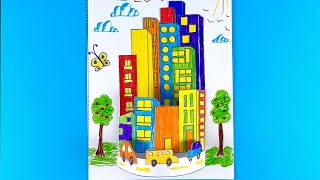
DIY 3D Paper City for Kids: Easy Step-by-Step Tutorial
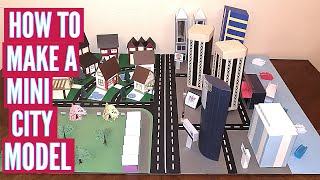
How to Make a Mini City Model | School Project
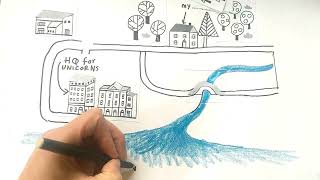
Fun for children: How to make a town map
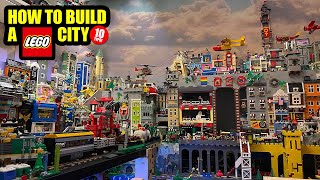
How to build a LEGO city (10 tips and tricks tutorial)
Facts about urban planning and model-making for kids
🏙️ More than half of the world’s people now live in cities — your model city represents millions of real neighborhoods!
📦 Corrugated cardboard is lightweight, easy to cut, and surprisingly strong, which is why model makers and architects use it a lot.
📐 Architects and planners use scale models (common scales are 1:100 or 1:500) to test how buildings and streets fit together.
♻️ Reusing and recycling cardboard saves trees and energy—turning old boxes into buildings is both creative and eco-friendly.
🚰 Ancient engineers built aqueducts and sewers; even simple infrastructure like pipes and roads can make a model city feel realistic.
How do I help my child design and build a model city?
What materials do I need to build a model city with recycled materials?
What ages is 'Let's Build a City' suitable for?
What are the benefits of building a model city with kids?
