Make a DIY Name Board
Make a colorful DIY name board using cardboard, paint, stencils, and glue; design, measure, and decorate letters to display proudly.


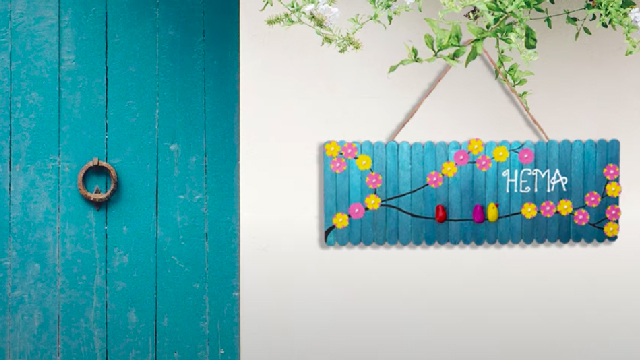
Step-by-step guide to make a DIY name board
Step 1
Spread scrap paper or newspaper on your table and tape it down to protect the surface.
Step 2
Use a ruler and pencil to draw a rectangle on the cardboard for your name board.
Step 3
Cut out the rectangle along the pencil lines to make the board shape.
Step 4
Measure the width of the board and mark even spaces with pencil for each letter.
Step 5
Place a stencil on a separate piece of cardboard and trace each letter of your name with a pencil.
Step 6
Cut out each traced letter carefully from the cardboard.
Step 7
Paint the board background with the color or pattern you like and let it dry a little.
Step 8
Paint each cardboard letter with bright colors or fun patterns and let them dry completely.
Step 9
Add extra decorations to the board and letters using colouring materials stickers or glitter.
Step 10
Apply glue to the back of each letter and press them onto the marked spots on your board.
Step 11
Press a clean sheet of scrap paper over the letters and gently weight them so the glue sticks well.
Step 12
Let the glued letters and decorations dry completely before moving the board.
Step 13
Take a photo and share your finished name board on DIY.org
Help!?
What can we use instead of cardboard, a stencil, or acrylic paint if those are hard to find?
Use a flattened cereal or shipping box for the board, trace letters freehand onto construction paper or thin craft foam instead of a stencil, and substitute washable tempera paint or permanent markers for acrylics while attaching letters with white school glue or a glue stick.
My letters won't stay glued or the paint keeps smudging—what should I try?
If letters lift, apply more white school glue to the back, press them onto the marked spots and cover with a clean sheet of scrap paper and a weight for several hours as the instructions say, and if paint smudges let the board background dry longer or use a low hairdryer to speed drying before placing letters.
How can we adapt the difficulty for toddlers, school-age kids, and teens?
For toddlers, skip tracing and cutting by using pre-cut foam letters or stickers and washable markers on a small cardboard rectangle; for school-age kids, follow the full steps including ruler measurements, stenciling, cutting, and painting; and for teens, add precise measurements, layered 3D letters, or mixed-media details like washi tape and small LEDs.
What are some ways to extend or personalize the finished name board after gluing and drying?
After painting and gluing as instructed, personalize by adding photos or small trinkets around the letters, sealing the surface with clear craft varnish, attaching a ribbon or sawtooth hanger to the back for display, or creating a themed board with glitter, stickers, and layered paper for extra dimension.
Watch videos on how to make a DIY name board
DIY Name Board Making | Easy Sign Board for School Exhibition, House & Offices | YouTube Sign Board
4 Videos
DIY Name Board Making | Easy Sign Board for School Exhibition, House & Offices | YouTube Sign Board
DIY Customised Name Hanging | Easy & Aesthetic Room Decor Idea! | Bikhrerang
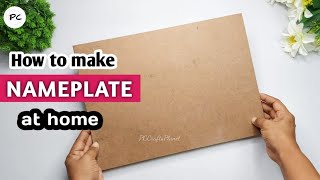
How to make beautiful and unique Nameplate at home | Nameplate making at home | PC Crafts Planet
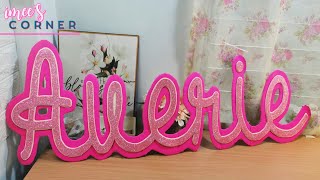
DIY Backdrop Name Ideas Tutorial || Name Backdrop Using Cardboard
Facts about paper and cardboard crafts for kids
🎨 Paint has been used in art for over 40,000 years — your name board joins a super-old creative tradition!
✂️ Stencils let you repeat the same shape perfectly and were popularized by street artists for speedy designs.
📏 Good letter spacing (kerning) can make a name board look professional — even tiny gaps change the feel!
🔤 Typography literally means ‘to form letters’ — designing your letters is practicing real typography.
📦 Cardboard is recyclable and often free from old boxes — making a name board can be eco-friendly and budget-friendly!
How do I make a colorful DIY name board with cardboard and paint?
What materials and supplies are needed to make a DIY name board?
What ages is a DIY name board activity suitable for?
What are the benefits and safety tips for making a DIY name board?
