Time to paint a galaxy
Paint a colorful galaxy scene on paper or canvas using sponges, brushes, and white splatter for stars while exploring color mixing and space patterns.


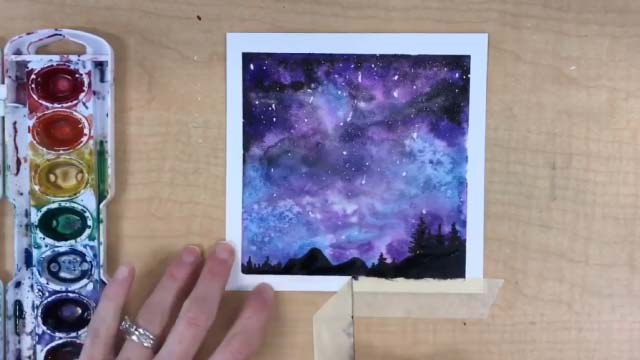

Step-by-step guide to paint a galaxy
Step 1
Put on your apron or old shirt to protect your clothes.
Step 2
Cover your workspace with paper towels or an old cloth to catch paint.
Step 3
Place your paper or canvas flat on the covered workspace.
Step 4
Squeeze small puddles of the colors you want to use onto your paper plate or palette.
Step 5
Paint the whole paper or canvas a dark color like black or deep blue to make the space background.
Step 6
Mix two colors on your palette to create a new shade for your galaxy clouds.
Step 7
Press a sponge with the mixed color onto the dark background to form soft nebula shapes.
Step 8
Repeat mixing and dabbing with different colors to build layers and bright patches in the galaxy.
Step 9
Dip the toothbrush or stiff brush into white paint thinned with a little water for the stars.
Step 10
Hold the brush over your painting and pull your thumb across the bristles to splatter tiny white stars.
Step 11
Use a small brush to add a few larger stars or twinkling crosses for sparkle.
Step 12
Let your painting dry completely before touching or moving it.
Step 13
Share your finished galaxy creation by posting a photo of it on DIY.org.
Help!?
If I don't have a canvas, sponge, or paper plate, what can I use instead?
Use heavy cardboard from a cereal box or thick watercolor paper as your 'canvas', a folded kitchen sponge or crumpled paper towel to press nebula shapes, and a clean plastic lid or piece of aluminum foil as your palette to squeeze puddles of paint onto.
My nebula colors look muddy or the splattered stars are barely visible—what should I try?
Avoid over-mixing colors on the palette and let each sponge layer dry before dabbing the next to prevent muddiness, and thin the white paint with a little water and test the toothbrush splatter on scrap paper to get brighter stars.
How can I adapt this galaxy painting for younger kids versus older kids?
For younger children, have them paint the dark background and press a single mixed color with a sponge for nebula shapes and add star stickers instead of splattering, while older kids can try multiple color mixes, finer toothbrush splatters, and detailed stars with a small brush as in the steps.
What are some fun ways to personalize or enhance the finished galaxy?
Add metallic or glow-in-the-dark paint for extra sparkle, paint a few named constellations with the small brush, and seal the dry painting with clear varnish before posting your photo on DIY.org.
Watch videos on how to paint a galaxy
Easy Galaxy Painting for kids and Beginners
4 Videos

Easy Galaxy Painting for kids and Beginners
How to Paint a Galaxy Night Sky in Watercolor Kids Art Tutorial

Easy Galaxy Painting Tutorial: Step-by-Step Acrylic Art for Beginners | How to Paint a Galaxy
The EASIEST Nebula & Galaxy Paint On YouTube - Step By Step!
Facts about painting and color mixing for kids
🎨 By mixing just three primary paints (red, blue, yellow) you can make hundreds of new colors for your galaxy!
🌌 Our Milky Way galaxy contains an estimated 100–400 billion stars—your painted stars are a tiny peek at that crowd.
✨ Flicking white paint with a toothbrush or stiff brush is a quick way artists make realistic star splatters.
🧽 Sponges are classic tools for painters—dabbing with a sponge creates the soft, cloudy look of nebulae.
🎆 Jackson Pollock helped popularize splatter and drip techniques that turn paint splashes into exciting textures.
How do you paint a galaxy with sponges, brushes, and white splatter?
What materials do I need to paint a colorful galaxy scene?
What ages is galaxy painting suitable for?
What are the benefits of painting galaxy scenes?
