Take the Mary Poppins Challenge - Straight from the DIY HQ
Build a mini "Mary Poppins" flying umbrella model using lightweight materials, string, and simple kite principles to observe lift and wind effects.


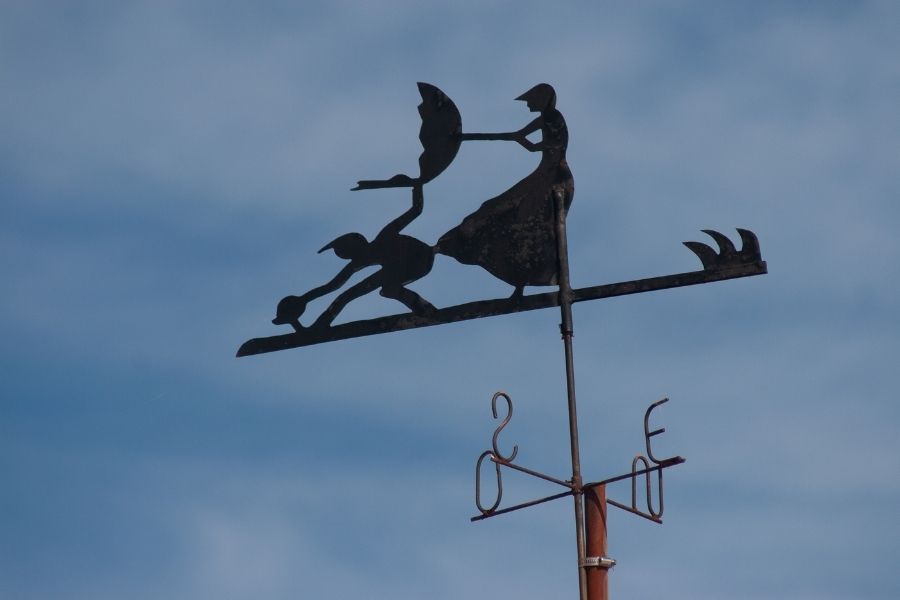

Step-by-step guide to Take the Mary Poppins Challenge — build a mini flying umbrella model
Step 1
Gather all the materials from the list and bring them to your work table.
Step 2
Lay the plastic bag or tissue paper flat and cut a circle about 20 centimeters across to make the umbrella canopy.
Step 3
Place the four straws or skewers on top of the canopy in a cross shape so their centers meet in the middle.
Step 4
Tape the center where the four straws meet to the underside of the canopy to hold the cross shape in place.
Step 5
Tape the ends of each straw so they lie flat and attach to the edge of the canopy to form the umbrella ribs.
Step 6
Tape the wooden skewer or sturdy straw to the underside center so it becomes the umbrella handle pointing down.
Step 7
Tie one end of the long flying string securely to the top of the handle so the string will pull the model when flying.
Step 8
Tape ribbon or streamers to the bottom of the handle for a tail and add a small paperclip or clothespin if you want a tiny weight for stability.
Step 9
Walk to an open outdoor area with an adult and stand where you can feel a gentle breeze.
Step 10
Hold the handle and let out about 2 meters of the flying string while keeping the canopy facing the wind.
Step 11
Turn to face into the wind and slowly raise the umbrella model until the breeze catches the canopy and lifts it.
Step 12
If it doesn’t fly well try shortening or lengthening the flying string or moving your hand closer to the canopy to change the flying angle.
Step 13
Take a picture or note what you learned and share your finished flying Mary Poppins umbrella on DIY.org
Help!?
If I don't have a plastic bag or tissue paper for the canopy, what can I use instead?
Use a thin grocery or sandwich bag, a cut-open lightweight trash bag, or a paper plate with the center removed and still cut to about a 20 cm circle to serve as the umbrella canopy.
My model won't lift in the breeze—what troubleshooting steps from the instructions should I try?
Make sure the taped center where the four straws meet is secure, add or adjust the small paperclip weight on the handle tail for stability, and try shortening or lengthening the flying string or moving your hand closer to the canopy to change the flying angle as the instructions suggest.
How can I adapt the Mary Poppins Challenge for younger children or make it more challenging for older kids?
For younger kids have an adult pre-cut the 20 cm canopy and do the sharp-skewer taping while the child decorates and holds the handle, and for older kids let them design different canopy sizes, rib placements, and experiment with tail lengths and weights.
What are easy ways to enhance or personalize the flying umbrella after building it?
Decorate the canopy with waterproof markers, add longer ribbon streamers or extra tails to the bottom of the handle, try different canopy diameters or rib counts to improve flight, and take a picture to share on DIY.org.
Watch videos on how to Take the Mary Poppins Challenge — build a mini flying umbrella model
DIY Mary Poppins NO SEW hat and candy umbrella 😘
4 Videos
DIY Mary Poppins NO SEW hat and candy umbrella 😘
3 Easy MARY POPPINS Party Games for Kids
Mary Poppins Tutorial : Hair and Make-Up

How to Make a Mary Poppins Costume | Hobbycraft
Facts about aerodynamics and kite-building for kids
🪄 Mary Poppins first appeared in P. L. Travers' 1934 books and her flying umbrella became an icon after the 1964 Disney film.
☂️ Umbrellas have been used for thousands of years—ancient China, Egypt, and Greece all made early sun-and-rain shields long before modern collapsible styles.
🪁 Kites were invented in China over 2,000 years ago and rely on wind and lift—the same basic forces your mini umbrella model will use.
🌬️ Gentle steady winds around 8–24 km/h (5–15 mph) are best for small flying models: too little wind won't lift them, too much can make them unstable.
🧪 Small tweaks—adding a tail, changing the canopy angle, or moving the bridle point—greatly affect stability and lift because of how airflow and balance interact.
How do you build the Mary Poppins flying umbrella model?
What materials do I need for the Mary Poppins flying umbrella?
What ages is the Mary Poppins flying umbrella suitable for?
What safety tips and learning benefits come with the Mary Poppins challenge?
