Play the Guitar & Sing Along
Learn simple guitar chords and strumming patterns, practice singing along to a favorite song, and perform a short, confidence-building mini-concert at home.


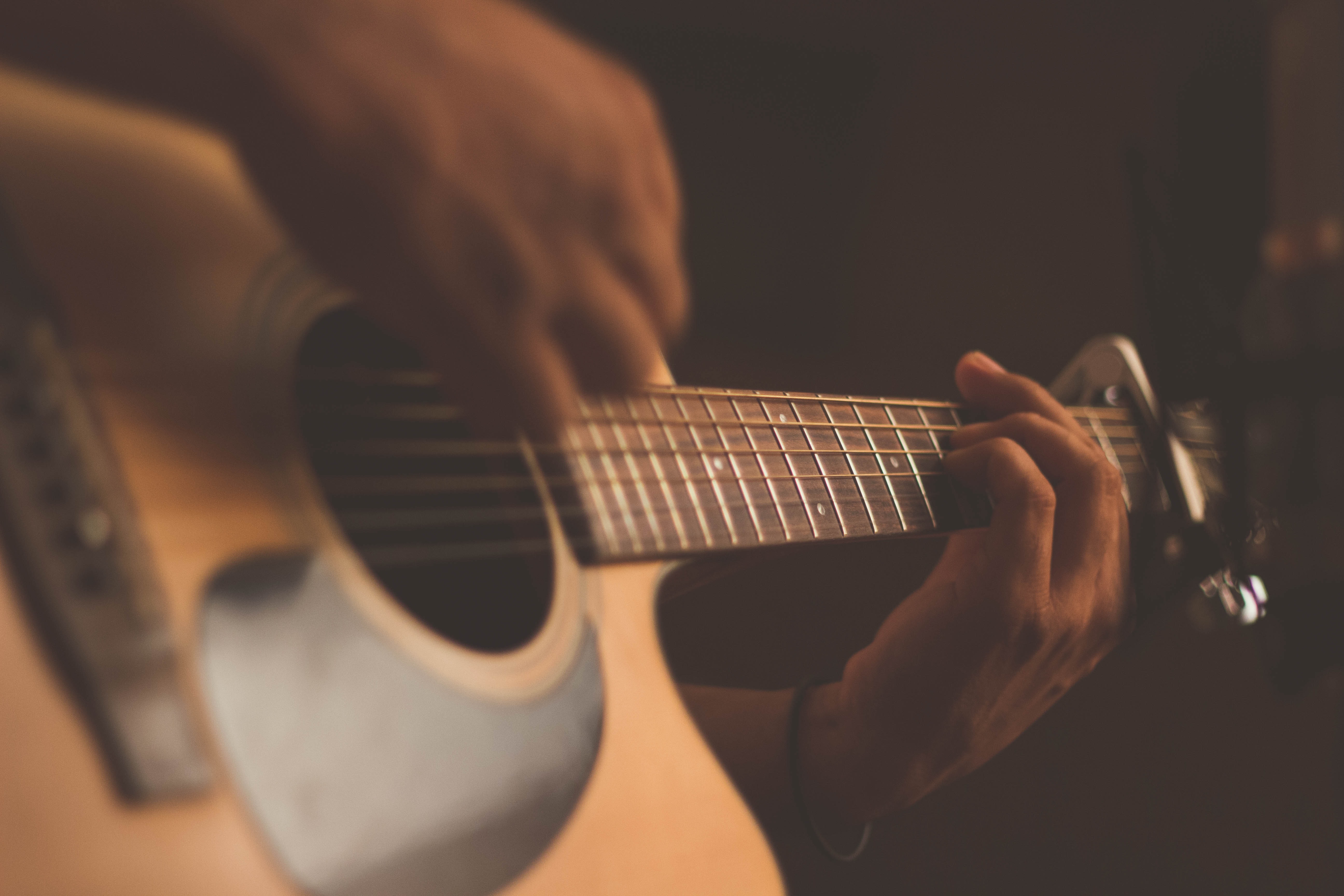

Step-by-step guide to play the guitar and sing along
Step 1
Pick up your guitar or ukulele and hold it comfortably.
Step 2
Sit on a chair or stool with good posture and rest the instrument on your leg.
Step 3
Tune your instrument using a tuner or tuning app until each string sounds right.
Step 4
Choose a favorite song that uses two or three simple chords.
Step 5
Look at a simple chord chart for your chosen song so you know which chords to play.
Step 6
Place your fingers into the first chord shape and make sure each note rings clearly.
Step 7
Move to the second chord slowly until you can switch cleanly between the first and second chords.
Step 8
Practice a simple strumming pattern like down down-up in a steady beat.
Step 9
Play the song’s chord progression while using your strumming pattern slowly and steadily.
Step 10
Sing or hum the melody by itself to learn the words and timing.
Step 11
Combine singing and playing slowly so your voice and your strumming match the chord changes.
Step 12
Rehearse the short version (one verse and chorus) three times in a row to build confidence.
Step 13
Set up a small performance area and arrange family or stuffed animals as your audience.
Step 14
Share your finished mini-concert performance on DIY.org.
Help!?
What can we use if we don't have a guitar or the tuner mentioned in step 3?
If you don't have a guitar, use a ukulele or a toy/homemade cardboard fretboard to practice chord shapes, and if you don't have a tuner use a free tuning app or an online tuner and a piano or phone reference pitch to tune as described in step 3.
Why do my chords sound muffled when following steps 5–6, and how can I fix it?
Press each finger close to the fret with your thumb behind the neck, lift any fingers that are touching adjacent strings so they don't mute them, and retune with your tuner/app from step 3 until every string rings clearly as required in step 5.
How can I adapt this activity for different ages while practicing the strumming pattern and rehearsing the mini-concert?
For preschoolers reduce to one or two open chords and a single down-stroke with adult help during step 2, for elementary kids practice the full two- to three-chord progression and the simple 'down down-up' strum in steps 6–8, and for teens add a capo, more advanced strumming patterns, and a longer rehearsal before the DIY.org share in step 12.
How can we enhance or personalize the mini-concert from steps 11–12 to make it more fun or challenging?
Write a short original bridge or change chord voicings from your chord chart, add costumes or simple stage lighting to your performance area in step 11, or record and edit multiple takes before uploading to DIY.org in step 12.
Watch videos on how to play the guitar and sing along
LIVE Lesson 1 : Beginner's Guitar Lesson | Introduction to Guitar 🎸 #guitar #siffyoungartiste
4 Videos
LIVE Lesson 1 : Beginner's Guitar Lesson | Introduction to Guitar 🎸 #guitar #siffyoungartiste
Guitar Lessons for Beginners in 21 days #1 | How to play guitar for beginners

Guitar Lessons for Beginners: Episode 1 - Play Your First Song in Just 10 Minutes! 🎸
How To Play Guitar Lesson #1
Facts about learning guitar and singing for kids
🎸 The modern guitar usually has six strings and evolved from earlier lute-like instruments over hundreds of years.
🎶 Just three open chords (like G, C and D) can let you play the chord changes for dozens of popular songs.
🧠 Strumming and singing at the same time trains your brain to coordinate different rhythms — it's like a fun brain workout!
🎤 Many famous singer-songwriters accompany themselves on guitar; learning simple chords helps you sing real songs quickly.
🌟 A 2–5 minute mini-concert at home can boost confidence and make stage nerves shrink with every practice.
How do you play the guitar and sing along with a child?
What materials do I need to play guitar and sing with my child?
What ages is playing guitar and singing along suitable for?
What are the benefits of learning guitar and singing together?
