Grow your Minecraft Crops!
Build and manage a Minecraft crop farm by planting seeds, watering soil, using bone meal, and harvesting wheat, carrots, potatoes, and learn how crops grow.


Step-by-step guide to grow your Minecraft crops
How To Plant & Grow Crops In Minecraft - Full Guide
Step 1
Open Minecraft and load or create a world where you will build your farm.
Step 2
Walk to a flat sunny spot that is at least 9 by 9 blocks to make your farm area.
Step 3
Clear all grass and plants inside that area so the ground is empty.
Step 4
Place fence pieces all around the cleared area and add a gate for entry.
Step 5
Use your hoe to till every block of ground inside the fenced area into farmland.
Step 6
Place a water source block in the center of the farm or every four blocks so the farmland stays hydrated.
Step 7
Put torches around the fence so the crops get light at night and mobs stay away.
Step 8
Plant a row of wheat seeds by right-clicking the tilled soil with wheat seeds selected.
Step 9
Plant a row of carrots by right-clicking the tilled soil with carrots selected.
Step 10
Plant a row of potatoes by right-clicking the tilled soil with potatoes selected.
Step 11
Use bone meal on one plant to speed up its growth and watch how it changes.
Step 12
Wait for crops to become fully grown and then harvest a crop by breaking the plant.
Step 13
Replant some of the seeds or crops you gathered so your farm keeps producing food.
Step 14
Put extra food and seeds into a chest near your farm to save them for later.
Step 15
Share your finished Minecraft crop farm on DIY.org.
Help!?
What can we use if we don't have some materials like fences, a hoe, or carrots?
If you don't have fence pieces use cobblestone walls or a 1-block dirt barrier to protect plants, craft any hoe (wood/stone/iron) to till the soil, and if you lack carrots or potatoes plant extra wheat seeds instead.
My crops aren't growing or the farmland turns back to dirt — what should I check?
Make sure a water source block is in the center or within four blocks of every tilled spot for hydration, place torches around the fence for nighttime light, close the gate so mobs can't trample the crops, and try bone meal on one plant to test growth.
How can I change the activity to suit younger or older kids?
For younger kids make a smaller 3x3 fenced farm and use bone meal to show quick growth, and for older kids expand to the full 9x9 with multiple rows, a chest, and optional redstone or villager automation.
How can we improve or personalize our Minecraft crop farm after finishing the basic steps?
Personalize it by adding labeled paths and signs, an armor-stand 'scarecrow' by the fence, extra rows of pumpkins or beetroot, and later automate harvest into the chest with dispensers and hoppers.
Watch videos on how to grow your Minecraft crops
NEW Ultimate Minecraft Farming Guide 1.21 | How To Farm EVERY Crop in Minecraft
4 Videos
NEW Ultimate Minecraft Farming Guide 1.21 | How To Farm EVERY Crop in Minecraft

The Ultimate Minecraft 1.21 Crop Farming Guide - Tips and Tricks to Efficiently Grow Food
NEW 1.20 Minecraft Farming Guide - How to Grow Crops in minecraft for Beginners!
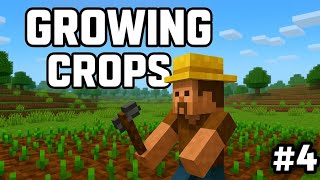
🌱 Growing Crops in Minecraft - Complete Farming Guide! 🌾
Facts about Minecraft farming
🌱 Minecraft crops (wheat, carrots, potatoes) grow through 8 stages before they can be harvested.
🦴 Bone meal is made from skeleton bones and acts as in-game fertilizer to speed up plant growth.
💧 A single water block hydrates farmland up to 4 blocks away, so one watering pit can serve lots of crops.
⚙️ Players create automated farms using redstone, pistons, water flows, or villagers to harvest crops fast.
🌾 Wheat is one of the world’s oldest domesticated crops—people have farmed it for thousands of years.
How do you build and manage a Minecraft crop farm?
What materials do I need to grow wheat, carrots, and potatoes in Minecraft?
What ages is growing Minecraft crops suitable for?
What are the benefits of growing crops in Minecraft for kids?
