Do the Crab Walk
Learn and practice the crab walk: balance on hands and feet, move sideways, build strength, coordination, and play simple challenges safely with a partner.
About this activity
Learn and practice the crab walk: balance on hands and feet, move sideways, build strength, coordination, and play simple challenges safely with a partner.
What you need
Step by step
- 1
Step 1
Put on comfortable clothes so you can move easily.
- 2
Step 2
Remove your shoes so your feet grip the floor.
- 3
Step 3
Lay out a yoga mat or choose a soft floor area to practice.
- 4
Step 4
Clear the area of toys or anything you might trip on.
- 5
Step 5
Sit with your knees bent and your feet flat on the floor.
- 6
Step 6
Place your hands on the floor behind your hips with fingers pointing toward your toes.
- 7
Step 7
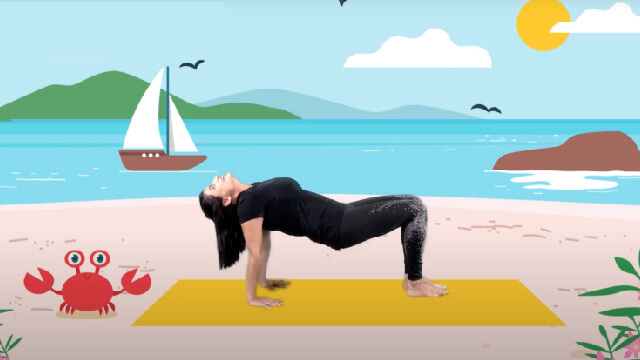
Press through your hands and feet to lift your hips until your belly faces the ceiling.
- 8
Step 8
Hold the lifted table position for 5 seconds to feel your balance.
- 9
Step 9
Move sideways by taking three small steps while keeping your hips lifted.
- 10
Step 10
Switch directions and move three small steps the other way while staying lifted.
- 11
Step 11
Set two cushions a short distance apart and take turns with your partner crab-walking to a cushion and back.
- 12
Step 12
Lower your hips down onto the mat to rest after your turn.
- 13
Step 13
Drink some water and take a short break to recover.
- 14
Step 14
Share your finished creation on DIY.org.
Fun facts
How do you do the crab walk with a child?
To do the crab walk, have your child sit with knees bent, feet flat and hands placed behind hips with fingers pointing toward the feet. Lift hips off the ground so weight rests on hands and feet, keeping the belly up and head facing forward. Practice moving one hand and the opposite foot sideways in a coordinated pattern to travel. Start with short distances and try timed laps or gentle turns to build confidence.
What materials do I need for crab walk practice?
No special materials are required—crab walking uses bodyweight only. For comfort and safety, use a soft surface or gym mat, non-slip socks or bare feet, and comfortable clothing. Optional items: cones or tape to mark lanes, a stopwatch for timed challenges, and lightweight soft balls for partner games. Have water nearby and a small first-aid kit for scrapes.
What ages is the crab walk suitable for?
This activity suits children roughly ages 3–12, with supervision and adaptations. Toddlers (3–4) may need assisted lifts and very short distances. Preschoolers (4–6) can begin independent crab walks with supervision on a soft surface. School-age children (7–12) usually manage longer laps, games, and partner challenges. Teens and adults can also use crab walks for conditioning; adjust for individual ability.
What safety tips should we follow for crab walk activities?
Safety tips: warm up wrists, shoulders, and hips before starting. Use a soft, non-slip surface and clear obstacles; supervise closely during partner challenges. Limit session length to avoid fatigue and stop if the child reports pain, dizziness, or numbness. Modify for wrist or shoulder discomfort—try forearm crab holds or a seated version. Encourage proper form (hips lifted, head up) and keep activities fun and low pressure.
Watch & Learn
Need help?
What can we use if we don't have a yoga mat or cushions?
Use a folded towel or blanket instead of the yoga mat and stacked books or rolled towels in place of the cushions for the crab-walk targets.
My hips keep dropping when I try to lift—how can I fix that while crab-walking?
Press more firmly through your hands and feet, pull your belly toward your spine as you practice holding the lifted table position for 5 seconds, and take smaller steps to keep hips up while moving sideways.
How do we change the activity for younger children or older kids?
For younger children, have an adult support under their hips and start with a lower lift and two tiny steps, while older kids can hold the lift longer than 5 seconds, take longer three-step moves, or race between cushions.
How can we make the crab-walk more fun or show off our version?
Extend the activity by arranging cushions as checkpoints for a timed relay, add a lightweight beanbag to pass while crab-walking, decorate your mat or cushions, and then share your finished creation on DIY.org.