Create a mixed media collage
Create a mixed media collage using paper, magazine pictures, fabric scraps, glue, and found objects to explore color, texture, layering, and composition.


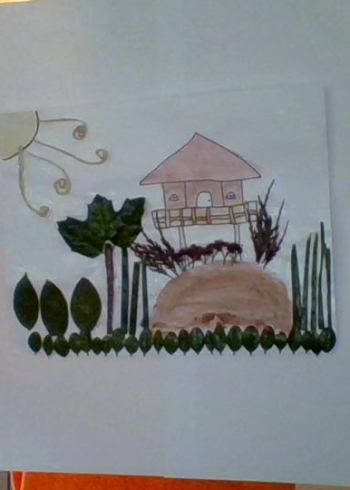

Step-by-step guide to create a mixed media collage
Step 1
Clear a flat workspace and cover it with scrap paper or newspaper to protect the table.
Step 2
Choose a sturdy piece of paper or cardboard to be your collage base and place it in the center of your workspace.
Step 3
Flip through magazines and cut out pictures colors and patterns you like and put them in a pile.
Step 4
Pick fabric scraps and cut or tear them into shapes you think will look fun on your collage.
Step 5
Collect small found objects you want to use and set them next to your paper so they’re ready.
Step 6
Choose one main image to be the focal point and place it where you want on the base.
Step 7
Arrange other cutouts and fabric pieces around the focal point to balance color texture and space.
Step 8
Glue down the largest pieces first by lifting each piece and pressing it onto the base with glue.
Step 9
Glue down fabric scraps next and press gently so they stick flat.
Step 10
Attach found objects with glue or tape to add texture and interest to your collage.
Step 11
Add final details like lines shapes or color accents with markers crayons or paint.
Step 12
Let your collage dry completely before moving it so nothing shifts.
Step 13
Tidy your workspace and put away scissors glue and leftover scraps.
Step 14
Share a photo of your finished mixed media collage on DIY.org.
Help!?
What can we use instead of fabric scraps or magazines if we don't have them?
If you don't have fabric scraps or magazines, substitute torn tissue paper, colored construction paper, old greeting cards, or printed images and use them in the steps where you 'flip through magazines and cut out pictures' and 'pick fabric scraps'.
My pieces keep sliding and the collage shifts—how do I fix that?
If pieces shift while you 'glue down the largest pieces first' or when attaching found objects, press each piece flat, weigh them with a clean book while drying, and secure heavier items with stronger glue or tape before you 'let your collage dry completely'.
How can I change the activity for younger or older kids?
For toddlers, pre-cut magazine images and fabric scraps and let them glue pieces down while an adult handles scissors and tape, while older kids can cut their own shapes, attach heavier found objects during 'Attach found objects with glue or tape,' and add fine marker or paint accents in 'Add final details'.
What are easy ways to make the collage more special or long-lasting?
After you 'let your collage dry completely,' personalize and preserve it by adding stitched accents or hot-glued 3D layers, sealing with diluted white glue or a clear sealer, writing a title, and framing it before you 'share a photo of your finished mixed media collage on DIY.org'.
Watch videos on how to create a mixed media collage
Mixed Media Collage Tutorial — Part 1
4 Videos

Mixed Media Collage Tutorial — Part 1
Try This Today! A Mixed Media Collage Paper Tutorial
Create AMAZING Mixed Media Collage Art with Fodder School 4
How to Make a Collage Zine, Zines for Beginners, DIY Booklet Instructions | Mixed Media Collage
Facts about collage and mixed media art for kids
🎨 Collage became a headline-making technique when artists like Picasso and Braque started gluing newspaper and cloth into paintings in the early 1900s.
✂️ The word "collage" comes from the French verb 'coller,' which means "to glue" — perfect for this glue-and-paper adventure!
🧵 Mixed-media art lets you mix fabric, paper, paint, found objects, and more — there are no strict rules, only fun experiments.
♻️ Using old magazines, fabric scraps, and found objects is a creative form of upcycling that keeps materials out of the trash.
📏 Layering textures (thin to thick) and contrasting colors makes a collage look deeper and more exciting to explore.
How do I create a mixed media collage with my child?
What materials do I need for a mixed media collage?
What ages is a mixed media collage suitable for?
What are the benefits of making mixed media collages?
