Attend a professional yacht race
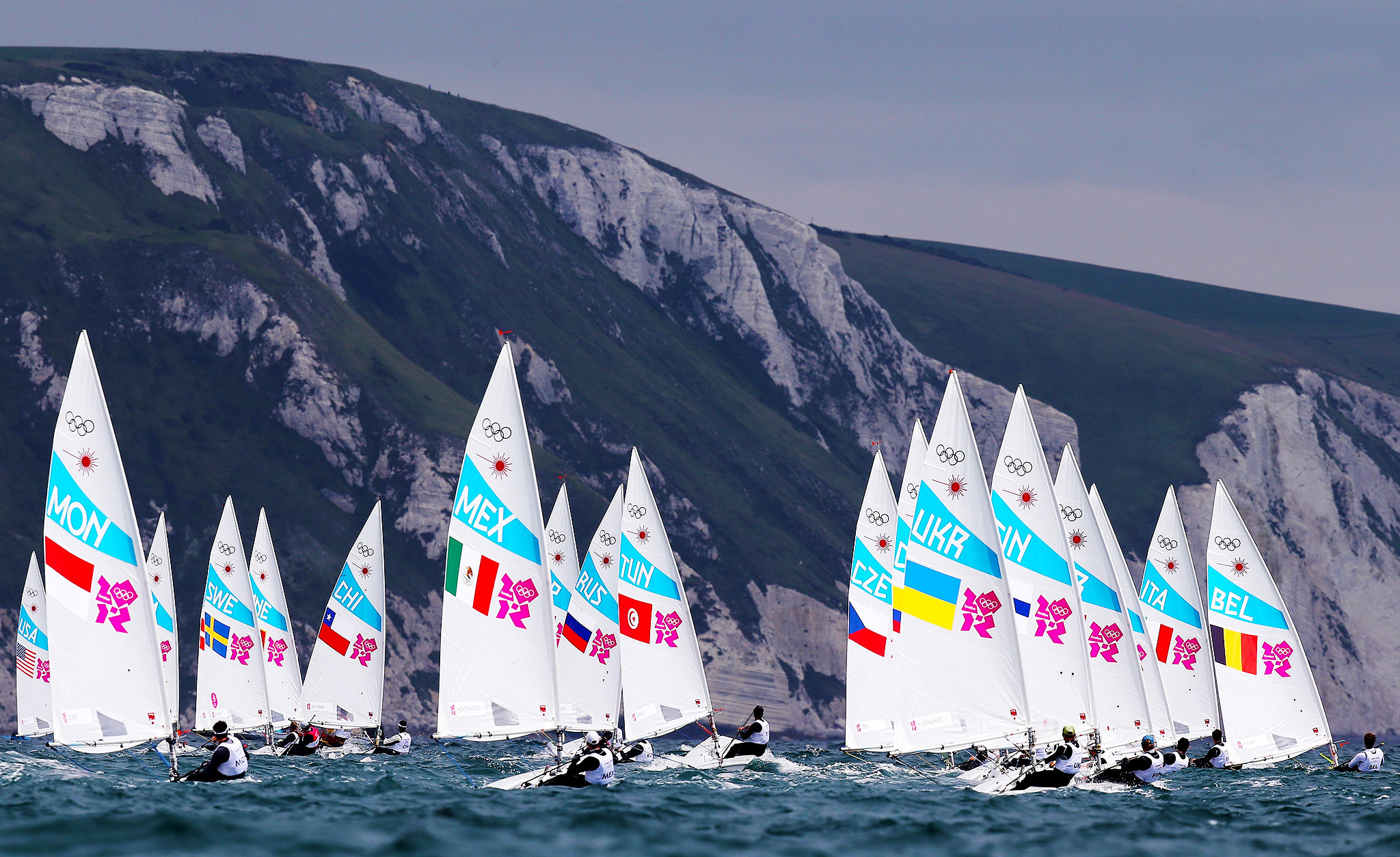
Attend a professional yacht race, observe sailboat teamwork and tactics, learn safety rules, identify sails and wind effects, and record sketches and notes.


Step-by-step guide to attend a professional yacht race
One of the Most Grueling Yacht Races in the World
Step 1
Ask an adult to find the race location and date and get permission or tickets.
Step 2
Pack your materials into a small bag.
Step 3
Go to the race early with your adult.
Step 4
Walk with your adult to a safe viewing spot.
Step 5
Stay behind barriers or in the designated spectator area with your adult.
Step 6
Put on your hat.
Step 7
Apply sunscreen with an adult's help.
Step 8
Watch the boats quietly for five minutes to get a sense of the race.
Step 9
Read posted safety rules or listen to staff announcements.
Step 10
Use binoculars to look closely at sails and note shapes and colors in your notebook.
Step 11
Sketch each different sail you see in your notebook.
Step 12
Label your sketches with short names for each sail.
Step 13
Observe flags or the breeze to find the wind direction.
Step 14
Write one sentence about how the wind changed a sail during the race.
Step 15
Share your finished sketches and notes on DIY.org.
Final steps
You're almost there! Complete all the steps, bring your creation to life, post it, and conquer the challenge!

Help!?
What can we use instead of binoculars, a sketch notebook, or sunscreen if those are hard to find?
Use a smartphone camera's zoom or a borrowed pair of binoculars to observe sails, substitute a tablet or stapled paper for your sketch notebook, and if you don't have sunscreen wear a hat and long sleeves while staying in the designated spectator area with an adult.
What should we do if we can't see the boats or hear staff announcements from our viewing spot?
Ask your adult to move you to a better safe viewing spot behind the barriers, use binoculars or your phone to zoom in and take photos for later sketches in your notebook, and check posted safety rules or ask staff for the announcements.
How can this yacht-race activity be adapted for younger children or older kids?
For younger children, shorten the quiet-watching to two minutes, let them match pre-drawn sail stickers in a simple notebook while an adult helps apply sunscreen and carry the small bag, and for older kids keep the five-minute observation, sketch more sail details and labels, and write the wind-change sentence before posting on DIY.org.
How can we extend or personalize the activity after the race?
Take photos of sails and flags with your smartphone, color and label your notebook sketches at home, create a wind-direction diagram from your observations, and compile everything into a labeled post to share on DIY.org.
Watch videos on how to attend a professional yacht race
Yachts | How It's Made
4 Videos
Yachts | How It's Made
Short Project: Car Racing
Speed Boat Racers | National Geographic
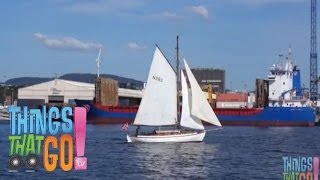
* YACHT * | Boats For Kids | Things That Go TV!
Facts about sailing and yacht racing for kids
✏️ Common sail types are the mainsail, jib/genoa, and spinnaker — each shape and trim tells you the wind and tactics being used.
⛵ America's Cup foiling yachts have topped speeds over 50 knots — faster than many highway cars!
🌬️ A sail works like an airplane wing, generating lift so boats can tack and make forward progress even toward the wind.
🛟 Safety is a competition rule: races require life jackets, harnesses, and man-overboard procedures with rescue support nearby.
🧑✈️ Pro yacht crews have specific roles (helm, trimmer, bow, tactician) and practice coordinated moves to change sails in seconds.
How do you attend a professional yacht race with a child?
What materials do I need to bring for a child at a yacht race?
What ages is watching a yacht race suitable for?
What are the benefits of taking a child to a yacht race?



One subscription, many ways to play and learn.
Only $6.99 after trial. No credit card required