Invent a battery powered circuit
Build and test a safe battery-powered circuit to light LEDs using batteries, wires, a switch, and a resistor, exploring conductivity and simple troubleshooting.


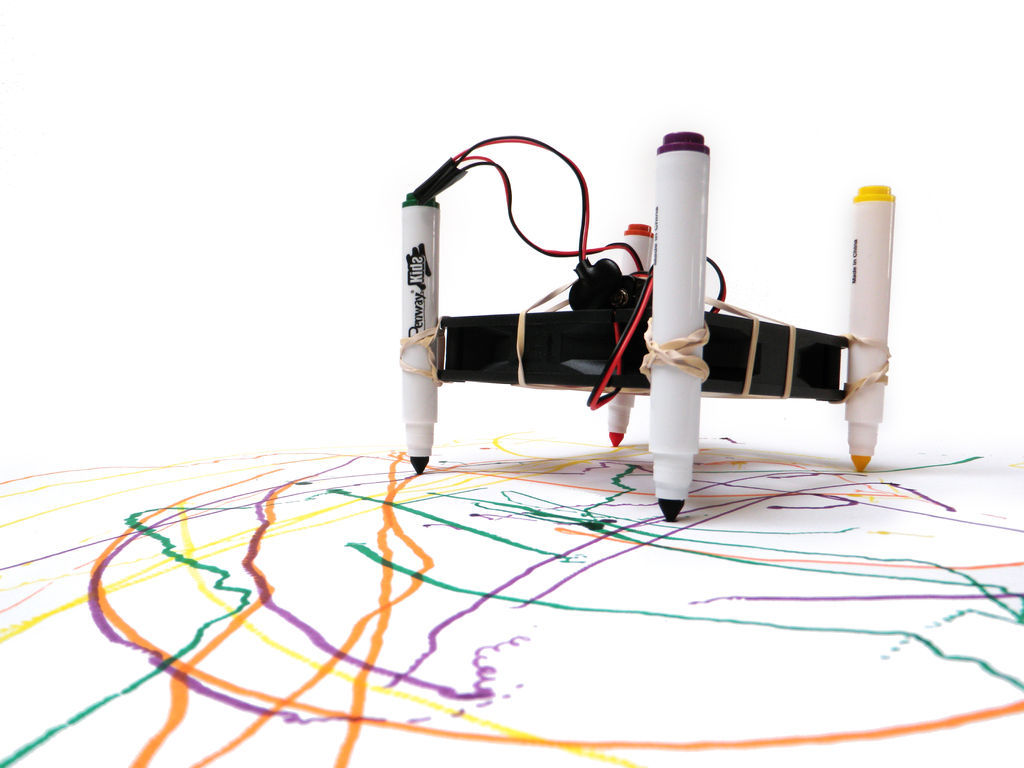

Step-by-step guide to invent a battery-powered circuit to light LEDs
How To Make a Simple Electric Circuit | Working Model School Science Project
Step 1
Gather all the materials on a clean table so everything is easy to reach.
Step 2
Put the 2 AA batteries into the battery holder making sure the + and - ends match the markings.
Step 3
Make sure the switch is in the OFF position before you start connecting anything.
Step 4
Find the LED legs and notice the long leg is the positive (anode) and the short leg is the negative (cathode).
Step 5
Clip or twist the battery holder red wire to one end of the 220 ohm resistor so they are connected.
Step 6
Attach the other end of the resistor to the LED long leg (anode) so the resistor sits in series with the LED.
Step 7
Connect the LED short leg (cathode) to one terminal of the switch.
Step 8
Connect the other terminal of the switch to the battery holder black wire so the circuit will close through the switch.
Step 9
Wrap any exposed metal connections with electrical tape so nothing touches by accident.
Step 10
Flip the switch to ON to see if the LED lights up.
Step 11
If the LED does not light, flip the switch to OFF before you touch the wires.
Step 12
Swap the LED legs (move which wire goes to the long leg and which goes to the short leg) to fix reversed polarity.
Step 13
Flip the switch to ON again to test the LED after you swap the legs.
Step 14
Share your finished circuit and what you learned by posting a photo and explanation on DIY.org.
Final steps
You're almost there! Complete all the steps, bring your creation to life, post it, and conquer the challenge!

Help!?
I don't have a 220 ohm resistor, a battery holder, or a switch—what safe substitutions can I use?
Use a 330 ohm resistor instead of the 220 ohm, tape two AA batteries end-to-end making sure the + and - ends match the markings if you lack a holder, and use a paperclip as a temporary switch (being careful to follow the instruction to keep the switch OFF before changing connections).
My LED doesn't light when I flip the switch ON; what should I check first?
With the switch OFF as the instructions require before touching wires, confirm the two AA batteries are inserted with the + and - matching the markings, that the battery-holder red wire is securely connected to one end of the 220 ohm resistor and that resistor is attached to the LED long leg (anode), and if it still doesn't light swap the LED legs to correct polarity and test again.
How can I adapt this activity for younger children or older kids who want more challenge?
For younger kids, have an adult pre-strip wires, make the clip/twist connections and wrap exposed metal with electrical tape while the child watches and flips the switch, and for older kids replace taped connections with a breadboard or soldered joints and measure voltages with a multimeter.
How can we extend or personalize the finished circuit to make it more interesting?
Add a second LED each with its own 220 ohm resistor wired in parallel to the battery and switch, mount the components neatly on cardboard with labeled wires and electrical tape, and then post a photo and explanation on DIY.org as the instructions suggest.
Watch videos on how to invent a battery-powered circuit to light LEDs
How to Build a Simple Electrical Circuit — At-Home Science Activity for Kids
4 Videos
How to Build a Simple Electrical Circuit — At-Home Science Activity for Kids
Build a Simple Electric Motor | Science Project
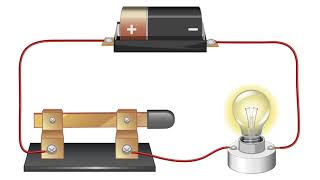
Setting Up a Simple Circuit
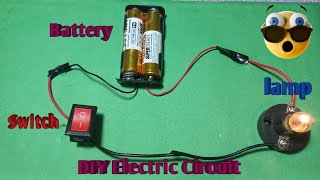
Your Guide to Making a Simple, Working Electric Circuit Model for a School Science Project
Facts about basic electronics for kids
⚡ Ohm's law (V = IR) is the simple formula that helps you pick the right resistor to protect an LED from too much current.
🔋 A fresh AA battery can power a small LED for several hours — exact time depends on LED brightness and the resistor you choose.
🧲 Copper is an excellent conductor, which is why wires are usually made of copper so electricity flows easily in your circuit.
💡 LEDs became practical in the 1960s and use much less energy than incandescent bulbs; some last tens of thousands of hours.
🛠️ The most common fixes when an LED won't light are: check battery polarity, secure loose wires, and verify the resistor isn't broken.
How do you build and test a safe battery-powered circuit to light LEDs?
What materials do I need to make a battery-powered LED circuit?
What ages is this battery-powered circuit activity suitable for?
What are the benefits and safety tips for this LED circuit activity?



One subscription, many ways to play and learn.
Only $6.99 after trial. No credit card required