Turn potential energy into kinetic energy
Build a simple ramp and release toy cars or marbles to observe how stored potential energy converts into kinetic energy through speed and motion.


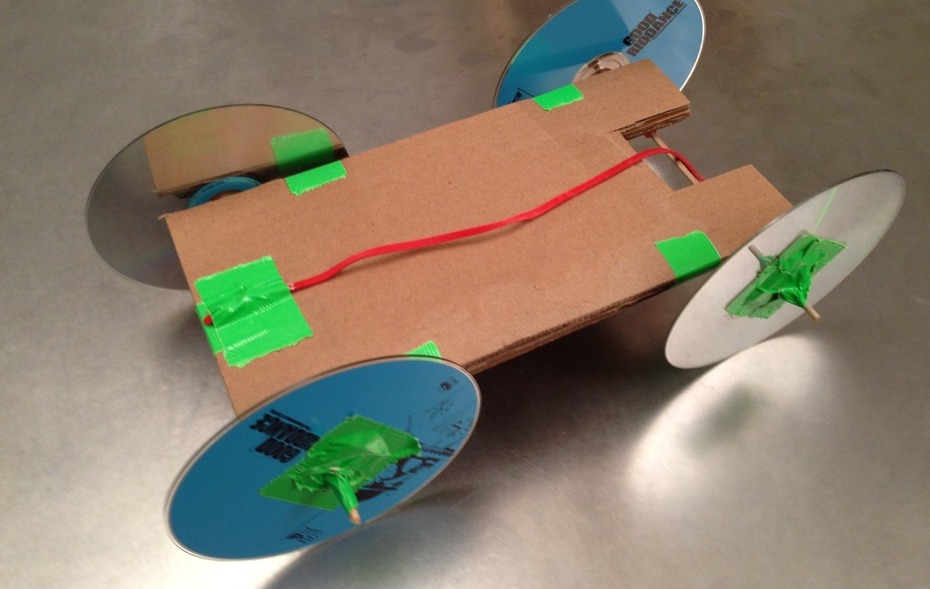

Step-by-step guide to turn potential energy into kinetic energy
Potential and Kinetic Energy || science Experiment | science project
Step 1
Gather all the materials listed above and bring them to your workspace.
Step 2
Find a flat spot on the floor to build your ramp.
Step 3
Clear the area of toys and small items so the ramp has room.
Step 4
Prop one end of the cardboard or board on the stack of books to make a sloping ramp.
Step 5
Tape the ramp to the books or floor so it will not slip during your test.
Step 6
Place the towel or cushion at the bottom of the ramp as a soft landing spot.
Step 7
Use the tape to make a start line at the top of the ramp and a finish line at the bottom.
Step 8
Put your toy car or marble on the start line without pushing it.
Step 9
Release the toy and let it roll down the ramp on its own.
Step 10
Repeat the release two more times from the same start line.
Step 11
After each run write one short note on your paper about how fast or how far the toy went.
Step 12
Add one more book under the ramp to raise the height and tape it again if needed.
Step 13
Repeat three releases from the same start line at the new height.
Step 14
Write one sentence comparing whether the toy went faster or further from the higher ramp.
Step 15
Share a photo or video and a short note about your experiment and what you learned on DIY.org
Help!?
What can we use if we don't have a cardboard or board ramp, a stack of books, or tape?
Use a sturdy shoebox lid or wooden plank instead of cardboard/board, a small stool or a stack of phone books instead of the books, and a non-slip mat or heavy book weights in place of tape to keep the ramp from slipping.
The ramp keeps slipping or my toy veers off—what should I check and fix?
If the ramp slips, press the tape firmly to the books and floor or tuck a towel under the base for grip, and if the toy veers, straighten the ramp edges or make a shallow guide line with tape so the car or marble rolls straight.
How can I adapt this ramp activity for younger kids or older kids?
For younger children, use fewer books to make a gentler slope, swap the marble for a large ball and have an adult handle the taping step, while older kids can raise the ramp higher, use a stopwatch and ruler to time and measure each run, and record results on the paper.
What are simple ways to extend or personalize the experiment after the basic runs?
Test different ramp surfaces like sandpaper or felt, try multiple toys (toy car, marble, LEGO vehicle), mark and measure run distances on your paper and graph how adding one more book changes speed, then share a photo or video and your note on DIY.org.
Watch videos on how to turn potential energy into kinetic energy
Potential and Kinetic Energy | #aumsum #kids #science #education #children
4 Videos

Potential and Kinetic Energy | #aumsum #kids #science #education #children
Convert Potential to Kinetic energy - DIY Science
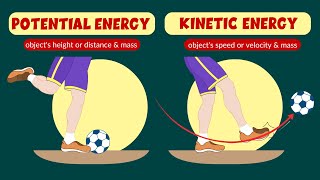
Potential and kinetic energy - Law of conservation of energy - Video for kids

Kinetic Energy | Potential and Kinetic Energy for Kids | Kinetic Energy Concepts, Examples | Science
Facts about energy and motion
⚖️ Potential energy depends on height and mass — lift a car higher and you store more energy (PE = m·g·h).
⚡ Kinetic energy increases with the square of speed — twice as fast means four times the energy (KE = 1/2·m·v²).
🏗️ Ramps (inclined planes) are one of the oldest simple machines — they let you move objects using less force over a longer distance.
🔵 Marbles are ancient toys: archaeologists have found small stone marbles in sites thousands of years old.
🧊 Friction and air resistance steal energy as heat and sound, so some potential energy never becomes perfect motion.
How do I build a simple ramp to show potential energy turning into kinetic energy?
What materials do I need to build a ramp for toy cars or marbles?
What ages is this ramp experiment suitable for?
What safety tips should I follow for a ramp and car/marble experiment?
