Experiment with magnets
Investigate magnets by building a simple magnetic explorer: test attraction and repulsion with different objects, chart results, and learn about magnetic fields.


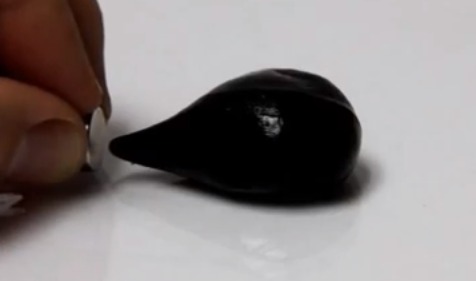

Step-by-step guide to experiment with magnets
10 Easy Magnet Science Experiments for Kids | Magnet Science Activities for Kids
Step 1
Collect all the materials and put them on a clear table.
Step 2
Tape one magnet securely to the end of a craft stick to make your first magnetic explorer.
Step 3
Tape the second magnet to another craft stick to make a second explorer.
Step 4
On the paper draw a table with three columns and write the headings Object Attracted? Notes.
Step 5
Put the objects you will test in a row next to your chart so they are easy to reach.
Step 6
Pick up one magnetic explorer and hold its magnet end near the first object without touching it.
Step 7
Watch to see whether the object moves toward the magnet or stays still.
Step 8
Write "attracted" or "not attracted" next to the object's name in your chart.
Step 9
Repeat Steps 6 through 8 for each object on your list.
Step 10
Hold the two explorers so their magnet ends are facing each other.
Step 11
Slowly move the magnet ends closer and notice whether they stick together or push apart.
Step 12
Line up several paperclips in a short row on the table.
Step 13
Bring one explorer near the end of the paperclip row and watch the paperclips form a chain that shows the magnetic field.
Step 14
Write a short note in the chart describing which objects were attracted which were not and what happened with the two magnets and the paperclip chain.
Step 15
Share your finished magnetic explorer experiment and your results on DIY.org.
Help!?
What can we use if craft sticks or small magnets are hard to find?
If you don't have craft sticks or small bar magnets, tape a wooden ruler, a pencil, or a large refrigerator magnet to make each magnetic explorer following Step 2's taping method.
If nothing moves when we hold the explorer near an object, what should we check or do differently?
If objects don't move, first make sure the magnet is taped securely to the craft stick (Steps 2–3), then try holding the explorer closer as in Step 6 because some magnets only attract at short distances, and test with the paperclips from Step 11 to confirm the magnet works.
How can I adapt this magnet experiment for different ages?
For preschoolers have an adult do the taping and let them try safe, large items while older kids can perform Steps 5–8 themselves and tweens can add measurements and compare how two explorers interact in Step 9.
How can we extend or personalize the magnetic explorer activity after finishing the steps?
To extend the activity, decorate and label each taped explorer, add a 'distance' column to your paper chart to record how far each object is attracted (Steps 5–8), and use the paperclip chain from Step 11 to compare which explorer pulls the longest chain.
Watch videos on how to experiment with magnets
Magnets for Kids | What is a magnet, and how does it work?
4 Videos

Magnets for Kids | What is a magnet, and how does it work?
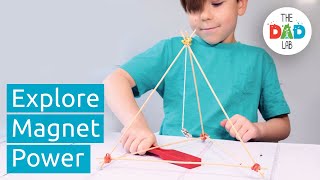
Simple Magnet Science Experiment for Kids
The Power of Magnets Explained for Kids in a Cool Way
What Can Magnets Do? 🧲 | Amazing Science Experiment for Kids
Facts about magnetism and magnetic fields
🧲 Neodymium magnets are super strong — a tiny one can lift hundreds of times its own weight.
🌍 Earth behaves like a giant magnet; its magnetic field shields us from solar wind and helps compasses point north.
🔬 Only materials containing iron, nickel, or cobalt are strongly attracted to magnets — wood, plastic, and aluminum are not magnetic.
⚡ You can make an electromagnet by coiling wire around an iron nail and connecting it to a battery — the electric current creates magnetism.
🔁 Magnets have two poles (north and south): opposite poles attract and like poles repel — perfect for testing with a magnetic explorer.
How do I set up a magnet explorer to test attraction and repulsion?
What materials do I need to do a magnet explorer activity?
What ages is the magnet explorer activity suitable for?
What safety precautions and fun variations can we try with a magnet explorer?
