Forage from a fruit tree
Safely harvest ripe fruit from a tree using careful observation, a picker or step stool, wash the fruit, and make a simple snack to taste.


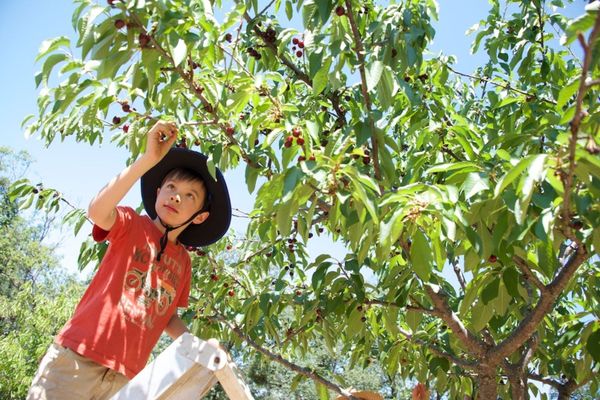

Step-by-step guide to forage from a fruit tree safely
Gardening for Kids! Fruit Tree Basics | Science for Homeschool and Public
Step 1
Ask an adult for permission to pick fruit from the tree and confirm it is okay to forage.
Step 2
Put on your closed-toe shoes (and gloves if you have them) to keep your feet and hands safe.
Step 3
Walk around the tree and inspect fruit for ripeness by gently twisting one to see if it comes off easily.
Step 4
Place the step-stool under the branch you want to reach and have an adult hold it steady.
Step 5
Use the fruit picker or, with adult help, climb the step-stool and gently twist ripe fruit to release it into your basket.
Step 6
Inspect each picked fruit and set aside any that are bruised or damaged.
Step 7
Carry your basket to a clean workspace and set it down carefully.
Step 8
Rinse the fruit in a bowl of cool water and rub each piece gently to remove dirt.
Step 9
Dry the fruit with a soft cloth or paper towel so it is ready to eat.
Step 10
With an adult helping to use the knife, cut or slice the fruit into bite-size pieces and arrange them on a plate.
Step 11
Share a photo and a short description of your finished snack on DIY.org.
Help!?
What can we use if we don't have a fruit picker, step-stool, gloves, or a basket?
Use a sturdy adult‑held ladder or chair instead of a step‑stool, long kitchen tongs in place of a fruit picker, thick gardening or work gloves for hand protection, and a clean tote, colander, or box instead of a basket.
What should we do if the fruit won't twist off when we gently test it for ripeness?
If the fruit doesn't come off easily during the inspection step, leave it on the tree and try again in a few days or have an adult use the fruit picker or a secure step‑stool to recheck so you don't damage the fruit or branch.
How can we adapt the activity for much younger children or older kids?
For toddlers, focus on safe roles like putting on closed‑toe shoes, carrying the basket, rinsing and drying fruit while an adult does the picking and cutting, and for older kids let them use the fruit picker and step‑stool with supervision and help slice the fruit with the knife under adult guidance.
How can we extend or personalize the activity after slicing the fruit and posting on DIY.org?
Personalize it by arranging the bite‑size pieces into fun shapes or a fruit salad on the plate, weighing and labeling each variety, trying simple toppings like lemon or honey, and creating a short photo story of the picking, rinsing, and plated snack to share on DIY.org.
Watch videos on how to forage from a fruit tree safely
Learn to Forage Wild Edibles with Sam Thayer and Robin Greenfield
4 Videos

Learn to Forage Wild Edibles with Sam Thayer and Robin Greenfield

Plant Life Cycle Stages From Seed To Fruit | Primary School Science Animation

11 Easy Edible Plants for Beginner Foragers- Eating Wild Food
Learn About Fruits That Grow On Trees: Lemons , Limes, Oranges | Learning Fruits Song For Kids | KLT
Facts about foraging and food safety
🍎 There are about 7,500 different apple varieties grown around the world—many with very different flavors and textures!
🌳 Many fruit trees (like apples, pears, and peaches) can live and produce fruit for decades; some apple trees are over 100 years old.
🧺 Foraging is an ancient habit—people gathered wild foods long before farming began.
🪜 A fruit picker tool or a sturdy step stool helps you harvest high fruit safely without climbing into the branches.
💧 Rinsing picked fruit under running water removes dirt and most surface microbes—no soap needed for fresh fruit.
How do you safely harvest ripe fruit from a tree and make a simple snack with a child?
What materials do I need to forage fruit and prepare a snack with a child?
What ages is fruit-foraging and snack-making suitable for?
What are the benefits of teaching children to forage fruit, and what safety tips should I remember?
