Draw a bridge with a surprising detail
Draw a bridge and add one surprising detail, like a hidden animal, secret door, or glowing lights, to spark imagination and design thinking.


Drawing Apps
Step-by-step guide to draw a bridge with a surprising detail
Step 1
Gather your materials.
Step 2
Choose the type of bridge you want to draw such as a suspension arch beam or simple footbridge.
Step 3
Lightly sketch the main outline of your bridge with your pencil and ruler to place it on the page.
Step 4
Add the bridge’s structural parts like pillars cables arches or beams using light pencil lines.
Step 5
Draw the surrounding scene such as water road hills or buildings around the bridge.
Step 6
Decide on one surprising detail to add like a hidden animal a secret door or glowing lights.
Step 7
Lightly sketch that surprising detail into the bridge or nearby scene so it blends or stands out.
Step 8
Refine important lines and shapes with your pencil to make the drawing clearer.
Step 9
Erase extra pencil marks to clean up your sketch.
Step 10
Trace the final lines with a fine-tip black marker to make your drawing pop.
Step 11
Add color to your bridge and scene with your coloring materials.
Step 12
Add small finishing touches like highlights patterns or a little sparkle if you want.
Step 13
Share your finished creation on DIY.org
Help!?
What can I use if I don't have a fine-tip black marker or a ruler listed in the materials?
If you don't have a fine-tip black marker or ruler, trace final lines with a thin gel pen or ballpoint and use the straight edge of a book or a piece of cardboard as your ruler while sketching with the pencil.
My bridge sketch looks messy or the marker smudged—how do I fix it?
If lines are messy or the marker smudges, keep your initial pencil lines light, carefully erase extra pencil marks with a clean eraser before tracing, and test the fine-tip black marker on scrap paper to avoid smudging when you trace the final lines.
How can I change the activity for different ages?
For younger kids, draw a simple footbridge with chunky crayons and big shapes and add a large hidden animal as the surprising detail, while older kids can design a suspension or arch bridge with accurate cables, refined pencil lines, shading, and detailed glowing lights.
What are some ways to enhance or personalize my finished bridge drawing?
You can personalize and extend the project by adding glued craft items for texture on pillars, using watercolor washes before tracing to make glowing lights pop as your surprising detail, or turning the scene into a paper diorama with cut-out components and extra color.
Watch videos on how to draw a bridge with a surprising detail
How to Draw a Bridge using One-Point Perspective for Beginners
4 Videos
How to Draw a Bridge using One-Point Perspective for Beginners
How to Draw a Bridge in Perspective: Fast
How to Draw Bridge, Easy Bridge Drawing, Easy Pencil Drawing Tutorials
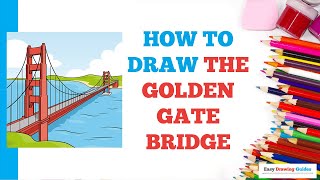
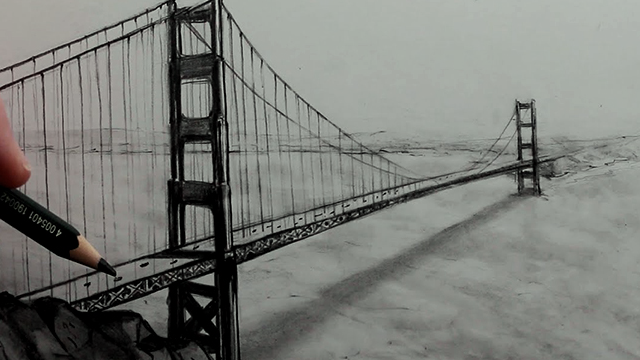
How to Draw the Golden Gate Bridge in a Few Easy Steps: Drawing Tutorial for Beginner Artists
Facts about drawing and creative design for kids
🏗️ The Danyang–Kunshan Grand Bridge in China is the world's longest bridge at about 164.8 km — that's longer than some cities!
🎨 Trompe-l'œil literally means 'deceive the eye' in French; artists use it to hide surprises that look real until you take a closer look.
🕵️ Many medieval buildings included secret passages and hidden doors so people could move unseen — perfect inspiration for a surprise in your drawing.
🦑 Clever animals like octopuses, cuttlefish, and chameleons can change color or texture to hide — great ideas for a hidden creature under your bridge.
✨ Fireflies, some fungi, and deep-sea creatures make their own light with bioluminescence — use glowing details to make your bridge sparkle at night.
How do I draw a bridge and add a surprising detail with my child?
What materials do I need to draw a bridge with a surprising detail?
What ages is this drawing activity suitable for?
What are the benefits of drawing a bridge with a surprising detail?
