Suture a laceration
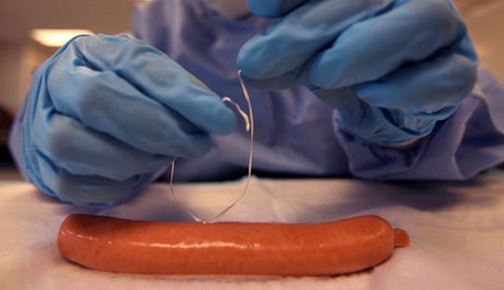
Practice suturing a pretend laceration on orange, foam, or fabric using blunt plastic needles, shoelace, and tape to learn basic stitches and hand skills.
About this activity
Practice suturing a pretend laceration on orange, foam, or fabric using blunt plastic needles, shoelace, and tape to learn basic stitches and hand skills.
What you need
Step by step
- 1
Step 1
Gather all your materials and put them on the towel or tray so everything is within reach.
- 2
Step 2
Lay the orange or foam or fabric flat on the towel or tray and smooth it so it does not move.
- 3
Step 3
Tape the corners or edges of your practice surface down so it stays steady while you work.
- 4
Step 4
Use the washable marker to draw a straight 2 to 3 centimeter laceration line on the practice surface.
- 5
Step 5
Cut the shoelace to about 25 centimeters long with the scissors so it is easy to handle.
- 6
Step 6
Thread one end of the shoelace through the eye of the blunt plastic needle and pull through so you have a long working end and a short tail.
- 7
Step 7
Insert the needle through the practice surface about 5 millimeters from one edge of the marked cut and push it across to come out about 5 millimeters from the opposite edge.
- 8
Step 8
Pull the shoelace through until the two edges of the laceration just come together without bunching or squeezing.
- 9
Step 9
Tie a secure square knot (two crossing throws) close to the skin to hold the edges together.
- 10
Step 10
Trim the shoelace ends with scissors leaving about 5 millimeters of tail so the knot stays secure.
- 11
Step 11
Move about 5 to 7 millimeters along the marked line and repeat Steps 7 to 10 to add more interrupted sutures if you want.
- 12
Step 12
Take a photo and share your finished practice suturing creation on DIY.org.
Fun facts
How do I teach my child to practice suturing a pretend laceration?
To teach suturing on an orange, foam, or fabric, first clean the work surface and tape the 'wound' edges to keep material stable. Draw a 2–4 cm incision with a marker. Thread a blunt plastic needle with a shoelace or thick thread. Use simple interrupted stitches: push the needle under one side, through to the other, and pull snug (not tight). Tie a square knot to secure each stitch. Repeat spaced evenly, trim excess thread, and dispose of tools. Always supervise and use blunt needles — never att
What materials do I need to practice pretend suturing with my child?
You'll need: an orange, foam block, or scrap fabric to simulate skin; blunt plastic suture needles or plastic lacing needles; thick thread or shoelace; strong tape or clips to hold material; marker to draw the incision; small scissors to trim thread; a cloth for cleanup; and adult supervision. Optional: tweezers to handle 'tissue', ruler for stitch spacing, and printed knot-tying guide. Avoid real needles or sharp instruments when children practice.
What ages is practicing sutures on pretend materials suitable for?
This activity suits about ages 8 and up with close adult supervision; children 8–12 benefit from guided instruction to build fine motor control. Teens (13+) can practice more complex knots and stitches with supervision. For younger kids (5–7), try larger-scale lacing activities or use big plastic needles and extra-large stitches to teach hand-eye coordination. Never use sharp or real medical needles; always supervise and adapt tool size to each child's skill level.
What are the benefits and safety tips for practicing sutures with children?
Benefits include improved fine motor skills, hand-eye coordination, concentration, and reduced fear of medical procedures by demystifying suturing. Safety tips: use only blunt plastic needles and non-sharp thread, work on pretend materials (orange, foam, or fabric), keep small parts away from very young children, and always supervise. Variations: practice different stitch patterns, change materials for texture, or time practice to make it a friendly challenge.
Watch & Learn
Need help?
What can I use instead of an orange, foam, or fabric if I can't find them?
Use a peeled banana, a kitchen sponge, or stacked felt as your practice surface and follow Steps 2–4 to tape it down and draw the 2–3 centimeter laceration.
The blunt plastic needle won't go through the practice surface or the shoelace slips out—what should I try?
If the needle won't pass in Step 7 or the shoelace won't stay in the eye, try a larger-eyed blunt needle or thinner lace/dental floss and carefully pre-poke a small hole with the scissors (with adult help) to ease insertion.
How do I adapt this activity for younger children or older kids learning more advanced skills?
For younger children have an adult pre-cut the shoelace to 25 cm, hold the surface, and guide the needle through Steps 5–7, while older kids can measure 5 mm spacing, tie independent square knots in Step 9, and add multiple interrupted sutures in Step 11.
How can we make the practice more realistic or challenging before taking the photo to share?
To enhance the activity, vary suture spacing in Step 11, practice tighter or looser square knots in Step 9, add washable red marker 'bruising' around the laceration for realism, or try a continuous stitch after mastering interrupted sutures before you take the photo in Step 12.