Try beatboxing
Learn basic beatboxing sounds (kick, hi-hat, snare), practice simple rhythms, and create short vocal drum patterns to perform confidently today.
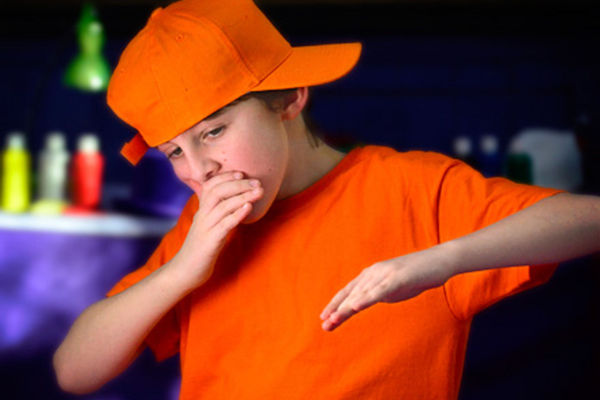
About this activity
Learn basic beatboxing sounds (kick, hi-hat, snare), practice simple rhythms, and create short vocal drum patterns to perform confidently today.
What you need
Step by step
- 1
Step 1
Sit in front of the mirror so you can watch your mouth while you practice.
- 2
Step 2
Take three deep belly breaths to warm up your airflow and relax your lips.
- 3
Step 3
Make the kick drum sound by closing your lips and pushing a quick burst of air to create a strong "B" pop without using your voice.
- 4
Step 4
Make the hi-hat sound by touching the tip of your tongue to the back of your teeth and letting out a short "tss" hiss.
- 5
Step 5
Make the snare sound by pushing a sharp puff of air through slightly parted lips to create a "pff" or "psh" snap.
- 6
Step 6
Practice the kick sound eight times slowly while watching your mouth in the mirror.
- 7
Step 7
Practice the hi-hat sound eight times slowly while watching your mouth in the mirror.
- 8
Step 8
Practice the snare sound eight times slowly while watching your mouth in the mirror.
- 9
Step 9
Count a steady "1 2 3 4" out loud to set an even tempo.
- 10
Step 10
On each "1 2 3 4" perform this pattern: kick on 1 hi-hat on 2 snare on 3 hi-hat on 4 (B tss pff tss).
- 11
Step 11
Repeat that 4-beat pattern slowly for one minute while keeping your count steady.
- 12
Step 12
Try speeding up a little bit while keeping each sound clear and your mouth relaxed.
- 13
Step 13
Create your own 4-beat pattern using kick hi-hat and snare and write it once in your notebook with simple letters or symbols.
- 14
Step 14
Practice your new pattern until you can perform it twice in a row without stopping.
- 15
Step 15
Share your finished beatbox pattern and performance on DIY.org.
Fun facts
How do I teach my child basic beatboxing sounds and short drum patterns?
Start with short 5–10 minute sessions. Demonstrate three core sounds: kick drum (puff lips or 'B' pop), hi-hat ('tss' or 'ts'), and snare ('pf', 'ka' or a sharp 'psh'). Break each sound down, have the child mimic slowly, then use a simple 4/4 loop: kick–hi-hat–snare–hi-hat (B tss pf tss). Use a metronome or clap to keep tempo, record small performances, and praise progress to build confidence.
What materials do I need to try beatboxing with my child?
You don't need special gear. Essentials: a quiet space, a mirror so kids can watch mouth movements, and a smartphone or recorder to playback practice. Optional helpful items: a metronome or beat app, headset microphone for fun performances, water to stay hydrated, and printed cheat sheets showing sound mnemonics (B, tss, pf). Keep session times short and supportive to avoid vocal strain.
What ages is beatboxing suitable for children?
Suitable for kids about 5 years and up, though many children around 6–12 quickly pick up rhythm and mouth control. Younger kids (4–5) can try simple sounds with adult guidance. Teens and families can enjoy deeper practice. Adjust expectations: start with 5–10 minute sessions, focus on imitation games and listening, and avoid pushing too hard—watch for voice fatigue and give regular breaks.
What are the benefits, safety tips, and fun variations for kids learning beatboxing?
Beatboxing builds rhythm, listening, breath control, diction, and confidence. It's great for language development and cooperative play. Safety tips: avoid straining the throat, take frequent rests, drink water, and stop if the child feels pain. Variations: create call-and-response games, combine beatboxing with clapping or simple hand percussion, use recorded loops to improvise, or hold a family 'battle' where kids trade short patterns.
Watch & Learn
Need help?
What can I use if I don't have a mirror, notebook, or access to DIY.org?
Use your phone or tablet's front camera or a reflective window to watch your mouth during the kick/hi-hat/snare steps, write your 4-beat pattern on plain paper if you don't have a notebook, and save or share a phone recording instead of posting to DIY.org.
My kick sounds weak or I keep accidentally using my voice — how do I fix that?
Follow the warm-up of three deep belly breaths, close your lips and push a quick burst of air for the 'B' pop while practicing the kick slowly eight times in front of the mirror to strengthen the sound without voicing.
How can I adapt this beatboxing activity for younger or older kids?
For younger children, simplify by clapping the '1 2 3 4' and practicing each sound four slow times instead of eight, while older kids can use a metronome or phone to speed up the one-minute pattern and write more complex patterns in the notebook.
How can we extend or personalize the activity after learning the basic pattern?
Record your one-minute performance on a phone, experiment by layering extra vocal sounds or creating new 4-beat patterns you write in the notebook, and then upload the polished clip to DIY.org to share.