Learn a greeting in another language
Learn and practice a simple greeting in another language, write its pronunciation and meaning, then perform it aloud for a friend or family member.



Step-by-step guide to learn a greeting in another language
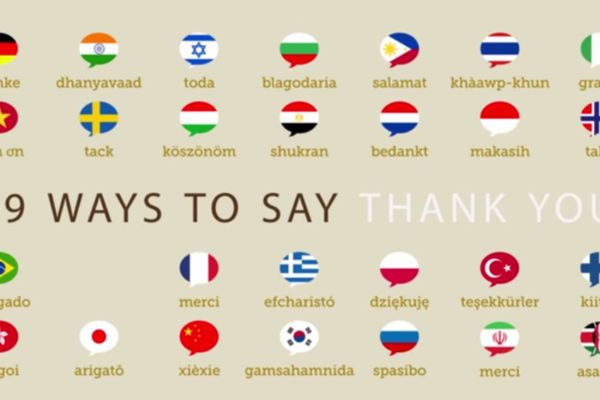
Hello Around the World | Learn to Say Hello in 12 Languages!
Step 1
Pick a language and one simple greeting you want to learn like "hello" or "good morning."
Step 2
Ask an adult or look in a book or online to find the greeting's correct spelling and pronunciation.
Step 3
Write the greeting on your paper in big clear letters.
Step 4
Write the pronunciation next to the greeting using simple sounds or syllables.
Step 5
Write the meaning of the greeting in one short sentence below it.
Step 6
Decorate the paper with colors or a drawing that matches the greeting or the country it comes from.
Step 7
Stand in front of the mirror so you can watch how your mouth moves when you speak.
Step 8
Say the greeting slowly three times while watching your mouth in the mirror.
Step 9
Say the greeting five times with feeling and try to copy the correct sounds and rhythm.
Step 10
Find a friend or family member to perform the greeting for.
Step 11
Perform the greeting aloud for them and tell them what it means.
Step 12
Ask them to repeat the greeting back or give you a thumbs up.
Step 13
Share your finished creation on DIY.org
Help!?
I don't have a mirror or colored markers—what can I use instead?
If you don't have a mirror, use a shiny spoon, window reflection, or your phone's front camera to watch how your mouth moves while speaking, and substitute colored pencils, crayons, stickers, or magazine cutouts when you decorate the paper.
I'm struggling to copy the sounds—how can I fix my pronunciation?
Play a short pronunciation audio or video from a trusted site as suggested in the 'ask an adult or look online' step, write the greeting broken into syllables on your paper, and record yourself while watching your mouth in the mirror to compare and improve before performing.
How can I change the activity for younger or older kids?
For preschoolers use one simple greeting with a big picture and a single mirror practice, for elementary follow the write-pronounce-repeat steps (write greeting, add pronunciation, say slowly three times, then five times), and for older kids add researching formal versus informal greetings, phonetic notes, and a short performance video to share.
How can we make this greeting project more interesting or unique?
Enhance your decorated paper by adding the country's flag and a short cultural fact, learn the typical response so you can perform a two-line dialogue, and record your mirror practice and final performance to share on DIY.org as a personalized video.
Watch videos on how to learn a greeting in another language
Hello Song for Kids | Learn to Say Hello in Different Languages | Fun & Easy Greetings
4 Videos

Hello Song for Kids | Learn to Say Hello in Different Languages | Fun & Easy Greetings

🌍 Say Hello in Different Languages! | Fun Kids Song About Greetings 🎶

Learn to Say 'Hello' in 24 Languages | European Day of Languages
Learn Spanish Greetings for Kids | Easy and Fun Lesson!
Facts about language learning for kids
👋 There are about 7,000 languages in the world — each one has its own special way to say hello!
🗣️ Young children are great at mimicking sounds, which helps them learn greetings faster than many adults.
📚 Phrasebooks have been helping travelers learn key greetings and phrases for centuries, long before smartphones.
🌞 Many languages use different greetings for morning, afternoon, and evening — for example, Spanish uses 'Buenos días' and 'Buenas noches'.
😊 Saying hello in someone's native language often makes them smile and can help start a friendly conversation instantly.
How do you teach a child to learn and perform a simple greeting in another language?
What materials do I need to help a child learn a greeting in another language?
What ages is learning a simple greeting in another language suitable for?
What are the benefits of learning and performing a greeting in another language?
