Make a cardboard game
Build a tabletop cardboard maze game with movable walls and a marble. Design routes, decorate pieces, and test problem-solving and fine motor skills.


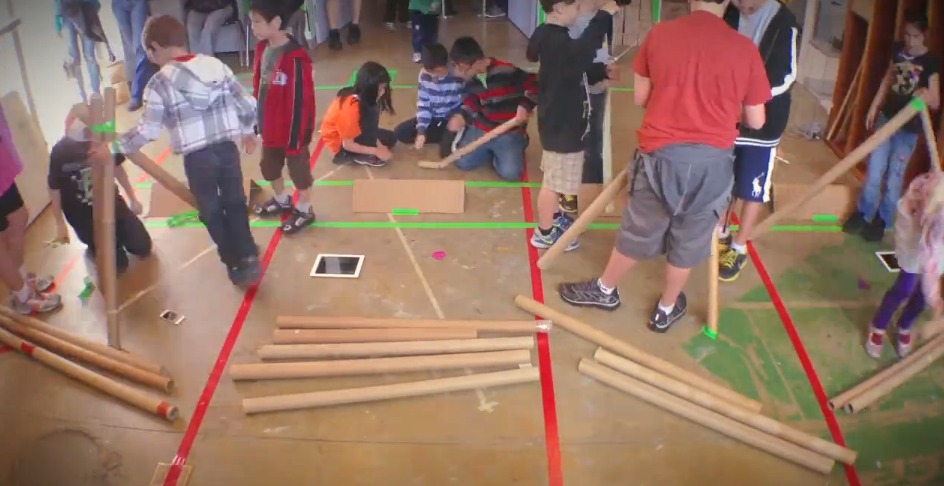

Step-by-step guide to make a tabletop cardboard maze game
[Easy Cardboard Craft] Whack-a-Mole Game - DIY Tutorial for Kids
Step 1
Choose a flat cardboard piece for your game base the size you want.
Step 2
Plan your maze by drawing routes and marking a start zone and a finish goal on the base.
Step 3
Cut several long thin strips from scrap cardboard to use as movable walls.
Step 4
Cut small rectangles from scrap cardboard to make wall stands.
Step 5
Fold each rectangle into an L shape to create a stand that will hold a wall upright.
Step 6
Attach the stands onto the base where you want walls using tape or glue.
Step 7
Slide the wall strips into the stands to build your first maze layout.
Step 8
Roll the marble from the start to the finish to test how the maze works.
Step 9
Move and reposition walls to fix stuck spots or to make the route trickier.
Step 10
Decorate the base and walls with coloring materials stickers or paint to personalize your game.
Step 11
Share your finished cardboard maze on DIY.org
Help!?
What can I use instead of a marble or special cardboard if I can't find them?
If you don't have a marble for the 'Roll the marble' test, use a small bead, button, or bouncy ball, and if you lack scrap cardboard for the 'Cut several long thin strips' walls use cereal-box cardboard or craft sticks and replace folded L-shaped stands with clothespins.
My walls keep falling over or the marble gets stuck—how do I fix that?
If walls fall or the marble gets stuck during the 'Roll the marble from the start to the finish' step, reinforce each 'Fold each rectangle into an L' stand with extra tape or glue, trim or sand rough edges on the 'long thin strips,' and widen tight turns by sliding the stands farther apart.
How can I adapt this maze activity for different ages?
For younger children make the 'Plan your maze' routes wide and short and use larger beads instead of marbles, for elementary add more 'long thin strips' with moderate turns to build fine motor skills, and for older kids create complex layouts with multiple goals and timed runs after you 'Decorate' the base.
What are some ways to extend or personalize the cardboard maze after it's built?
To enhance the game, decorate the base and walls with a theme, glue on small ramps or cardboard tunnels for multi-level routes, add numbered checkpoints and a paper scorecard for timed runs, and then photograph and 'Share your finished cardboard maze on DIY.org'.
Watch videos on how to make a tabletop cardboard maze game
5 DIY Cardboard Games Your Kids Will Love
4 Videos
5 DIY Cardboard Games Your Kids Will Love
How to make Game from cardboard. Easy DIY Tutorial for Everyone. No electronic components required!
How To Make A Colorful Cardboard Game | Easy Diy Project For Kids

How to make a cardboard DIY Video Game no Battery Needed!
Facts about cardboard crafts for kids
🧩 Mazes and labyrinth designs have been made by humans for thousands of years and appear in ancient art and architecture.
🔴 Marbles are one of the oldest toys — archaeologists have found marble-like toys in ancient burial sites.
📦 Corrugated cardboard, the sturdy material great for games and models, was developed in the 19th century and is widely recyclable.
🧠 Designing and solving mazes helps boost spatial reasoning, planning, and fine motor control in kids.
♻️ A single cardboard box can be upcycled into many game pieces — cardboard is one of the easiest craft materials to reuse.
How do you build a tabletop cardboard maze game with movable walls and a marble?
What materials do I need to make a cardboard marble maze?
What ages is a cardboard marble maze suitable for?
What are the benefits of making a cardboard maze for kids?
